
Filter
137
Text search:
World
Health
Organization
(WHO)
and
InterAgency
Standing
Committee
(IASC)
Featured
Recommendations
37
New Publications
31
Language
Document type
No document type
84
Guidelines
18
Manuals
16
Studies & Reports
5
Strategic & Response Plan
5
Training Material
3
Fact sheets
3
Situation Updates
2
Online Courses
1
Countries / Regions
Nepal
7
Global
5
Syria
4
Latin America and the Carribbean
3
Haiti
2
Philippines
2
South Sudan
2
Indonesia
2
Bangladesh
2
Ukraine
2
Yemen
2
Congo, Democratic Republic of
1
Ethiopia
1
Zimbabwe
1
Somalia
1
Pakistan
1
Iraq
1
Afghanistan
1
Germany
1
Turkey
1
Kenya
1
Mozambique
1
Papua New Guinea
1
Sudan
1
Vanuatu
1
Hungary
1
Burundi
1
Madagascar
1
Myanmar / Burma
1
Sri Lanka
1
Chile
1
Western Pacific Region
1
Asia
1
Fiji
1
Solomon Islands
1
Venezuela
1
Poland
1
Eastern Europe
1
North Korea
1
Romania
1
Moldova
1
Iran
1
Belarus
1
Authors & Publishers
Publication Years
Category
Key Resources
49
Countries
18
Women & Child Health
18
Clinical Guidelines
6
Capacity Building
4
Public Health
4
Pharmacy & Technologies
1
Toolboxes
Conflict
19
Mental Health
18
COVID-19
13
Disability
12
Refugee
9
Natural Hazards
6
HIV
6
Zika
3
Rapid Response
2
TB
2
Global Health Education
2
Planetary Health
2
2.0 Rapid Response
2
Typhoon
1
Specific Hazards
1
Pharmacy
1
NTDs
1
Malaria
1

The health impact of radiological and nuclear emergencies can last for decades. Lessons learned from past radiological and nuclear accidents have d
...
Technical Note
Recently, the approach to hazardous events has undergone a considerable shift, away from reactive activities focused on managing and responding to events and towards a more proactive
...
Women, the elderly, adolescents, youth, and children,
persons with disabilities, indigenous populations, refugees,
migrants, and minorities experience the highest degree
of socio-economic margina
...
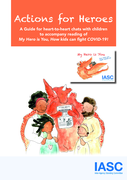
The Actions for Heroes Guide is developed by the Inter-Agency Standing Committee Reference Group on Mental Health
...

A practical handbook. This Health Cluster Guide (2nd edition, 2020) provides practical advice on how WHO, Health Cluster Coordinators
...
Who is where, when, doing what (4Ws) in mental health and psychosocial support : manual with activity codes
recommended
Humanitarian actors in emergencies often encounter challenges in knowing Who is Where, When, doing What (4Ws) with regard to mental health and psyc
...
The development of this Operational Roadmap has been driven by a growing consensus in Ukraine on the need to prioritize activities that are urgently required to address the mental health and psychos
...

2nd edition. The interagency field handbook on malaria control was developed to set out effective malaria control responses in humanitarian emergencies, particularly during the acute phase when reliance on international humanitarian assistance is gr
...

This document contains guidance for strengthening the disability inclusiveness of MHPSS responses and programmes in emergency settings. It is intended to supplement the IASC Guidelines on Mental
...
Internally displaced persons (IDPs), refugees, migrants and returnees constitute a sizeable population in the WHO Eastern Mediterranean Region. There were 12 million refugees (half are Pa
...

Specific action sheets offer useful guidance on mental health and psychosocial support and cover the following areas coordination assessment monito
...
We need to be concerned about mental health in the context of climate change
The Atlas of health and climate is a product of this unique collaboration between the meteorological and public
...
WHO published the first COVID-19 Strategic Response and Preparedness Plan (SPRP) on 3 February, 2020. This report highlights the main points of progress that were made up to 30 June 2020 under the t
...

No publication year indicated
The specific objectives of the plan are to:
- Scale up evidence-based, cost effective interventions through effective strategies within a HSS approach and provide equitable coverage with quality.
- Reduce ...
The specific objectives of the plan are to:
- Scale up evidence-based, cost effective interventions through effective strategies within a HSS approach and provide equitable coverage with quality.
- Reduce ...

Each humanitarian setting provides distinct opportunities and challenges for actors to coordinate and collaborate at strategic and operational leve
...
The project was developed by the International Federation of Medical Students’ Associations (IFMSA), in line with the Federation’s statement “a world in which students are equipped with knowledge, skills
...
