Filter
74
Text search:
World
Food
Programme,
Emergency
Telecommunications
Cluster
Featured
Recommendations
8
New Publications
34
Language
Document type
No document type
49
Strategic & Response Plan
9
Studies & Reports
8
Manuals
3
Guidelines
3
Situation Updates
1
Online Courses
1
Countries / Regions
Sierra Leone
6
Mozambique
6
Liberia
4
Bangladesh
4
Myanmar / Burma
4
Congo, Democratic Republic of
3
Global
3
Guinea
2
Philippines
2
South Sudan
2
Syria
2
Nigeria
1
Ethiopia
1
Togo
1
Zimbabwe
1
Haiti
1
Nepal
1
Zambia
1
Kenya
1
Gambia
1
Sudan
1
Central African Republic
1
Ukraine
1
Ecuador
1
Madagascar
1
Sri Lanka
1
Yemen
1
East and Southern Africa
1
Latin America and the Carribbean
1
Asia
1
Africa
1
Venezuela
1
Laos
1
Authors & Publishers
Publication Years
Category
Countries
27
Key Resources
10
Capacity Building
3
Public Health
2
Women & Child Health
1
Toolboxes
Ebola & Marburg
10
Conflict
7
COVID-19
6
Natural Hazards
5
2.0 Rapid Response
4
Rapid Response
3
Refugee
2
TB
2
Planetary Health
2
Cholera
1
Typhoon
1
HIV
1
Mental Health
1
Pharmacy
1
Health Financing Toolbox
1
Today, WFP has the capabilities and know-how to tap into mobile technology and artificial intelligence to monitor food security; use satellite technology to locate and track communities in need; and offer digital finance via blockchain technology to
...

The COVID-19 pandemic is a multiplier of vulnerability, compounding threats to food insecurity, while exposing weaknesses in food and health systems. It is severely undermining the capacity of commu
...

The Republic of the Union of Myanmar is at a historic moment, with a new civilian government assuming power in 2016. The country graduated to lower-middle-income status in 2015, and has made significant progress in reducing poverty, improving food s
...
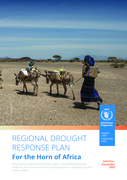
After five consecutive below-average rains, the humanitarian crisis in the Horn of Africa is expanding and deepening.
Combined with insecurity and macroeconomic volatility, the impact of the drought on food and nutrition security has been devasta
...
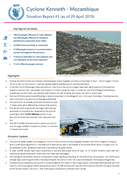
Key figures (to date)
• 168,254 people affected in Cabo Delgado and 900 people affected in Nampula (preliminary estimates from INGC)
• 35,000 houses partially or destroyed
• 37,696 people hosted in accommodation centers throughout the province
• 9 districts identified in Cabo Delgado and
...

The World Health Organization (WHO) is releasing the second edition of its Global Accelerated Action for the Health of Adolescents (AA-HA!) guidance. The document aims to equip governments to respond to the health and well-being challenges, opportun
...
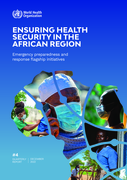
The World Health Organization Regional Office for Africa (WHO AFRO), in accordance with recommendations from various WHO committees, has developed three flagship initiatives to support Member States in the African region to prepare for, detect and r
...
Food and nutrition security in the Democratic Republic of the Congo is subject to the relentless impact of conflict, epidemics and climate events that have persisted in the country for decades, further compounded by the global COVID-19 pandemic. Lac
...
Needs assessment is essential for programme planning, monitoring and evaluation, and accountability, however needs assessment is still a critical weakness of humanitarian response. Organisations need to improve how they do assessments. The Assessmen
...

Notable progress has also been made on other key health indicators such as reducing maternal, infant and child deaths and malnutrition, increasing immunization coverage, eliminating infectious diseases such as polio and reducing the incidence of malaria, tuberculosis and diarrhoeal diseases.
But
...