Filter
187
Text search:
Interagency
Standing
Committee
(IASC
Featured
Recommendations
46
New Publications
48
Language
Document type
No document type
114
Guidelines
21
Manuals
17
Studies & Reports
14
Strategic & Response Plan
7
Fact sheets
6
Training Material
4
Situation Updates
2
Brochures
1
Online Courses
1
Countries / Regions
Nepal
9
Global
7
Syria
6
Ukraine
6
Mozambique
4
Haiti
3
Philippines
3
South Sudan
3
Germany
3
Indonesia
3
Latin America and the Carribbean
3
Congo, Democratic Republic of
2
Ethiopia
2
Bangladesh
2
Yemen
2
Zimbabwe
1
India
1
Somalia
1
Pakistan
1
Iraq
1
Jordan
1
Afghanistan
1
Turkey
1
Kenya
1
Papua New Guinea
1
Sudan
1
Vanuatu
1
Hungary
1
Burundi
1
Colombia
1
Madagascar
1
Myanmar / Burma
1
Sri Lanka
1
Chile
1
Western Pacific Region
1
Western and Central Europe
1
Asia
1
Fiji
1
Solomon Islands
1
Venezuela
1
Poland
1
Eastern Europe
1
North Korea
1
Laos
1
Romania
1
Moldova
1
Iran
1
Belarus
1
Authors & Publishers
Publication Years
Category
Key Resources
62
Countries
33
Women & Child Health
25
Clinical Guidelines
9
Public Health
5
Capacity Building
4
Pharmacy & Technologies
1
Toolboxes
Conflict
26
Mental Health
26
COVID-19
21
Refugee
13
Disability
12
Natural Hazards
8
HIV
6
Zika
4
TB
3
Rapid Response
2
Global Health Education
2
Planetary Health
2
2.0 Rapid Response
2
Ebola & Marburg
1
Typhoon
1
Specific Hazards
1
Caregiver
1
Pharmacy
1
NTDs
1
Malaria
1
Nòt Oryantasyon pou Sipò Sante Mantal ak Sipò Siko-sosyal
Repons-Dijans pou Tranblemanntè Ayiti – Janvye 2010
The health impact of radiological and nuclear emergencies can last for decades. Lessons learned from past radiological and nuclear accidents have demonstrated that the mental health and psychosocial consequences can outweigh the direct physical health impacts of radiation exposure. International rad
...
Technical Note
Recently, the approach to hazardous events has undergone a considerable shift, away from reactive activities focused on managing and responding to events and towards a more proactive process of emergency and disaster risk management (DRM). The ultimate goal of this shift in focus is
...
Specific action sheets offer useful guidance on mental health and psychosocial support and cover the following areas coordination assessment monitoring and evaluation protection and human rights standards human resources community mobilisation and support health services education dissemination of i
...

This document contains guidance for strengthening the disability inclusiveness of MHPSS responses and programmes in emergency settings. It is intended to supplement the IASC Guidelines on Mental Health and Psychosocial Support in Emergency Settings
...
Was Kinder gegen COVID-19 tun können!
The Actions for Heroes Guide is developed by the Inter-Agency Standing Committee Reference Group on Mental Health and Psychosocial Support in Emergency Settings (
...
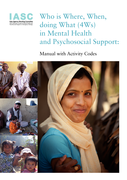
Who is where, when, doing what (4Ws) in mental health and psychosocial support : manual with activity codes
recommended
Humanitarian actors in emergencies often encounter challenges in knowing Who is Where, When, doing What (4Ws) with regard to mental health and psychosocial support (MHPSS). Such knowledge is essential to inform coordination. 4Ws tools are used in many areas of aid to map activities conducted across
...
Women, the elderly, adolescents, youth, and children,
persons with disabilities, indigenous populations, refugees,
migrants, and minorities experience the highest degree
of socio-economic marginalization. Marginalized people
become even more vulnerable in emergencies.1 This is due
to factors su
...

Recognizing the extent to which the COVID-19 outbreaks affects women and men differently is hugely important. Some preliminary data suggested that more men than women are dying, potentially due to sex-based immunological differences, higher rates of cardiovascular disease for men and lifestyle choic
...
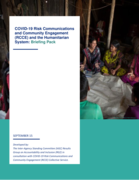
This briefing pack serves this purpose by sharing RCCE/humanitarian coordination experience from country level, feedback from global consultations and addressing frequently asked questions. In parallel, the RCCE Core Group has been working to revise the RCCE Collective Service Strategy. Where possib
...
This document is for humanitarian health actors working at national and sub-national level in countries facing humanitarian emergencies. It applies to Health Cluster partners, including governmental and non-governmental health service providers.
Based on the
...

A practical handbook. This Health Cluster Guide (2nd edition, 2020) provides practical advice on how WHO, Health Cluster Coordinators and partners can work together during a humanitarian crisis to achieve the aims of reducing avoidable mortality, morbidity and disability, and restoring the delivery
...

Each humanitarian setting provides distinct opportunities and challenges for actors to coordinate and collaborate at strategic and operational levels. The Health and Protection Joint Operational Framework has been developed to ensure that the health and protection response during humanitarian emerge
...
In March 2020 the IASC Reference Group on Mental Health and Psychosocial Support uniting 57 humanitarian organizations as member issued the Interim Briefing Note Addressing Mental Health and Psychosocial Aspects of COVID-19 Outbreak. This document h
...