Filter
102
Text search:
Guzmán
M.
Featured
Recommendations
9
New Publications
17
Language
Document type
No document type
38
Studies & Reports
36
Guidelines
20
Fact sheets
4
Manuals
2
Training Material
1
Strategic & Response Plan
1
Countries / Regions
Philippines
7
Global
6
Latin America and the Carribbean
3
Indonesia
2
Argentina
2
Peru
2
Africa
2
Burkina Faso
1
Nigeria
1
Senegal
1
Congo, Democratic Republic of
1
India
1
Germany
1
Syria
1
Rwanda
1
Bangladesh
1
Benin
1
Brazil
1
Colombia
1
Chile
1
Middle East and North Africa
1
Russia
1
Authors & Publishers
Publication Years
Category
Countries
29
Clinical Guidelines
10
Public Health
4
Women & Child Health
3
Key Resources
1
Toolboxes
COVID-19
24
NTDs
9
Disability
7
Planetary Health
7
Rapid Response
4
Zika
4
HIV
4
TB
4
AMR
2
Cholera
1
Global Health Education
1
Pharmacy
1
Health Financing Toolbox
1
NCDs
1
Malaria
1
The crisis caused by the COVID-19 pandemic exacerbated preexisting structural economic inequalities, and had a disproportionate impact on informal workers, especially on women and young people, who lost jobs and income. The situation was even more difficult for single-parent households led by women,
...
Peru celebrates 200 years of independence in 2021. Over this period of independent life, and despite the turbulent socio-political scenarios, from internal armed conflict to economic crisis to political instability over the last 40 years, Peru has experienced major changes on its epidemiological and
...

The Planetary Health Education Framework is a project of the Planetary Health Alliance (planetaryhealthalliance.org). The Planetary Health Alliance is a consortium of over 250 partners from around the world committed to understanding and addressing the human health impacts of global environmental ch
...
A framework to guide planetary health education - The lancet, Planetary health

Mosquito-borne diseases are expanding their range, and re-emerging in areas where they had subsided for decades. The extent to which climate change influences the transmission suitability and population at risk of mosquito-borne diseases across different altitudes and population densities has not be
...
BMJ Open 2021;11:e042279. doi:10.1136/bmjopen-2020-042279. Neglected tropical diseases tend to cluster in the same poor populations, and to make progress with their control, they will have to be dealt with in an integrated manner. Peptide microarrays may be a solution to tese problems, where diagnos
...
2nd edition.
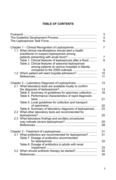
The tool kit provides learning objects and curricular content to support the competencies for those proficiency/trainee levels

Malaria vaccines: the 60‑year journey of hope and final success—lessons learned and future prospects
Tropical Medicine and Health (2023) 51:29
Anema et al. AIDS Research and Therapy 2011, 8:13 http://www.aidsrestherapy.com/content/8/1/13
This Urban Flood Risk Handbook: Assessing Risk and Identifying Interventions is a roadmap for conducting an urban flood risk assessment in any city in the world. It includes practical guidance for a flood risk assessment project, covering the key hazard and risk modeling stages as well as the evalua
...

In response to the recent publication “Is onchocerciasis elimination in Africa feasible by 2025: a perspective based on lessons learnt from the African control programmes” by Dadzie et al., it is important to clarify and highlight the positive and unequivocal research and operational contributio
...
This document provides recommendations on essential measures to protect the health and safety of operators and other persons involved in emergency vector control of Aedes spp. mosquitoes, including space spraying of insecticides, larvicide application and, in some cases, indoor residual spraying. It
...
WHO published and launched the third part of the Wheelchair Service Training Package (WSTP) series consisting of two sub-packages: the Wheelchair Service Training Package for Managers (WSTPm) and the Wheelchair Service Training Package for Stakeholders (WSTPs). WHO recognises that in order to develo
...
Mycetoma is a chronic infectious disease of the subcutaneous tissue with a high morbidity. This disease has been reported from countries between 30°N and 15°S since 1840 but the exact burden of disease is not known. It is currently unknown what the incidence, prevalence and the number of reported
...