
Filter
1936
Text search:
vaccine
safety
Featured
Recommendations
241
New Publications
454
Language
Document type
No document type
781
Guidelines
343
Studies & Reports
340
Manuals
134
Strategic & Response Plan
124
Fact sheets
102
Situation Updates
37
Training Material
29
Resource Platforms
13
Videos
10
Infographics
9
Online Courses
7
Brochures
6
App
1
Countries / Regions
Global
95
India
56
Kenya
54
Sierra Leone
50
Nigeria
45
Liberia
44
Latin America and the Carribbean
44
South Africa
39
Africa
37
Uganda
35
Ethiopia
31
Western and Central Europe
31
Tanzania
28
Congo, Democratic Republic of
25
Ghana
25
Zambia
24
West and Central Africa
21
Philippines
20
Nepal
20
Syria
20
Bangladesh
19
Brazil
19
Ukraine
19
Myanmar / Burma
18
East and Southern Africa
18
Malawi
17
Middle East and North Africa
17
Rwanda
16
Pakistan
15
South Sudan
15
Namibia
14
Russia
14
South–East Asia Region
13
Zimbabwe
12
Guinea
11
Mozambique
11
Senegal
10
Eastern Europe and Central Asia
10
Germany
9
Lesotho
9
Yemen
8
Sudan
7
Eastern Europe
7
Lebanon
6
Cambodia
6
China
6
Indonesia
6
Burkina Faso
5
Cameroon
5
Haiti
5
Central African Republic
5
Argentina
5
Colombia
5
Botswana
5
Chile
5
Western Pacific Region
5
Paraguay
5
Asia
5
Vietnam
5
USA
4
Somalia
4
Afghanistan
4
Ecuador
4
Bolivia
4
Venezuela
4
Jordan
3
Turkey
3
Thailand
3
Peru
3
Eswatini/ Swaziland
3
El Salvador
3
Palestine
3
Laos
3
Moldova
3
United Kingdom
3
Spain
3
Mali
2
Côte d’Ivoire / Ivory Coast
2
Niger
2
Iraq
2
Egypt
2
Papua New Guinea
2
North Macedonia
2
Libya
2
Madagascar
2
Nicaragua
2
Sri Lanka
2
Timor Leste/ East Timor
2
France
2
Guinea-Bissau
1
Morocco
1
Saudi Arabia
1
Togo
1
Chad
1
Gambia
1
Malaysia
1
Dominican Republic
1
Switzerland
1
Cuba
1
Burundi
1
Honduras
1
Angola
1
Guatemala
1
Mexico
1
Fiji
1
Bhutan
1
Djibouti
1
Tajikistan
1
Qatar
1
Bulgaria
1
Iran
1
Kazakhstan
1
Georgia
1
North America
1
Gabon
1
Jamaica
1
Japan
1
Mauritius
1
Tunisia
1
Portugal
1
South Korea
1
Belarus
1
French Guyana
1
Authors & Publishers
Publication Years
Category
Countries
684
Clinical Guidelines
192
Key Resources
101
Women & Child Health
100
Public Health
94
Pharmacy & Technologies
25
Capacity Building
22
Toolboxes
COVID-19
456
Ebola & Marburg
108
HIV
87
TB
86
Rapid Response
76
AMR
64
Pharmacy
56
NTDs
53
Conflict
48
2.0 Rapid Response
41
Planetary Health
40
Refugee
37
Global Health Education
33
Caregiver
30
Polio
29
Zika
25
Natural Hazards
24
Cholera
23
Health Financing Toolbox
23
Malaria
23
Mental Health
20
NCDs
10
Specific Hazards
8
Disability
6
South Sudan
1

2nd edition. The purpose of this document is to present updated standardized protocols that P. falciparum-endemic countries can use to determine the prevalence of parasites with pfhrp2/3 gene deletions causing negative HRP2 RDT results among symptomatic falciparum patients. The findings should be us
...

Depuis 2010, la lutte contre le paludisme a permis de réaliser des progrès majeurs grâce à la distribution de moustiquaires, au diagnostic rapide, aux traitements à base d'artémisinine (ACT) et aux interventions préventives ciblées.

WHO guidelines for clinical management of arboviral diseases: dengue, chikungunya, Zika and yellow fever
recommended
The new WHO guidelines provide clinical management recommendations for four of the most widespread arboviruses affecting humans: dengue, chikungunya, Zika, and yellow fever.
An integrated approach is vital, as these four diseases often present with similar symptoms, especially in the early stages
...

The 2024 edition reviews more than 50 health-related indicators from the Sustainable Development Goals and WHO’s Thirteenth General Programme of Work. It also highlights the findings from the Global health estimates 2021, notably the impact of the COVID-19 pandemic on life expectancy and healthy l
...

Non-Communicable Diseases (NCDs) have emerged as conditions of great public health concern in Kenya accounting for 39% of deaths annually. The Ministry of Health through the Department of Non-Communicable Diseases has adopted the vision of achieving a nation free from preventable burden of NCDs. Fur
...
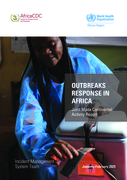
During the reporting period, significant progress was made in strengthening the mpox response across the continent. The lessons learned and challenges identified during the joint mpox continental intra-action review (IAR), which took place successfully in December 2024 in Addis Ababa have guided the
...

WHO, as the coordinating authority on international health, supports countries in protecting public health through evidence-based policies and actions. Considering the significant health burden and the multiple potential benefits of interventions, the WHO Air Quality, Energy and Health Unit aims to
...
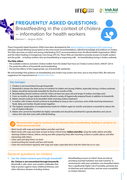
These Frequently Asked Questions (FAQs) have been developed by the Infant Feeding in Emergencies (IFE) Core Group Infectious Disease Working Group based on the most recent recommendations, collective knowledge and evidence on cholera. The FAQs also draw on infant and young child feeding (IYCF) recom
...

Ces questions fréquemment posées (FAQs) ont été élaborées par le Groupe de travail sur les maladies infectieuses du Groupe l'alimentation central sur des nourrissons en situation d'urgence (IFE) en se basant sur les recommandations les plus récentes, les connaissances collectives et les donnÃ
...

On 4 September 2025, the Ministry of Health of the Democratic Republic of the Congo (DRC) declared an outbreak of Ebola Virus Disease (EVD) in Kasai Province, following confirmation of Zaire ebolavirus by the National Institute of Biomedical Research (INRB) in Bulape and Mweka Health Zones. As of 19
...

This plan, approved by the Organization’s 62nd Directing Council, was shaped by extensive consultations with countries and stakeholders, and commits to transformative health outcomes over the next six years, tackling noncommunicable diseases (NCDs), mental health, health security, fragmented healt
...

Strengthening global health security to protect the world against future epidemics and pandemics requires well-tested and decentralized capacities for the local detection and rapid containment of outbreaks of infectious disease. For such capacities to translate into effective response actions, ind
...

Epidemics and pandemics are some of the biggest threats to a safe and healthy world. But with effective preparedness and response measures, we can reduce their impacts and even stop them in their tracks.
Through the Programmatic Partnership with the European Union, 24 local Red Cross and Red Cres
...

In an era of constrained resources and tightening budgets, strategic prioritization in tuberculosis (TB) programming is more critical than ever. Countries must make informed decisions to allocate limited resources effectively - maximizing impact, preventing avoidable deaths, and sustaining progress
...

These guidelines, produced in 2022 by the Uganda Ministry of Health, provide guidance on the diagnosis of HIV, the care of people living with HIV, and the use of antiretroviral drugs for treating and preventing HIV infection, including injectable cabotegravir and the dapivirine vaginal ring.
WHO guidelines on meningitis diagnosis, treatment and care. Web Annex C. Evidence-to-Decision frameworks
recommended
The guidelines are primarily intended for health-care professionals working in first- or second-level health-care facilities, including emergency, inpatient and outpatient services. They are also directed at policy-makers, health-care planners and programme managers, academic institutions, non-gover
...
