
Filter
4801
Text search:
quality
rights
training
Featured
506
1255
Language
4693
123
93
65
60
36
27
14
9
7
6
5
5
5
5
5
4
4
4
3
3
3
3
3
3
3
3
2
2
2
2
2
2
2
2
2
2
2
2
2
2
2
2
2
2
1
1
1
1
1
1
1
1
1
1
1
1
1
1
1
Document type
2505
750
685
381
244
115
60
30
11
8
5
2
1
1
Countries
236
143
138
97
90
90
86
86
81
80
77
70
69
68
66
64
61
59
56
52
46
41
41
40
39
39
37
37
33
33
31
26
22
22
20
18
18
18
18
17
16
15
15
15
15
14
14
14
13
12
12
12
11
11
10
9
9
8
8
8
7
7
7
6
6
6
6
6
5
5
5
5
5
5
5
5
5
5
4
3
3
3
3
3
3
3
3
3
3
3
2
2
2
2
2
2
2
2
2
2
2
2
2
2
2
2
2
2
2
2
2
2
2
1
1
1
1
1
1
1
1
1
1
1
1
1
1
1
1
1
1
1
Authors & Publishers
931
274
160
151
116
112
110
65
64
54
50
39
30
27
26
24
24
23
22
20
20
19
17
17
17
17
17
16
16
15
14
13
13
13
13
12
12
12
12
12
11
11
11
11
11
11
11
11
11
11
11
10
10
10
10
10
10
10
9
9
9
9
9
9
9
9
8
8
8
8
8
8
8
8
8
8
8
7
7
7
7
7
7
7
7
7
7
7
6
6
6
6
6
6
6
6
6
6
6
6
6
6
6
5
5
5
5
5
5
5
5
5
5
5
5
5
5
5
5
5
5
5
5
5
5
5
5
5
5
5
5
5
5
5
5
5
5
5
5
4
4
4
4
4
4
4
4
4
4
4
4
4
4
4
4
4
4
4
4
4
4
4
4
4
4
4
4
4
4
4
4
4
4
4
4
4
4
4
3
3
3
3
3
3
3
3
3
3
3
3
3
3
3
3
3
3
3
3
3
3
3
3
3
3
3
3
3
3
3
3
3
3
3
3
3
3
3
3
3
3
3
3
3
3
3
3
3
3
3
3
3
3
3
3
3
3
3
3
3
3
3
3
3
3
3
3
3
3
3
3
3
3
3
3
3
3
3
3
3
3
3
3
3
3
3
3
3
2
2
2
2
2
2
2
2
2
2
2
2
2
2
2
2
2
2
2
2
2
2
2
2
2
2
2
2
2
2
2
2
2
2
2
2
2
2
2
2
2
2
2
2
2
2
2
2
2
2
2
2
2
2
2
2
2
2
2
2
2
2
2
2
2
2
2
2
2
2
2
2
2
2
2
2
2
2
2
2
2
2
2
2
2
2
2
2
2
2
2
2
2
2
2
2
2
2
2
2
2
2
2
2
2
2
2
2
2
2
2
2
2
2
2
2
2
2
2
2
2
2
2
2
2
2
2
2
2
2
2
2
2
2
2
2
2
2
2
2
2
2
2
2
2
2
2
2
2
2
2
2
2
2
2
2
2
2
2
2
2
2
2
2
2
2
2
2
2
2
2
2
2
2
2
2
2
2
2
2
2
2
2
2
2
2
2
2
2
2
2
2
2
2
2
2
2
2
2
2
2
2
2
2
2
2
2
2
2
2
1
1
1
1
1
1
1
1
1
1
1
1
1
1
1
1
1
1
1
1
1
1
1
1
1
1
1
1
1
1
1
1
1
1
1
1
1
1
1
1
1
1
1
1
1
1
1
1
1
1
1
1
1
1
1
1
1
1
1
1
1
1
1
1
1
1
1
1
1
1
1
1
1
1
1
1
1
1
1
1
1
1
1
1
1
1
1
1
1
1
1
1
1
1
1
1
1
1
1
1
1
1
1
1
1
1
1
1
1
1
1
1
1
1
1
1
1
1
1
1
1
1
1
1
1
1
1
1
1
1
1
1
1
1
1
1
1
1
1
1
1
1
1
1
1
1
1
1
1
1
1
1
1
1
1
1
1
1
1
1
1
1
1
1
1
1
1
1
1
1
1
1
1
1
1
1
1
1
1
1
1
1
1
1
1
1
1
1
1
1
1
1
1
1
1
1
1
1
1
1
1
1
1
1
1
1
1
1
1
1
1
1
1
1
1
1
1
1
1
1
1
1
1
1
1
1
1
1
1
1
1
1
1
1
1
1
1
1
1
1
1
1
1
1
1
1
1
1
1
1
1
1
1
1
1
1
1
1
1
1
1
1
1
1
1
1
1
1
1
1
1
1
1
1
1
1
1
1
1
1
1
1
1
1
1
1
1
1
1
1
1
1
1
1
1
1
1
1
1
1
1
1
1
1
1
1
1
1
1
1
1
1
1
1
1
1
1
1
1
1
1
1
1
1
1
1
1
1
1
1
1
1
1
1
1
1
1
1
1
1
1
1
1
1
1
1
1
1
1
1
1
1
1
1
1
1
1
1
1
1
1
1
1
1
1
1
1
1
1
1
1
1
1
1
1
1
1
1
1
1
1
1
1
1
1
1
1
1
1
1
1
1
1
1
1
1
1
1
1
1
1
1
1
1
1
1
1
1
1
1
1
1
1
1
1
1
1
1
1
1
1
1
1
1
1
1
1
1
1
1
1
1
1
1
1
1
1
1
1
1
1
1
1
1
1
1
1
1
1
1
1
1
1
1
1
1
1
1
1
1
1
1
1
1
1
1
1
1
1
1
1
1
1
1
1
1
1
1
1
1
1
1
1
1
1
1
1
1
1
1
1
1
1
1
1
1
1
1
1
1
1
1
1
1
1
1
1
1
1
1
1
1
1
1
1
1
1
1
1
1
1
1
1
1
1
1
1
1
1
1
1
1
1
1
1
1
1
1
1
1
1
1
1
1
1
1
1
1
1
1
1
1
1
1
1
1
1
1
1
1
1
1
1
1
1
1
1
1
1
1
1
1
1
1
1
1
1
1
1
1
1
1
1
1
1
1
1
1
1
1
1
1
1
1
1
1
1
1
1
1
1
1
1
1
1
1
1
1
1
1
1
1
1
1
1
1
1
1
1
1
1
1
1
1
1
1
1
1
1
1
1
1
1
1
1
1
1
1
1
1
1
1
1
1
1
1
1
1
1
1
1
1
1
1
1
1
1
1
1
1
1
1
1
1
1
1
1
1
1
1
1
1
1
1
1
1
1
1
1
1
1
1
1
1
1
1
1
1
1
1
1
1
1
1
1
1
1
1
1
1
1
1
1
1
1
1
1
1
1
1
1
1
1
1
1
1
1
1
1
1
1
1
1
1
1
1
1
1
1
1
1
1
1
1
1
1
1
1
1
1
1
1
1
1
1
1
1
1
1
1
1
1
1
1
1
1
1
1
1
1
1
1
1
1
1
1
1
1
1
1
1
1
1
1
1
1
1
1
1
1
1
1
1
1
1
1
1
1
1
1
1
1
1
1
1
1
1
1
1
1
1
1
1
1
1
1
1
1
1
1
1
1
1
1
1
1
1
1
1
1
1
1
1
1
1
1
1
1
1
1
1
1
1
1
1
1
1
1
1
1
1
1
1
1
1
1
1
1
1
1
1
1
1
1
1
1
1
1
1
1
1
1
1
1
1
1
1
1
1
1
1
1
1
1
1
1
1
1
1
1
1
1
1
1
1
1
1
1
1
1
1
1
1
1
1
1
1
1
1
1
1
1
1
1
1
1
1
1
1
1
1
1
1
1
1
1
1
1
1
1
1
1
1
1
1
1
1
1
1
1
1
1
1
1
1
1
1
1
1
1
1
1
1
1
1
1
1
1
1
1
1
1
1
1
1
1
1
1
1
1
1
1
1
1
1
1
1
1
1
1
1
1
1
1
1
1
1
1
1
1
1
1
1
1
1
1
1
1
1
1
1
1
1
1
1
1
1
1
1
1
1
1
1
1
1
1
1
1
1
1
1
1
1
1
1
1
1
1
1
1
1
1
1
1
1
1
1
1
1
1
1
1
1
1
1
1
1
1
1
1
1
1
1
1
1
1
1
1
1
1
1
1
1
1
1
1
1
1
1
1
1
1
1
1
1
1
1
1
1
1
1
1
1
1
1
1
1
1
1
1
1
1
1
1
1
1
1
1
1
1
1
1
1
1
1
1
1
1
1
1
1
1
1
1
1
1
1
1
1
1
1
1
1
1
1
1
1
1
1
1
1
1
1
1
1
1
1
1
1
1
1
1
1
1
1
1
1
1
1
1
1
1
1
1
1
1
1
1
1
1
1
1
1
1
1
1
1
1
1
1
1
1
1
1
1
1
1
1
1
1
1
1
1
1
1
1
1
1
1
1
1
1
1
1
1
1
1
1
1
1
1
1
1
1
1
1
1
1
1
1
1
1
1
1
1
1
1
1
1
1
1
1
1
1
1
1
1
1
1
1
1
1
1
1
1
1
1
1
1
1
1
1
1
1
1
1
1
1
1
1
1
1
1
1
1
1
1
1
1
1
1
1
1
1
1
1
1
1
1
1
1
1
1
1
1
1
1
1
1
1
1
1
1
1
1
1
1
1
1
1
1
1
1
1
1
1
1
1
1
1
1
1
1
1
1
1
1
1
1
1
1
1
1
1
1
1
1
1
1
1
1
1
1
1
1
1
1
1
1
1
1
1
1
1
1
1
1
1
1
1
1
1
1
1
1
1
1
1
1
1
1
1
1
1
1
1
1
1
1
1
1
1
1
1
1
1
1
1
1
1
1
1
1
1
1
1
1
1
1
1
1
1
1
1
1
1
1
1
1
1
1
1
1
1
1
1
1
1
1
1
1
1
1
1
1
1
1
1
1
1
1
1
1
1
1
1
1
1
1
1
1
1
1
1
1
1
1
1
1
1
1
1
1
1
1
1
1
1
1
1
1
1
1
1
1
1
1
1
1
1
1
1
1
1
1
1
1
1
1
1
1
1
1
1
1
1
1
1
1
1
1
1
1
1
1
1
1
1
1
1
1
1
1
1
1
1
1
1
1
1
1
1
1
1
1
1
1
1
1
1
1
1
1
1
1
1
1
1
1
1
1
1
1
1
1
1
1
1
1
1
1
1
1
1
1
1
1
1
1
1
1
1
1
1
1
1
1
1
1
1
1
1
1
1
1
1
1
1
1
1
1
1
1
1
1
1
1
1
1
1
1
1
1
1
1
1
1
1
1
1
1
1
1
1
1
1
1
1
1
1
1
1
1
1
1
1
1
1
1
1
1
1
1
1
1
1
1
1
1
1
1
1
1
1
1
1
1
1
1
1
1
1
1
1
1
1
1
1
1
1
1
1
1
1
1
1
1
1
1
1
1
1
1
1
1
1
1
1
1
1
1
1
1
1
1
1
1
1
1
1
1
1
1
1
1
1
1
1
1
1
1
1
1
1
1
1
1
1
1
1
1
1
1
1
1
1
1
1
1
1
1
1
1
1
1
1
1
1
1
1
1
1
1
1
1
1
1
1
1
1
1
1
1
1
1
1
1
1
1
1
1
1
1
1
1
1
1
1
1
1
1
1
1
1
1
1
1
1
1
1
1
1
1
1
1
1
1
1
1
1
1
1
1
1
1
1
1
1
1
1
1
1
1
1
1
1
1
1
1
1
1
1
1
1
1
1
1
1
1
1
1
1
1
1
1
1
1
1
1
1
1
1
1
1
1
1
1
1
1
1
1
1
1
1
1
1
1
1
1
1
1
1
1
1
1
1
1
1
1
1
1
1
1
1
1
1
1
1
1
1
1
1
1
1
1
1
1
1
1
1
1
1
1
1
1
1
1
1
1
1
1
1
1
1
1
1
1
1
1
1
1
1
1
1
1
1
1
1
1
1
1
1
1
1
1
1
1
1
1
1
1
1
1
1
1
1
1
1
1
1
1
1
1
1
1
1
1
1
1
1
1
1
1
1
1
1
1
1
1
1
1
1
1
1
1
1
1
1
1
1
1
1
1
1
1
1
1
1
1
1
1
1
1
1
1
1
1
1
1
1
1
1
1
1
1
1
1
1
1
1
1
1
1
1
1
1
1
1
1
1
1
1
1
1
1
1
1
1
1
1
1
1
1
1
1
1
1
1
1
1
1
1
1
1
1
1
1
1
1
1
1
1
1
1
1
1
1
1
1
1
1
1
1
1
1
1
1
1
1
1
1
1
1
1
1
1
1
1
1
1
1
1
1
1
1
1
1
1
1
1
1
1
1
1
1
1
1
1
1
1
1
1
1
1
1
1
1
1
1
1
1
1
1
1
1
1
1
1
1
1
1
1
1
1
1
1
1
1
1
1
1
1
1
1
1
1
1
1
1
1
1
1
1
1
1
1
1
1
1
1
1
1
1
1
1
1
1
1
1
1
1
1
1
1
1
1
1
1
1
1
1
1
1
1
1
1
1
1
1
1
1
1
1
1
1
1
1
1
1
1
1
1
1
1
1
1
1
1
1
1
1
1
1
1
1
1
1
1
1
1
1
1
1
1
1
1
1
1
1
1
1
1
1
1
1
1
1
1
1
1
1
1
1
1
1
1
1
1
1
1
1
1
1
1
1
1
1
1
1
1
1
1
1
1
1
1
1
1
1
1
1
1
1
1
1
1
1
1
1
1
1
1
1
1
1
1
1
1
1
1
1
1
1
1
1
1
1
1
1
1
1
1
1
1
1
1
1
1
1
1
1
1
1
1
1
1
1
1
1
1
1
1
1
1
1
1
1
1
1
1
1
1
1
1
1
1
1
1
1
1
1
1
1
1
1
1
1
1
1
1
1
1
1
1
1
1
1
1
1
1
1
1
1
1
1
1
1
1
1
1
1
1
1
1
1
1
1
1
1
1
1
1
1
1
1
1
1
1
1
1
1
1
1
1
1
1
1
1
1
1
1
1
1
1
1
1
1
1
1
1
1
1
1
1
1
1
1
1
1
1
1
1
1
1
1
1
1
1
1
1
1
1
1
1
1
1
1
1
1
1
1
1
1
1
1
1
1
1
1
1
1
1
1
1
1
1
1
1
1
1
1
1
1
1
1
1
1
1
1
1
1
1
1
1
1
1
1
1
1
1
1
1
1
1
1
1
1
1
1
1
1
1
1
1
1
1
1
1
1
1
1
1
1
1
1
1
1
1
1
1
1
1
1
1
1
1
1
1
1
1
1
1
1
1
1
1
1
1
1
1
1
1
1
1
1
1
1
1
1
1
1
1
1
1
1
1
1
1
1
1
1
1
1
1
1
1
1
1
1
1
1
1
1
1
1
1
1
1
1
1
1
1
1
1
1
1
1
1
1
1
1
1
1
1
1
1
1
1
1
1
1
1
1
1
1
1
1
1
1
1
1
1
1
1
1
1
1
1
1
1
1
1
1
1
1
1
1
1
1
1
1
1
1
1
1
1
1
1
1
1
1
1
1
1
1
1
1
1
1
1
1
1
1
1
1
1
1
1
1
1
1
1
1
1
1
1
1
1
1
1
1
1
1
1
1
1
1
1
1
1
1
1
1
1
1
1
1
1
1
1
1
1
1
1
1
1
1
1
1
1
1
1
1
1
1
1
1
1
1
1
1
1
1
1
1
1
1
1
1
1
1
1
1
1
1
1
1
1
1
1
1
1
1
1
1
1
1
1
1
1
1
1
1
1
1
1
1
1
1
1
1
1
1
1
1
1
1
1
1
1
1
1
1
1
1
1
1
1
1
1
1
Publication Years
1477
2823
479
20
1
1
Category
1568
387
386
385
317
131
65
3
Toolboxes
475
376
297
209
185
173
172
165
137
112
107
102
98
89
86
76
74
71
65
31
23
20
18
18
16
3
2
ASEAN ERAT Guidelines
This publication aims to provide updated guidance on the specific use of yellow fever laboratory assays in the context of surveillance to be used across the Global Yellow Fever Laboratory Network for disease surveillance. In the recent years, new commercial assays became available and are now recomm
...
ended for use by WHO and this publication will support national program on the use of compound laboratory assays as per the most recent recommended testing algorithms. This piece is aligned with the elimination effort set in the comprehensive global strategy to eliminate yellow fever epidemics (EYE) strategy 2017-2026 and where its advisory laboratory technical working group actively contributed to its development. The target audiences are policy-makers and health workers.
more

The document is a comprehensive practical guide for managing cholera epidemics. It includes detailed instructions on outbreak investigation, control measures, case management, and the organization of treatment facilities. It emphasizes strategies such as rehydration therapy, water sanitation, hygien
...
e promotion, and vaccination to prevent the spread of cholera. The guide serves as a resource for healthcare professionals, logisticians, and public health officials to respond effectively to cholera outbreaks.
more

Benchmarking is a strategic process often used by businesses and institutes to standardize performance in relation to the best practices of their sector. The World Health Organization (WHO) and partners have developed a tool with a list of benchmarks and corresponding suggested actions that can be a
...
pplied to implement the International Health Regulations 2005 (IHR) and strengthen health emergency prevention, preparedness, response and resilience capacities.
The first edition of the benchmarks was published in 2019 to support countries in developing, implementing and documenting progress of national IHR or health security plans (e.g. national action plan for health security (NAPHS), national action plan for emerging infectious diseases, public health emergencies and health security and other country level plans for health emergencies). The tool has been updated to incorporate lessons from COVID-19 and other health emergencies, to align with the updated IHR monitoring & evaluation framework (IHR MEF) tools and the health systems for health security framework, and to support strengthening health emergency prevention, preparedness, response and resilience (HEPR) capacities and the Preparedness and Resilience for Emerging Threats (PRET) initiative.
more

Laboratory manual for yellow fever
recommended
This WHO laboratory manual provides the most up to date methods and procedures for the laboratory identification of yellow fever virus infection in humans. It provides guidance on the establishment and maintenance of an effective laboratory providing routine surveillance testing for yellow fever, wh
...
ich operates within the WHO coordinated Global Yellow Fever Laboratory Network (GYFLaN) capable of providing confirmation of yellow fever infection reliably and timely. This second edition supersedes the first edition of the 2004 WHO manual for the monitoring of yellow fever virus infection.
more
WHO has published the first-ever guidance on the clinical management of diphtheria. The only previously available guidance was an operational protocol. The new guidance followed the rigorous process for developing guidance at WHO.
It addresses the use of Diphtheria Antitoxin (DAT) in the treatmen
...
t of diphtheria. There is a worldwide shortage of DAT and evidence based recommendations on the use of DAT were requested by many Member States.
The guidance also includes new recommendations on antibiotics. In patients with suspected or confirmed diphtheria, WHO recommends using macrolide antibiotics (azithromycin, erythromycin) rather than penicillin antibiotics.
This clinical practice guideline has been rapidly developed recognizing the global increase in diphtheria outbreaks. Outbreaks of diphtheria in Nigeria, Guinea and neighbouring countries in 2023 have highlighted the urgent need for evidence-based clinical practice guidelines for the treatment of diphtheria. Given the sporadic nature of outbreaks, many clinicians in the affected regions have never managed acute diphtheria and its related complications. Diphtheria remains a neglected disease and vaccination is the top priority. At the same time, for patients with diphtheria, access to antibiotics, DAT and supportive care can be lifesaving.
more

Sexual abuse perpetrated against children is one of the most significant crises of our time. Child sexual abuse is a significant risk factor for children, in common with other forms of child maltreatment. Sexual abuse can have severe short- and long-term consequences on the physical, mental, social,
...
emotional and economic well-being of children, families and communities. In emergencies, the threat of all forms of child abuse and gender-based violence (GBV), including child sexual abuse, is acute and widespread.
more

As the Americas undergo profound demographic change and there are more persons aged 65 years or older than children younger than 5 years, it is crucial to recognize that national immunization programs must be redesigned to ensure comprehensive protection for individuals across the lifespan. By adopt
...
ing a life course approach (LCA) to immunization, vaccination programs can be tailored to close immunity gaps at different stages of life. The life course approach foresees the establishment of multiple strategies to reduce missed opportunities for vaccination according to age group. This technical document explains the key concepts of the LCA with a focus on immunization by vaccination, as well as the underlying biological mechanisms that require the application different vaccines at different life stages according to changes to the immune system and in the epidemiological situation of a community.
more

Cardiovascular diseases (CVDs) are a growing public health problem in Ghana and other African countries. Strokes and other CVDs have become a leading cause of death due to increasing risk factors such as hypertension. According to the Global Burden of Disease study (GBD), ischaemic heart disease was
...
the fourth leading cause of death in Ghana in 2016. The prevalence of hyper-
tension, a major risk factor for CVDs, is increasing rapidly and ranges from 19% to 48%, according to the Ghana Health Service Annual Report, 2017, due to rising life expectancy and the increasing prevalence of contributing factors such as overweight/obesity. Early diagnosis and adequate management of the risk factors can reduce the fatal consequences of CVDs.
At the heart of improving risk assessment and management of CVDs are nationally approved guidelines, which facilitate standardisation of care approaches.
These guidelines developed by experts from all levels of health care and stakeholders capture all recommended approaches and necessary information for clinicians and other healthcare workers on CVDs. They also serve as a practical guide for assessing and managing the most important CVDs prevalent in Ghana and can be used at all levels of care namely health facilities without a doctor; with a general practitioner and with a physician specialist.
more

Alcohol consumption is deeply embedded in the social landscape of many societies. Several major factors have an impact on levels and patterns of alcohol consumption in populations – such as historical trends in alcohol consumption, the availability of alcohol, culture, economic status and trends i
...
n the marketing of alcoholic beverages, as well as implemented alcohol control measures. At the individual level, the patterns and levels of alcohol consumption are determined by many different factors, including gender, age and individual biological and socioeconomic vulnerability factors, as well as the policy environment. Prevailing social norms that support drinking behaviour and mixed messages about the harms and benefits of drinking encourage alcohol consumption delay appropriate health-seeking behaviour and weaken community action
more
Care for persons with noncommunicable diseases (NCDs), such as cardiovascular disease, diabetes, cancer, and chronic obstructive pulmonary disease, is a major health priority for most countries worldwide, particularly for low-middle income countries where the problem seems to be worsening. Globally,
...
research demonstrates that the vast majority of people with NCDs receive suboptimal care. Many people living with chronic conditions remain undiagnosed and unaware of their condition, while many others remain untreated or with inadequate control. Meanwhile the premature mortality caused by NCDs remains high in many countries. In response to the global epidemic of NCDs, the World Health Organization (WHO) launched the Global Strategy for the Prevention and Control of Noncommunicable Diseases in 2012, which establishes 9 voluntary global targets and indicators to be considered by Member States when formu- lating national plans to combat NCDs.
more

This status report shows how far we have come—and how much further we must go—if we hope to meet the global commitments to end AIDS in children. It offers a snapshot of global progress and permits an early assessment of the impact of the Global Alliance’s work.

The 2023 meeting of the WHO Clinical Consortium on Healthy Ageing (CCHA) was the group’s ninth gathering and took place in Geneva 5–7 December 2023. The meeting was structured around seven panels, with a series of technical presentations, plenary discussions and group work, and a final session o
...
utlining the work programme for 2024.
more

Toolkit regarding Zika Virus

The Guidance on global monitoring for diabetes prevention and control by WHO provides a comprehensive framework to support countries in tracking and managing diabetes prevention, care, and outcomes. This document outlines indicators across 4 domains: health system determinants, service delivery, ris
...
k factors, and outcomes/impacts. The guidance helps countries align their monitoring efforts with WHO’s global diabetes targets, Global Diabetes Compact, and relevant global NCD targets.
more

This document provides a list of key WHO-recommended maternal and newborn health commodities and aims to accelerate progress towards the SDGs. It consolidates the key and enabling commodities from existing WHO guidelines on maternal and newborn health.
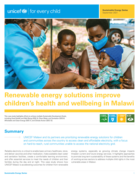
UNICEF Malawi and its partners are prioritizing renewable energy solutions for children and communities across the country to access clean and affordable electricity, with a focus on hard-to-reach, rural communities unable to access the national electricity grid.

Caring for burns patients from the incident scene to definitive treatment can be a complex, resource-consuming process with the potential to overwhelm health system capacity.This document provides practical guidance for building capacity and capability for burns care from clinical, human resources a
...
nd operational perspectives. It is therefore recommended that guidance in this document be applied to any contexts in which the local health system might struggle to cope and require surge support.
more

Early Identification and Early Intervention Services for Young Children with Developmental Delays and Disabilities in Namibia Republic of Namibia Namibia
Regional Consultations Report

Tuberculosis (TB) is among the top ten most common causes of death globally and as a single infectious disease it top among infectious diseases. Furthermore, it is noted as the top causes of death among people infected with the human immunodeficiency virus (HIV). Despite recent decreases in the numb
...
er of notified cases, Namibia still has a high TB burden and is included among the top 30 high-burden TB countries by the World Health Organisation (WHO). In the 2018 Global TB Report, the estimated incidence rate of TB in Namibia was 423/100,000. The same report estimated that 60 people per 100,000 populations died of TB in Namibia, which is a concern, for a disease that is curable and preventable.
more
