
Filter
1986
Text search:
Epidemic
Infectious
Disease
Featured
256
477
Language
Document type
891
382
367
127
111
44
26
24
7
4
2
1
Countries
126
82
80
59
57
48
47
44
42
33
32
31
30
28
28
24
24
23
23
20
19
19
18
18
17
16
16
16
16
15
14
13
11
11
11
10
10
10
9
9
9
8
8
7
7
7
6
5
5
5
5
4
4
4
4
4
3
3
3
3
3
3
3
3
2
2
2
2
2
2
2
2
2
2
2
2
2
2
2
2
2
2
2
2
2
1
1
1
1
1
1
1
1
1
1
1
1
1
1
1
1
1
1
1
1
1
1
1
Authors & Publishers
Publication Years
Category
657
163
119
118
37
30
26
2
Toolboxes
309
210
172
105
75
67
67
64
49
47
45
45
44
38
36
30
29
27
26
25
21
17
11
6
3
1
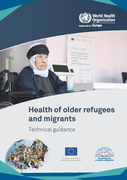
Technical guidance.
This technical guidance aims to inform policy and practice development specifically related to improving the health of older refugees and migrants within the European Union and the larger WHO European Region. Both ageing and migration are in themselves complex multidimensional p
...

At least half of the world’s population does not have full coverage of essential health services. Health expenses push more than 100 million people into extreme poverty each and every year, forcing them into terrible choices that no one should ever have to make: Buy medicine or food? Education or
...
Cовершенствование теоретических знаний и практических навыков по вопросам диагностики и лечения туберкулеза с множественной лекарственной устойчивостью (МЛУ) ми
...
Клинический протокол для Европейского региона ВОЗ
Toolkit
HIV Treatment and Care
The World Drug Report 2022 is aimed not only at fostering greater international cooperation to counter the impact of the world drug problem on health, governance and security, but also, with its special insights, at assisting Member States in anticipating and address-ing threats from drug markets an
...
As a new chapter in the response to the world drug problem begins, UNAIDS calls on countries to adopt the recommendations contained within this report, and to rapidly transform those commitments into laws, policies, services and support that allow people who use drugs to live healthy and dignified l
...
This publication describes an arduous campaign to tackle the use of antimicrobials - specifically antibiotics - in the Danish swine-producing sector thanks to the collaboration between the regulatory sector within the Ministry of Environment and Food, private veterinary practitioners and swine produ
...

Ramped-up cancer services could save 7 million lives over the next decade—and addressing huge service gaps between rich and poor countries is key to success, according to this report.
In 2019, over 90% of high-income countries reported that comprehensive cancer treatment services were available
...

Accessed Febr. 6, 2020

Pregnancy often results in exclusion from clinical trials of antiretroviral (ARV) drugs, resulting in limited data on pharmacokinetics (PK), drug safety, and the efficacy of new ARV drugs in pregnancy and lactation. However, pregnancy, lactation, or the potential for pregnancy should not preclude th
...
22nd edition
Each of the 20 chapters deals with aspects of the UHC journey, dedicated towards an equitable and inclusive national health system that leaves no-one behind. While some authors describe the fundamental changes and practical considerations required to reconfigure the country's health sy
...

Stand 2.10.2020
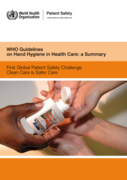
Confronted with the important issue of patient safety, in 2002 the Fifty-fifth World Health Assembly adopted a resolution urging countries to pay the closest possible attention to the problem and to strengthen safety and monitoring systems. In May 2004, the Fifty-seventh World Health Assembly approv
...
ObjetivoEl objetivodel documento es servir de guía de actuación para el manejo casos de COVID-19 en atención primaria.3.Recomendaciones generalesSe recomienda la colocación de información visual (carteles, folletos, etc.) en lugares estratégicosde los centros de atenció
...
Se sabe que las mujeres embarazadas experimentan cambios inmunológicos y fisiológicos que pueden hacerlas más susceptibles a las infecciones respiratorias virales, incluido COVID-19. Varios estudios revelaron que las mujeres embarazadas con diferentes enfermedades resp
...
Groupe de référence du CPI pour la SMSPS dans les situations d'urgence
Kuruluşlararası Daimî Komite (IASC) Acil Durumlarda Ruh Sağlığı ve Psikososyal Destek Referans Grubu
