
Filter
2027
Text search:
drug
adherence
Featured
234
589
Language
1968
29
23
20
7
4
4
2
1
1
1
1
1
1
1
1
1
1
1
1
Document type
1173
328
269
102
73
37
28
7
4
2
1
1
Countries
138
84
77
62
61
61
60
55
47
39
38
34
34
31
30
27
26
25
23
20
19
19
17
16
14
14
13
13
11
11
10
10
9
7
7
7
7
6
6
6
4
4
4
4
4
3
3
3
3
3
3
3
3
3
3
3
3
3
3
2
2
2
2
2
2
2
2
2
1
1
1
1
1
1
1
1
1
1
1
1
1
1
1
1
1
1
1
1
1
1
1
1
1
1
Authors & Publishers
255
119
70
41
39
39
31
30
29
27
26
26
23
18
17
17
16
15
15
15
15
14
14
14
11
11
10
10
9
9
9
9
8
8
8
8
8
8
8
7
7
7
7
7
7
7
6
6
6
6
5
5
5
5
5
5
5
5
5
5
5
5
5
5
5
5
5
5
5
4
4
4
4
4
4
4
4
4
4
4
4
4
4
4
4
4
4
4
4
3
3
3
3
3
3
3
3
3
3
3
3
3
3
3
3
3
3
3
3
3
3
3
3
3
3
3
3
3
3
3
3
3
3
3
3
3
3
3
3
3
3
3
3
3
3
3
2
2
2
2
2
2
2
2
2
2
2
2
2
2
2
2
2
2
2
2
2
2
2
2
2
2
2
2
2
2
2
2
2
2
2
2
2
2
2
2
2
2
2
2
2
2
2
2
2
2
2
2
2
2
2
2
2
2
2
2
2
2
2
2
2
2
2
2
2
2
2
2
2
2
2
2
2
2
2
2
2
2
2
2
2
2
2
2
2
2
2
2
2
2
2
2
2
2
2
2
2
2
2
2
2
2
2
2
2
2
2
2
2
2
2
2
2
2
2
2
2
2
2
2
1
1
1
1
1
1
1
1
1
1
1
1
1
1
1
1
1
1
1
1
1
1
1
1
1
1
1
1
1
1
1
1
1
1
1
1
1
1
1
1
1
1
1
1
1
1
1
1
1
1
1
1
1
1
1
1
1
1
1
1
1
1
1
1
1
1
1
1
1
1
1
1
1
1
1
1
1
1
1
1
1
1
1
1
1
1
1
1
1
1
1
1
1
1
1
1
1
1
1
1
1
1
1
1
1
1
1
1
1
1
1
1
1
1
1
1
1
1
1
1
1
1
1
1
1
1
1
1
1
1
1
1
1
1
1
1
1
1
1
1
1
1
1
1
1
1
1
1
1
1
1
1
1
1
1
1
1
1
1
1
1
1
1
1
1
1
1
1
1
1
1
1
1
1
1
1
1
1
1
1
1
1
1
1
1
1
1
1
1
1
1
1
1
1
1
1
1
1
1
1
1
1
1
1
1
1
1
1
1
1
1
1
1
1
1
1
1
1
1
1
1
1
1
1
1
1
1
1
1
1
1
1
1
1
1
1
1
1
1
1
1
1
1
1
1
1
1
1
1
1
1
1
1
1
1
1
1
1
1
1
1
1
1
1
1
1
1
1
1
1
1
1
1
1
1
1
1
1
1
1
1
1
1
1
1
1
1
1
1
1
1
1
1
1
1
1
1
1
1
1
1
1
1
1
1
1
1
1
1
1
1
1
1
1
1
1
1
1
1
1
1
1
1
1
1
1
1
1
1
1
1
1
1
1
1
1
1
1
1
1
1
1
1
1
1
1
1
1
1
1
1
1
1
1
1
1
1
1
1
1
1
1
1
1
1
1
1
1
1
1
1
1
1
1
1
1
1
1
1
1
1
1
1
1
1
1
1
1
1
1
1
1
1
1
1
1
1
1
1
1
1
1
1
1
1
1
1
1
1
1
1
1
1
1
1
1
1
1
1
1
1
1
1
1
1
1
1
1
1
1
1
1
1
1
1
1
1
1
1
1
1
1
1
1
1
1
1
1
1
1
1
1
1
1
1
1
1
1
1
1
1
1
1
1
1
1
1
1
1
1
1
1
1
1
1
1
1
1
1
1
1
1
1
1
1
1
1
1
1
1
1
1
1
1
1
1
1
1
1
1
1
1
1
1
1
1
1
1
1
1
1
1
1
1
1
1
1
1
1
1
1
1
1
1
1
1
1
1
1
1
1
1
1
1
1
1
1
1
1
1
1
1
1
1
1
1
1
1
1
1
1
1
1
1
1
1
1
1
1
1
1
1
1
1
1
1
1
1
1
1
1
1
1
1
1
1
1
1
1
1
1
1
1
1
1
1
1
1
1
1
1
1
1
1
1
1
1
1
1
1
1
1
1
1
1
1
1
1
1
1
1
1
1
1
1
1
1
1
1
1
1
1
1
1
1
1
1
1
1
1
1
1
1
1
1
1
1
1
1
1
1
1
1
1
1
1
1
1
1
1
1
1
1
1
1
1
1
1
1
1
1
1
1
1
1
1
1
1
1
1
1
1
1
1
1
1
1
1
1
1
1
1
1
1
1
1
1
1
1
1
1
1
1
1
1
1
1
1
1
1
1
1
1
1
1
1
1
1
1
1
1
1
1
1
1
1
1
1
1
1
1
1
1
1
1
1
1
1
1
1
1
1
1
1
1
1
1
1
1
1
1
1
1
1
1
1
1
1
1
1
1
1
1
1
1
1
1
1
1
1
1
1
1
1
1
1
1
1
1
1
1
1
1
1
1
1
1
1
1
1
1
1
1
1
1
1
1
1
1
1
1
1
1
1
1
1
1
1
1
1
1
1
1
1
1
1
1
1
1
1
1
1
1
1
1
1
1
1
1
1
1
1
1
1
1
1
1
1
1
1
1
1
1
1
1
1
1
1
1
1
1
1
1
1
1
1
1
1
1
1
1
1
1
1
1
1
1
1
1
1
1
1
1
1
1
1
1
1
1
1
1
1
1
1
1
1
1
1
1
1
1
1
1
1
1
1
1
1
1
1
1
1
1
1
1
1
1
1
1
1
1
1
1
1
1
1
1
1
1
1
1
1
1
1
1
1
1
1
1
1
1
1
1
1
1
1
1
1
1
1
1
1
1
1
1
1
1
1
1
1
1
1
1
1
1
1
1
1
1
1
1
1
1
1
1
1
1
1
1
1
1
1
1
1
1
1
1
1
1
1
1
1
1
1
1
1
1
1
1
1
1
1
1
1
1
1
1
1
1
1
1
1
1
1
1
1
1
1
1
1
1
1
1
1
1
1
1
1
1
1
1
1
1
1
1
1
1
1
1
1
1
1
1
1
1
1
1
1
1
1
1
1
1
1
1
1
1
1
1
1
1
1
1
1
1
1
1
1
1
1
1
1
1
1
1
1
1
1
1
1
1
1
1
1
1
1
1
1
1
1
1
1
1
1
1
1
1
1
1
1
1
1
1
1
1
1
1
1
1
1
1
1
1
1
1
1
1
1
1
1
1
1
1
1
1
1
1
1
1
1
1
1
1
1
1
1
1
1
1
1
1
1
1
1
1
1
1
1
1
1
1
1
1
1
1
1
1
1
1
1
1
1
1
1
1
1
1
1
1
1
1
1
1
1
1
1
1
1
1
1
1
1
1
1
1
1
1
1
1
1
1
1
1
1
1
1
1
1
1
1
1
1
1
1
1
1
1
1
1
1
1
1
1
1
1
1
1
1
1
1
1
1
1
1
1
1
1
1
1
1
1
1
1
1
1
1
1
1
1
1
1
1
1
1
1
1
1
1
1
1
1
1
1
1
1
1
1
1
1
1
1
1
1
1
1
1
1
1
1
1
1
1
1
1
1
1
1
1
1
1
1
1
1
1
1
1
1
1
1
1
1
1
1
1
1
1
1
1
1
1
1
1
1
1
1
1
1
1
1
1
1
1
1
1
1
1
1
1
1
1
1
1
1
1
1
1
1
1
1
1
1
1
1
1
1
1
1
1
1
1
1
1
1
1
1
1
1
1
1
1
1
1
1
1
1
1
1
1
1
1
1
1
1
1
1
1
1
1
1
1
1
1
1
1
1
1
1
1
1
1
1
1
1
1
1
1
1
1
1
1
1
1
1
1
1
1
1
1
1
1
1
1
1
1
1
1
1
1
1
1
1
1
1
1
1
1
1
1
1
1
1
1
1
1
1
1
1
1
1
1
1
1
1
1
1
1
1
1
1
1
1
1
1
1
1
1
1
1
1
1
1
1
1
1
1
1
1
1
1
1
1
1
1
1
1
1
1
1
1
1
1
1
1
1
1
Publication Years
484
1346
188
8
1
Category
872
205
114
70
52
48
23
Toolboxes
333
177
157
89
77
62
61
56
44
43
21
20
16
16
13
11
10
10
9
5
5
4
4
3
2
Guidance on temporary malaria control measures in Ebola-affected countries
World Health Organization
(2014)
Malaria is a prevalent cause of febrile illnesses in areas with high transmission, and its clinical presentation overlaps with initial signs of Ebola disease. For this reason, the effectiveness of the Ebola response in Guinea, Liberia and Sierra Leone can be optimized through the deployment of targe
...
ted measures to reduce the number of fever cases due to malaria
WHO recommends specific adaptations in the diagnosis of malaria and in LLIN distribution in countries heavily affected by the Ebola outbreak and mass drug administration using artemisinin-based combination therapies (ACTs) in areas where transmission of both Ebola and malaria is high and access to malaria treatment is very low.
more
Clinical guideline, Methods, Evidence and Recommendations
In this guideline the following is covered: information needs of people with chronic hep
titis B and their carers; where children, young people and adults with chronic hepatitis B a-
should be assessed; assessment of liver disease, includi
...
ng the use of non-invasive tests and genotype testing; criteria for offering antiviral treatment; the efficacy, safety and cost effectiveness of currently available treatments; selection of first-line therapy; management of treatment failure or drug resistance; prophylactic treatment during im-
munosuppressive therapy; and monitoring for treatment response
more
Barriers to HIV Services and Treatment for Persons with Disabilities in Zambia
The 80-page report documents the obstacles faced by people with disabilities in both the community and healthcare settings. These include pervasive stigma and discrimination, lack of access to inclusive HIV prevention ed
...
ucation, obstacles to accessing voluntary testing and HIV treatment, and lack of appropriate support for adherence to antiretroviral treatment. The report also describes the sexual and intimate partner violence women and girls with disabilities face, and the need for the government and international donors to do more to ensure inclusive and accessible HIV services.
more

The most frequent health problems of newly arrived refugees and migrants include accidental injuries, hypothermia, burns, gastrointestinal illnesses, cardiovascular events, pregnancy- and delivery-related complications, diabetes and hypertension. Female refugees and migrants frequently face specific
...
challenges, particularly in maternal, newborn and child health, sexual and reproductive health, and violence. The exposure of refugees and migrants to the risks associated with population movements – psychosocial disorders, reproductive health problems, higher newborn mortality, drug abuse, nutrition disorders, alcoholism and exposure to violence – increase their vulnerability to noncommunicable diseases (NCDs)
more
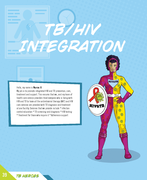
TB heroes
Hello, my name is Nurse X
My job is to promote integrated HIV and TB prevention, care, treatment and support. This ensures that we, and my team of health care service providers treat everyone who is living with HIV and TB to have all the antiretroviral therapy (ART) and HIV care services
...
are provided with TB diagnosis and treatment at one facility. Services that we provide include * Infection control education * TB screening and diagnosis * HIV testing * Treatment for those who require it * Adherence support
Accessed November 2017
more
Fever Diagnostic Technology Landscape
recommended
1st edition.
Unitaid’s report describes a slate of new devices that can more efficiently identify dangerously ill children so that they can be treated immediately. These tools make it easier to recognize danger signs, and support integrated approaches to reducing childhood deaths from the three
...
greatest childhood killers: malaria, pneumonia and diarrhoea.
The report also highlights tests that can determine whether or not a child has an illness that can be treated with antibiotics. Viral infections are a common cause of childhood fevers, but cannot be cured with antibiotics. Although many children seeking care at clinics have fever, three-quarters by some estimates, only a small fraction of those have an illness that can be treated with an antimalarial or antibiotic drug
more
These National Operational Guidelines for Viral Load Testing detail how routine viral load testing will be implemented at the facility level in India. They include frequency and interpretation of monitoring, sample collections, storage and transportation, receipt of results,
...
adherence counseling, and reporting requirements. Roles and responsibilities are outlined as well as turnaround time requirements.
more

The mandate of the National Tuberculosis Control Programme is to provide leadership and stewardship to accelerate intense and coordinated efforts to reduce the adult TB burden of 290 per 100,000 population recently established in the 2013 National TB Prevalence Survey. Other key challenges are low T
...
B case notification, unacceptably high TB death rates, low antiretroviral therapy (ART) coverage among TB/HIV patients and low drug-resistant notification and treatment.
more
This publication seeks to describe the best treatments and practices based on the scientific evidence available at the time of writing as evaluated by the authors and may change as a result of new research. Readers need to apply this knowledge to patients in accordance with the guidelines and laws o
...
f their country of practice. Some medications may not be available in some countries and readers should consult the specific drug information since not all the unwanted effects of medications are mentioned.
more

Antibiotics have been a critical public health tool since the discovery of Penicillin in 1928, saving the lives of millions of people around the world. In developing country like ours, where the burden of treatable disease is very high and access to health facilities and laboratories is difficult, a
...
ntibiotics have long acted as miracle drugs. Today, however, the emergence of drug
resistance in bacteria is reversing the miracles of the past eighty years, with drug choices for the treatment of many bacterial infections becoming increasingly limited, expensive, and in some cases, nonexistent. Diseases previously regarded as relatively easy to manage are much harder to treat as doctors must use “last-resort” drugs that are more costly, take longer to work
and are often unavailable or unaffordable in developing countries. Moreover, regular prescription of antibiotics, random treatment, over the counter sales, inadequate dosage, inclusion of antibiotics in animal feeds and agriculture has contributed equally to emergence of antibiotics resistance as silent epidemic within the country.
more
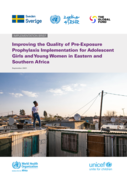
Adolescent girls and young women (AGYW) remain disproportionately affected by HIV in Eastern and Southern Africa (ESA), with 26 per cent of new infections attributed to this population. AGYW face many personal, social and structural barriers to access, uptake and use of traditional HIV prevention me
...
thods. Oral Pre-exposure Prophylaxis (PrEP) is proven to be highly effective as an additional prevention choice for reducing the risk of HIV acquisition, including for AGYW. Successful uptake and adherence to PrEP is critical in its effectiveness as an HIV prevention method, however, the current demand for PrEP by AGYW is low with suboptimal adherence.
Within the ESA region, there is currently great impetus to address these challenges and scale up PrEP for AGYW. A critical aspect of this is to leverage the learnings and evidence from implementation of how to improve the demand and quality of PrEP programming for this population. Improving the Quality of Pre-Exposure Prophylaxis Implementation for Adolescent Girls and Young Women in Eastern and Southern Africa examines the current efforts in the region to accelerate and scale up evidence-based PrEP delivery platforms. The implementation brief provides current knowledge and builds on WHO guidance to provide key considerations for implementation, including driving demand and improving quality, as well as focus on wider combination prevention and integration agendas.
more
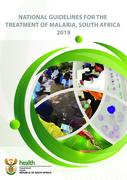
National Guidelines for the Treatment of Malaria - 2019
South African Malaria Elimination Committee (SAMC)
National Department of Health South Africa
(2019)
CC
These guidelines are based on the 3rd Edition of the WHO Guidelines (Published 2015) World Health Organization’s Guidelines for the treatment of malaria. Additional literature surveys have been undertaken. Factors that were considered in the choice of therapeutic options included effectiveness, sa
...
fety, and impact on malaria transmission and on the emergence and spread of antimalarial drug resistance. On-going surveillance is critical given the spread of artemisinin resistance in Southeast Asia, although not yet confirmed anywhere in Africa. The guidelines on the treatment of malaria in South Africa aim to facilitate effective, appropriate and timeous treatment of malaria, thereby reducing the burden of this disease in our communities. This is essential to further reduce the malaria case fatality rates currently recorded in South Africa, to decrease malaria transmission and to limit resistance to antimalarial drugs.
more
Nat Commun 9, 5370 (2018). https://doi.org/10.1038/s41467-018-07804-8. Mycobacterium ulcerans is the causative agent of Buruli ulcer, a neglected tropical skin disease that is most commonly found in children from West and Central Africa. Despite the severity of the infection, therapeutic options are
...
limited to antibiotics with severe side effects. Here, we show that M. ulcerans is susceptible to the anti-tubercular drug Q203 and related compounds targeting the respiratory cytochrome bc1:aa3. While the cytochrome bc1:aa3 is the primary terminal oxidase in Mycobacterium tuberculosis, the presence of an alternate bd-type terminal oxidase limits the bactericidal and sterilizing potency of Q203 against this bacterium. M. ulcerans strains found in Buruli ulcer patients from Africa and Australia lost all alternate terminal electron acceptors and rely exclusively on the cytochrome bc1:aa3 to respire. As a result, Q203 is bactericidal at low dose against M. ulcerans replicating in vitro and in mice, making the drug a promising candidate for Buruli ulcer treatment.
more
Mem Inst Oswaldo Cruz, Rio de Janeiro, Vol. 117: e200460, 2022
Integrating the multiple dimensions of the problem into a coherent approach adapted to field realities and needs represents an immense challenge, but the payoff is more effective and sustainable experiences, with higher social awareness
...
, increased case detection and follow-up, improved adherence to care, and integrated participation of various actors from multiple action levels. Information, Education, and Communication (IEC) initiatives have great potential for impact in the implementation of multidimensional programs of prevention and control successfully customised to the diverse and complex contexts where Chagas disease persists.
more
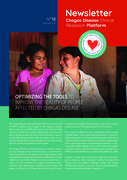
To support its R&D activities on Chagas disease, DNDi launched the Chagas Clinical Research Platform (CCRP). The platform brings together partners, experts, and stakeholders to provide support for evaluation and development of new treatments for Chagas disease. The patient-centred platform aims to f
...
acilitate clinical research, provide a forum for technical discussions, develop a critical mass of expertise, and strengthen institutional research capacities. In addition, it identifies and reviews priority needs, works towards standardization of methodology to assess drug efficacy and reviews alternatives for using current approved drugs (new schemes, doses, combination) and special scenarios (resistance).
more
This chapter discusses the antibacterial treatment of leprosy infections. Antibiotic treatment is
a key component of leprosy treatment, as it is vital to prevent the progression of the infection.
Treatment with rifampin and other antibiotics is highly effective and cures 98% of patients with
the
...
leprosy infection. Furthermore, the relapse rate is very low, at about 1% over 5–10 years.
There is little M. leprae drug resistance in leprosy and few reports of multi-drug resistance (1, 2, 3,
4, 5, 6, 7, 8). An antibiotic treatment may take months or years to produce clinical improvement,
especially in patients with an initial high bacterial index (BI).
more

This brief update on tuberculosis (TB) in the African region covers the state of TB in the WHO African region, strategic priorities and targets and the impact of COVID-19 on essential services. This is followed by key figures for the region, the role of WHO in country support and, recognizing the im
...
portance of diagnosis and drug susceptibility testing, a focus onstrengthening laboratory networks and the regional laboratory and diagnostic objectives. A brief update of the state of the science and how this is funded across the African region is provided, before closing with challenges and opportunities,strategic directions and a brief discussion of funding concerns. Discussions around the drivers of the disease, and issues of the poverty, inequality and stigma that continue to plague those living with TB are fully recognized, but are outside the scope of this report.
more
Zambia has completed the implementation of the National TB Strategic Plan (2017-2021) that set in motion the TB elimination agenda in Zambia through coordinated and accelerated TB response. During this period, the National TB and Leprosy Programme (NTLP) registered tremendous success.
The NTLP is
...
poised to attain the ambitious goal pronounced by the government of eliminating TB by 2030, in line with the Sustainable Development Goals (SDGs) and the World Health Organization End TB Strategy. The programme exponentially increased TB notifications from as low as 35,922 people with TB in 2018 to 40,726 in 2020 and in 2021 the TB notifications rose to 50,825 (a 25% increase against 2020 performance). The NTLP also registered incredible success in sustaining high TB Preventive Treatment (TPT) initiations among persons living with HIV and a high TB treatment success rate among drug-susceptible TB cases. New and relapse TB notifications in children below 15 years increased by 43%, from 2,724 in 2020 to 3,890 in 2021. TB notifications ratio between children aged 0-4 and 5-14 was 0.9, an improvement from what we achieved in 2018 (the ratio was 0.7). The proportion of TB patients who are HIV positive continued to decrease, reaching 34% in 2021 from 39% in 2020. Sustained increases in TB notifications, treatment success rate, and TPT initiations have resulted in a rapid decrease in the TB incidence rate that reached 307 per 100,000 population in 2021 against a rate of 391 in 2015.
more

Hepatitis B (HBV) infection is a major public health problem and cause of chronic liver disease.
The 2024 HBV guidelines provide updated evidence-informed recommendations on key priority topics. These include expanded and simplified treatment criteria for adults but now also for adolescents; expa
...
nded eligibility for antiviral prophylaxis for pregnant women to prevent mother-to-child transmission of HBV; improving HBV diagnostics through use of point-of-care HBV DNA viral load and reflex approaches to HBV DNA testing; who to test and how to test for HDV infection; and approaches to promote delivery of high-quality HBV services, including strategies to promote adherence to long-term antiviral therapy and retention in care.
The 2024 guidelines include 11 updated chapters with new recommendations and also update existing chapters without new recommendations, such as those on treatment monitoring and surveillance for liver cancer.
more
Guidelines for the management of asthma in adults and adolescents: Position statement of the South African Thoracic Society – 2021 update
Lalloo, U.G.; Kalla, I.S.; Abdool-Gaffar, S. et al.
African Journal of Thoracic and Critical Care Medicine
(2021)
CC
sthma prevalence is increasing worldwide, and surveys indicate that most patients in developed and developing countries, including South Africa, do not receive optimal care and are therefore not well controlled. Standard management guidelines adapted to in-country realities are important to support
...
optimal care. The South African Thoracic Society (SATS) first published a guideline for the management of chronic persistent asthma in 1992, which has subsequently been revised several times.
The main aim of the present document was to revise and update SATS’ statement on the suggested management of chronic asthma, based on the need to promote optimal care and control of asthma, together with the incorporation of new concepts and drug developments. This revised document reinforces optimal care and incorporates the following primary objectives to achieve the recent advances in asthma care:
• continued emphasis on the use of inhaled corticosteroids (ICS) as the foundation of asthma treatment
• to reduce the reliance on short-acting beta-2 agonist (SABA) monotherapy for asthma symptoms
• to incorporate the evidence and strategy for the use of the combination of an ICS and formoterol for acute symptom relief (instead of a SABA)
• to incorporate the evidence and strategy for the use of as-needed ICS-long-acting beta agonists (LABA) for patients with infrequent symptoms or ‘mild’ asthma
• to incorporate the evidence and strategy for the use of a long-acting muscarinic antagonist (LAMA) in combination with ICS-LABA; and
• to incorporate the evidence and strategy for the use of and management with a biologic therapy in severe asthma.
more
