
Filter
847
Text search:
UNICEF
Supply
Division
Featured
Recommendations
74
New Publications
314
Language
Document type
No document type
545
Studies & Reports
131
Guidelines
82
Manuals
37
Strategic & Response Plan
24
Training Material
10
Fact sheets
9
Situation Updates
6
Resource Platforms
2
Brochures
1
Countries / Regions
Nepal
52
Liberia
42
Kenya
38
Bangladesh
34
Nigeria
31
Uganda
31
Global
30
Myanmar / Burma
27
Sierra Leone
26
India
26
Namibia
18
Ethiopia
15
Ghana
15
Rwanda
14
Congo, Democratic Republic of
13
Senegal
12
Malawi
12
Latin America and the Carribbean
12
Africa
10
Pakistan
9
Ukraine
9
Lesotho
9
Zimbabwe
8
Syria
8
Tanzania
8
Western and Central Europe
8
Philippines
7
South Sudan
7
Zambia
7
Burkina Faso
6
Botswana
6
East and Southern Africa
6
South–East Asia Region
6
Guinea
5
Mali
5
Indonesia
5
Mozambique
5
Yemen
5
West and Central Africa
5
Asia
5
Haiti
4
Afghanistan
4
Middle East and North Africa
4
Western Pacific Region
4
Eastern Europe and Central Asia
4
Côte d’Ivoire / Ivory Coast
3
Cameroon
3
Niger
3
South Africa
3
Brazil
3
Russia
3
Somalia
2
Cambodia
2
Papua New Guinea
2
Benin
2
Sri Lanka
2
Eastern Europe
2
Turkmenistan
2
Togo
1
Jordan
1
Lebanon
1
Thailand
1
China
1
Mauritania
1
Sudan
1
Central African Republic
1
Argentina
1
North Macedonia
1
Serbia
1
Croatia
1
Burundi
1
Madagascar
1
Mexico
1
Other region
1
Bhutan
1
Venezuela
1
Southern Africa
1
Laos
1
Timor Leste/ East Timor
1
Bulgaria
1
Iran
1
Kyrgyzstan
1
Vietnam
1
Japan
1
Portugal
1
Spain
1
Azerbaijan
1
Bosnia and Herzegovina
1
Authors & Publishers
Publication Years
Category
Countries
445
Key Resources
78
Women & Child Health
77
Clinical Guidelines
52
Public Health
33
Capacity Building
14
Pharmacy & Technologies
7
Toolboxes
COVID-19
69
Ebola & Marburg
32
HIV
32
Disability
26
Conflict
26
Caregiver
25
Planetary Health
18
Global Health Education
17
Rapid Response
15
Mental Health
15
Pharmacy
15
AMR
13
Refugee
10
Health Financing Toolbox
10
2.0 Rapid Response
10
Polio
9
Natural Hazards
9
TB
8
NTDs
6
Cholera
5
Malaria
5
Zika
4
NCDs
3
Specific Hazards
1
Social Ethics
1
Almost 25% of deaths worldwide could be prevented if the actions in the compendium were fully implemented
This compendium provides a systematic compilation of published guidance from WHO and other UN organizations on health and environment. Guidance on policies and actions as well as awareness rais
...

Version 4
The purpose of these standard operating procedures (SOPs) is to offer policy guidance and to provide performance standards on how to respond to any type of poliovirus outbreak or event in a timely and effective manner, and specifically, to stop an outbrea
...

Early Identification and Early Intervention Services for Young Children with Developmental Delays and Disabilities in Namibia Republic of Namibia Namibia
Regional Consultations Report

The combined effects from ambient (outdoor) air pollution and indoor (household, in particular) air pollution cause approximately 7 million premature deaths every year, largely as a result of increased mortality from stroke, IHD, COPD, lung cancer and acute respiratory infections (1). Air pollution
...

No publication year indicated
The specific objectives of the plan are to:
- Scale up evidence-based, cost effective interventions through effective strategies within a HSS approach and provide equitable coverage with quality.
- Reduce neonatal mortality by improved home-based newborn ...
The specific objectives of the plan are to:
- Scale up evidence-based, cost effective interventions through effective strategies within a HSS approach and provide equitable coverage with quality.
- Reduce neonatal mortality by improved home-based newborn ...
In 2014, the Ministry of Health (MOH) in Malawi conducted a nationwide assessment of emergency obstetric and newborn care (EmONC) services. This cross-sectional facility-based survey used 10 data collection modules. Data collection began on 23rd September 2014 and concluded on 17th October 2014, in
...

Evidence for improving community health supply chains from Ethiopia, Malawi and Rwanda. Journal of Global Health vol. 4 No.2 (2014)
The WHO/UNICEF JMP report, WASH in Health Care Facilities, is the first comprehensive global assessment of water, sanitation and hygiene (WASH) in health care facilities. It also finds that 1 in 5 health care facilities has no sanitation service*, i
...
Procurement and supply management activities are fundamental to consistent and reliable access to essential medicines and health products. To reduce the impact of CVD, action needs to be taken to improve prevention, diagnosis, care and management of
...
This guide is intended for people involved in the management and operation of small- to mediumsized organized water supply systems. The content has been developed with particular consideration for operational-level personnel with responsibility for
...
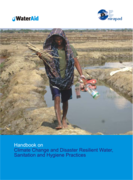
WaterAid is an international NGO that provides assistance for safe water supply,
sanitation and hygiene practice in the poor communities in the world.

Democratic dispensation in 1994 created a political and social platform that reshaped life in South Africa. There was a surge in common belief that the inequity and wrong of Apartheid should and could be rectified. Equity of access to water and sanitation were obvious targets for improvement. In 199
...

Long-term polio vaccine security – the timely, sustained, and uninterrupted supply of suitable types of affordable, quality-assured polio vaccines – is essential in the global effort to achieve and maintain a polio free world. However, fragmente
...

Nationally, Senegal met the MDG target for water supply access. It did this by engaging the public and private sectors to effectively invest and report on investments. It focused on larger population centers, less on remote regions of the country. I
...
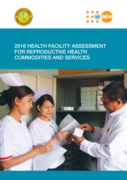
A nationwide survey of a representative sample of health facilities across public health services in all states and regions of Myanmar has been undertaken since 2014 to track Reproductive Health Commodity Security (RHCS) indicators, such as the availability of reproductive health (RH) commodities; t
...
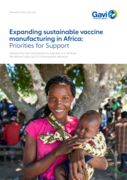
Despite high regional demand for vaccines valued at over US$ 1 billion annually, Africa’s vaccine industry provides only 0.1% of global supply. Vaccine inequity and hoarding at the start of the pandemic, which resulted in delays in obtaining COVID
...
A cross-sectional descriptive study design covering all states and regions was undertaken to:
1) To assess availability, utilization and supply chain management system for RH commodities at different levels of health facilities,
2) To ass ...
1) To assess availability, utilization and supply chain management system for RH commodities at different levels of health facilities,
2) To ass ...
