
Filter
264
Text search:
UN
Country
Team
in
Colombia
Featured
Recommendations
24
New Publications
56
Language
Document type
No document type
141
Studies & Reports
71
Guidelines
14
Strategic & Response Plan
14
Manuals
13
Training Material
6
Situation Updates
3
Resource Platforms
1
Infographics
1
Countries / Regions
Global
23
Latin America and the Carribbean
22
Venezuela
17
Colombia
14
Syria
8
Ethiopia
6
Congo, Democratic Republic of
4
Ghana
4
Uganda
4
Yemen
4
Liberia
3
Nigeria
3
Haiti
3
Philippines
3
India
3
Somalia
3
Nepal
3
South Sudan
3
Afghanistan
3
Thailand
3
Indonesia
3
Mozambique
3
Central African Republic
3
Brazil
3
Mexico
3
Africa
3
Sierra Leone
2
Kenya
2
Cambodia
2
China
2
South Africa
2
Bangladesh
2
Argentina
2
Myanmar / Burma
2
Chile
2
Eastern Europe
2
Iran
2
Guinea
1
Burkina Faso
1
Senegal
1
Mali
1
Morocco
1
USA
1
Zimbabwe
1
Iraq
1
Lebanon
1
Zambia
1
Tanzania
1
Rwanda
1
Malawi
1
Sudan
1
Peru
1
North Macedonia
1
Hungary
1
Ukraine
1
Bolivia
1
South–East Asia Region
1
Western Pacific Region
1
Western and Central Europe
1
Asia
1
Palestine
1
Russia
1
Estonia
1
Kyrgyzstan
1
Georgia
1
Jamaica
1
Norway
1
Portugal
1
Authors & Publishers
Publication Years
Category
Countries
51
Key Resources
32
Women & Child Health
20
Public Health
16
Clinical Guidelines
12
Capacity Building
8
Annual Report MEDBOX
1
Pharmacy & Technologies
1
Toolboxes
Mental Health
36
COVID-19
31
Disability
17
Conflict
15
HIV
15
Planetary Health
14
Refugee
12
NTDs
11
Zika
8
TB
7
Natural Hazards
5
Global Health Education
4
AMR
4
Health Financing Toolbox
4
Rapid Response
3
Specific Hazards
3
Caregiver
3
NCDs
3
Malaria
3
Ebola & Marburg
2
Pharmacy
2
2.0 Rapid Response
1
This training and guidance has been developed to provide an in-depth understanding on what it means to respect legal capacity in mental health and related areas as well as concrete strategies to ens
...
In its report from 2014, the Working Group outlines the various factors influencing vaccine acceptance or refusal, and what can be done to create social norms around vaccine acceptance and to encourage the general public regarding the necessity of v
...
This training and guidance module addresses the use of coercive and violent practices in mental health and related services with a particular focus on seclusion and restraint. It aims to promote a greater understanding of why these practices are use
...
There is a substantial and ever-increasing unmet need for rehabilitation worldwide, which is particularly profound in low- and middle
-income countries. The availability of accessible and affordable rehabilitation is necessary for many people with
...
The Scientific Conceptual Framework for Land Degradation Neutrality (LDN) provides a scientific foundation for understanding, implementing and monitoring LDN. It has been designed to create a bridge between the vision and the practical implementation of LDN, by defining LDN
...

Every year, nearly 250 million people move across borders temporarily or permanently for a job opportunity, studying, to flee a crisis back home, or for other reasons. Another 750 million move for similar reasons within the borders of their countries. With the understanding that human mobility affec
...
The report offers an overview of the progress the humanitarian sector has made and the obstacles it has faced over the past 10 years. Accountability is no longer just a fashionable term, there is now a shared understanding of what it takes to be accountable. From changes at policy level, to concrete
...
The Guidelines for the Diagnosis, Treatment and Prevention of Leprosy provide state-of-the-art knowledge and evidence on leprosy diagnosis, treatment and prevention based on a public health approach in endemic countries. The target audience of this
...
The chapter Fostering Health Systems’ Monitoring to Better Serve Older Populations is part of the publication series entitled Decade of Healthy Aging: Situation and Challenges. The publications are designed to favor the prioritization of effective actions at the local level as well as the monitori
...
An applied approach to the training of trainers who, in turn,
train teams to implement psychosocial and mental health
interventions in developing countries affected by emergencies.
The film
On
...

Global Report on Food Crises 2023
recommended
The Global Report on Food Crises (GRFC) 2023 highlights that the number of people experiencing high levels of acute food insecurity and requiring urgent food and livelihood assistance increased for the fourth consecutive year in 2022. Over a quarter
...
This report presents the results of the official United Nations estimates and projections of urban and rural populations for 233 countries and areas of the world and for close to 1,900 urban settlements with 300,000 inhabitants or more in 2018, as p
...
The magnitude of urban disasters, high population densities, and a complex social, political and institutional environment has challenged the manner in which humanitarian agencies are used to working. Humanitarian agencies are now grappling with how
...
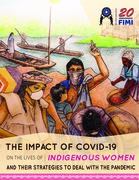
The International Forum of Indigenous Women (IIWF) has prepared this report in order to have a
document for analysis and systematization of the impacts of the COVID-19 pandemic on the lives
of Indigenous Women, and to identify the strategies promo
...
Crisis Group’s Watch List identifies ten countries or regions at risk of deadly conflict or escalation thereof in 2021. In these places, early action, driven or supported by the EU and its member
...
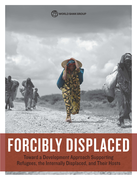
The report depicts the reality of forced displacement as a developing world crisis with implications for sustainable growth: 95 percent of the displaced live in developing countries and over half are in
...
This tool is a living document that provides guidance on good partnership practices that promote strong relationships between civil society organizations and government representatives on engaging men and boys in gender equality and sexual
...
The second edition of the WHPCA Global Atlas of Palliative Care was launched during World Hospice & Palliative Care Day 10 October. The Atlas is an update of the original WHPCA/WHO Global Atlas of Palliative care at the end of life published in 2014
...
Cervical intraepithelial neoplasia (CIN) is a premalignant lesion that may exist at any one of three stages: CIN1, CIN2, or CIN3. If left untreated, CIN2 or CIN3 (collectively referred to as CIN2+) can progress to cervical cancer. Instead of screening and diagnosis by the standard sequence of cytolo
...

The COVID-19 HEalth caRe wOrkErs Study (HEROES): Regional Report from the Americas is a multicenter prospective cohort study to assess the impact of the COVID-19 pandemic on the mental health of health care workers in 26 countries on four continents
...
