
Filter
263
Text search:
Pan
American
Health
Organization
(PAHO)
Featured
Recommendations
20
New Publications
60
Language
Document type
No document type
93
Studies & Reports
59
Guidelines
40
Manuals
16
Fact sheets
16
Strategic & Response Plan
15
Situation Updates
8
Training Material
4
Infographics
4
Brochures
3
Resource Platforms
3
Online Courses
1
Videos
1
Countries / Regions
Latin America and the Carribbean
63
Global
14
Brazil
12
Venezuela
8
Haiti
7
Paraguay
7
Colombia
6
Argentina
4
Mozambique
3
Peru
3
Bolivia
3
Angola
3
Bangladesh
2
Ecuador
2
Ghana
1
Zambia
1
Syria
1
Ukraine
1
Honduras
1
Myanmar / Burma
1
Yemen
1
South–East Asia Region
1
Asia
1
Africa
1
Eastern Europe
1
Russia
1
Estonia
1
Iran
1
North America
1
Portugal
1
Spain
1
Authors & Publishers
Publication Years
Category
Countries
60
Clinical Guidelines
23
Women & Child Health
23
Key Resources
20
Public Health
16
Capacity Building
3
Pharmacy & Technologies
2
Toolboxes
COVID-19
37
NTDs
26
Zika
21
Mental Health
19
HIV
15
Planetary Health
11
Caregiver
10
NCDs
10
Rapid Response
8
TB
7
AMR
6
Cholera
5
Natural Hazards
5
Global Health Education
5
Health Financing Toolbox
5
Refugee
4
2.0 Rapid Response
4
Conflict
3
Malaria
3
Disability
2
Typhoon
2
Specific Hazards
2
Pharmacy
2
Ebola & Marburg
1
Polio
1
Social Ethics
1
In 2005, the World Health Organization (WHO) Member States adopted the revised International
Health Regulations (IHR) (2005). The
...
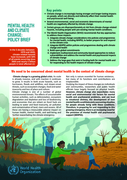
We need to be concerned about mental health in the context of climate change

Health communication has proven to play a crucial role in addressing diseases such as dengue, Zika and chikungunya, for which there are no definitive or easily accessible vaccines. In this context, this discipline becomes a fundamental tool to promo
...
2nd edition. These guidelines include several notable changes from the first edition. For cutaneous leishmaniasis, ketoconazole has been removed from the list of treatment options; the number of Leishmania species for which there is strong evidence for the efficacy of miltefosine has increased from
...

A survey was conducted in countries in all six WHO regions and focused on the building blocks that are considered prerequisites to combat antimicrobial resistance: a comprehensive national plan, laboratory capacity to undertake surveillance for resistant microorganisms, access to safe, effective ant
...
This guidance is intended to be used by programme managers following the decision to introduce human papillomavirus (HPV) virological testing as a screening assay in their national cervical cancer prevention and control programme. The guidance includes a step-by-step process to be followed after the
...

This publication aims to provide updated guidance on the specific use of yellow fever laboratory assays in the context of surveillance to be used across the Global Yellow Fever Laboratory Network for disease surveillance. In the recent years, new commercial assays became available and are now recomm
...
IPCAT2 will assist countries to determine the core components already in place, that is, existing strengths, and to identify gaps or weaknesses to guide action planning. IPCAT2 corresponds to the six core component recommendations of the guidelines targeted at the national level.
It is very impor
...
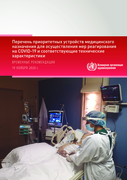
23 February 2021
This document describes the medical devices required for the clinical management of COVID-19, selected and prioritized according to the latest available evidence and interim guidelines. This includes: oxygen therapy, pulse oximeters, patient monitors, thermometers, infusion and suc
...

Доклад Секретариата по теме Деменция
The World Health Organization organized a Consultation of National Leprosy Programme managers, partners and affected persons to discuss the draft Global Leprosy Strategy, 2021--2030. This virtual ev
...
Updated 10 August 2020
This document presents an essential medicines list (EML) to manage patients in intensive care units (ICUs) with suspected or confirmed COVID-19 diagnosis, which includes active ingredients with dosage form and concentration, and are preferably in the WHO Model Lists of Essent
...
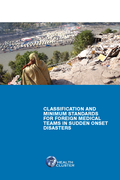
The document introduces a simple classification, minimums standards and a registration form for Foreign Medical Teams (FMTs) that may provide surgical and trauma care arriving within the aftermath of a sudden onset disaster. These can serve as tools to improve the coordination of the foreign medical
...
WHO would like to express its gratitude and appreciation to all Member States that provided information to the WHO survey on policies and activities at the national level in the area of antimicrobial resistance. The contribution of staff in WHO Regional and Country Offices has been invaluable: in ga
...
The two-year impact report for the Access to COVID-19 Tools (ACT) Accelerator details impact, case studies and timelines of key milestones for the Diagnostics, Therapeutics and Vaccines pillars, as well as the Health Systems and Response Connector.

This fourth annual report monitors global progress towards the 2023 target for global elimination of industrially produced trans-fatty acids (TFA), highlighting achievements during the past year (October 2021 – September 2022). Countries are responding to the World
...
