
Filter
237
Text search:
Nursing
Council
of
Kenya
Featured
Recommendations
17
New Publications
46
Language
Document type
No document type
114
Studies & Reports
53
Guidelines
26
Manuals
19
Strategic & Response Plan
12
Training Material
5
Situation Updates
5
Fact sheets
2
Brochures
1
Countries / Regions
Kenya
51
Uganda
11
Africa
11
South Africa
10
Nigeria
9
Global
8
Tanzania
7
Ethiopia
6
Malawi
6
Zimbabwe
4
India
4
Rwanda
4
Zambia
3
Botswana
3
Ghana
2
Pakistan
2
Namibia
2
Eswatini/ Swaziland
2
Lesotho
2
East and Southern Africa
2
West and Central Africa
2
South–East Asia Region
2
Russia
2
Sierra Leone
1
Liberia
1
Senegal
1
Congo, Democratic Republic of
1
Guinea-Bissau
1
Somalia
1
Nepal
1
Afghanistan
1
Syria
1
Indonesia
1
Bangladesh
1
Mozambique
1
Ukraine
1
Colombia
1
Angola
1
Myanmar / Burma
1
Yemen
1
Latin America and the Carribbean
1
Eastern Europe
1
Southern Africa
1
Canada
1
Tajikistan
1
Authors & Publishers
Publication Years
Category
Countries
108
Clinical Guidelines
17
Public Health
16
Women & Child Health
12
Key Resources
9
Capacity Building
6
Pharmacy & Technologies
1
Toolboxes
Caregiver
27
Mental Health
20
HIV
19
AMR
17
TB
8
Global Health Education
8
Disability
7
COVID-19
6
Refugee
4
Social Ethics
4
Pharmacy
4
NTDs
4
Ebola & Marburg
3
Conflict
2
Rapid Response
2
Specific Hazards
2
Planetary Health
2
Cholera
1
Polio
1
Natural Hazards
1
Health Financing Toolbox
1
NCDs
1
2.0 Rapid Response
1

Antimicrobial resistance (AMR) is an important public health concern shared by developed and developing countries. In developing countries the burden of infectious diseases is greater and exacerbated by limited access to, and availability and afford
...
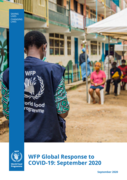
The COVID-19 pandemic is a multiplier of vulnerability, compounding threats to food insecurity, while exposing weaknesses in food and health systems. It is severely undermining the capacity of commu
...

This document adopts a health determinants framework for examining the evidence related to women’s poor mental health. From this perspective, public policy including economic policy, socio-cultural and environmental factors, community and social support, stressors and life events, personal behavio
...
Recommendations, resources and references
A publication of the Southern African HIV Clinicians Society
The infectious disease burden in India is among the highest in the world. A large amount of antibiot-ics are consumed in fighting infections, some of them saving lives, but every use adding to antib
...

Every year, an estimated 15 million babies are born preterm – before 37 weeks of pregnancy. That is more than 1 in 10 live births. Approximately 1 million children die each year worldwide due to complications from their early birth. Those that sur
...

Antibiotics and other antimicrobial agents are invaluable life savers, particularly in resource-limited countries where infectious diseases are abundant. Both uncomplicated and severe infections are potentially curable as long as the aetiological agents are susceptible to the
...
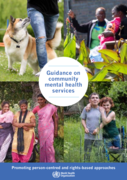
The WHO Guidance on community mental health services: Promoting person-centred and rights-based approaches document is part of the WHO Guidance and technical packages on community mental health services set
...
The WHO Guidance on community mental health services: Promoting person-centred and rights-based approaches document is part of the WHO Guidance and technical packages on community mental health services set
...
national programmes for occupational health and safety for health workers: lessons learned from countries: summary report of the WHO online workshop, 15 July 2020

Poor quality health services are holding back progress on improving health in countries at all income levels.
Today, inaccurate diagnosis, medication errors, inappropriate or unnecessary treatment, inadequate or unsafe clinical facilities or practices, or providers who lack adequate training an ...
Today, inaccurate diagnosis, medication errors, inappropriate or unnecessary treatment, inadequate or unsafe clinical facilities or practices, or providers who lack adequate training an ...
Internally displaced children are twice invisible in global and national data. First, because internally displaced people (IDPs) of all ages are often unaccounted for. Second, because age-disaggregation of
...
Submitted to the US Agency for International Development by the
Systems for Improved Access to Pharmaceuticals and Services (SIAPS) Program.
This manual provides a framework to identify problems and design interventions to improve access to and use of
...

This report makes the case for a major new initiative—to rapidly recruit, train and deploy 2 million community health workers in Africa. Drawing on a vast body of evidence and substantial regional experience, the report shows how community health
...
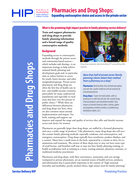
this Service Delivery brief provides evidence-based strategies that can help support drug shops and pharmacies in providing a wider variety of family planning methods and information. Evidence shows that with training and support, pharmacy and drug
...

The WHO Guidance on community mental health services: Promoting person-centred and rights-based approaches document is part of the WHO Guidance and technical packages on community mental health services set
...
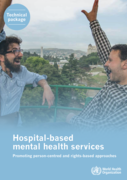
The WHO Guidance on community mental health services: Promoting person-centred and rights-based approaches document is part of the WHO Guidance and technical packages on community mental health services set
...
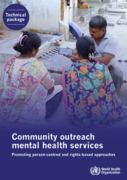
The WHO Guidance on community mental health services: Promoting person-centred and rights-based approaches document is part of the WHO Guidance and technical packages on community mental health services set
...

The WHO Guidance on community mental health services: Promoting person-centred and rights-based approaches document is part of the WHO Guidance and technical packages on community mental health services set
...
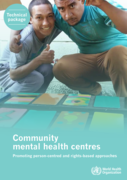
The WHO Guidance on community mental health services: Promoting person-centred and rights-based approaches document is part of the WHO Guidance and technical packages on community mental health services set
...
