
Filter
1756
Text search:
National
Centre
for
Disease
Control,
India
Featured
Recommendations
188
New Publications
491
Language
Document type
No document type
964
Studies & Reports
339
Guidelines
242
Manuals
104
Strategic & Response Plan
49
Fact sheets
22
Training Material
17
Situation Updates
12
Resource Platforms
3
Infographics
3
Online Courses
1
Countries / Regions
India
334
Global
101
Nepal
57
Bangladesh
30
Asia
29
South Africa
24
South–East Asia Region
23
Myanmar / Burma
22
Nigeria
19
Kenya
16
Africa
16
Western and Central Europe
14
Malawi
13
Tanzania
12
Ethiopia
11
Uganda
9
Pakistan
9
Syria
9
Sierra Leone
8
Liberia
8
Philippines
8
Namibia
8
Thailand
7
Ukraine
7
Latin America and the Carribbean
7
Russia
7
Indonesia
6
Mozambique
6
Eastern Europe
6
Zambia
5
China
5
Rwanda
5
Guinea
4
Senegal
4
Ghana
4
Zimbabwe
4
Haiti
4
Afghanistan
4
Cambodia
4
East and Southern Africa
4
Eastern Europe and Central Asia
4
Congo, Democratic Republic of
3
Somalia
3
South Sudan
3
Sri Lanka
3
Yemen
3
West and Central Africa
3
Middle East and North Africa
3
Western Pacific Region
3
USA
2
Iraq
2
Jordan
2
Lebanon
2
Sudan
2
Benin
2
Central African Republic
2
Brazil
2
Colombia
2
Madagascar
2
Albania
2
Tajikistan
2
Moldova
2
Iran
2
Georgia
2
Vietnam
2
North America
2
Bosnia and Herzegovina
2
Burkina Faso
1
Mali
1
Morocco
1
Saudi Arabia
1
Cameroon
1
Papua New Guinea
1
Ecuador
1
Botswana
1
Greece
1
Libya
1
Lesotho
1
Mexico
1
Other region
1
Bhutan
1
Palestine
1
Armenia
1
Mongolia
1
Laos
1
Timor Leste/ East Timor
1
Qatar
1
Kyrgyzstan
1
Kazakhstan
1
Turkmenistan
1
Maldives
1
Mauritius
1
Tunisia
1
Authors & Publishers
Publication Years
Category
Countries
587
Clinical Guidelines
213
Public Health
126
Women & Child Health
93
Key Resources
80
Pharmacy & Technologies
22
Capacity Building
21
Toolboxes
HIV
148
TB
142
Mental Health
128
COVID-19
117
NTDs
74
AMR
65
Planetary Health
56
NCDs
50
Caregiver
49
Disability
47
Global Health Education
40
Rapid Response
33
Malaria
27
Health Financing Toolbox
26
Pharmacy
23
Refugee
19
Ebola & Marburg
18
Conflict
16
Natural Hazards
16
Polio
15
2.0 Rapid Response
15
Cholera
11
Specific Hazards
7
Zika
6
Social Ethics
4

Background: Cardiovascular disease (CVD), mainly heart attack and stroke, is the
leading cause of premature mortality in low and middle income countries (LMICs).
Identifying and managing individuals at high risk of CVD is an important strategy to
...
Many low-resource settings have a shortage of physicians and health workers. (1) In order to provide patient-centred continuous care more effectively, primary care systems can include team-based care strategies in their clinic workflows and protocols. Team-based care uses multidisciplinary teams (wh
...

Tuberculosis (TB) is among the top ten most common causes of death globally and as a single infectious disease it top among infectious diseases. Furthermore, it is noted as the top causes of death among people infected with the human immunodeficienc
...
Mental, Neurological, and Substance Use Disorders: Disease Control Priorities, Third Edition (Volume 4).
Patel V, Chisholm D, Dua T, et al., editors.
Washington (DC): The International Bank
...

Interim rapid response guidance, 10 June 2022.
It includes considerations for certain populations such as patients with mild disease with considerations
...
Monitoring is a crucial element in any successful programme. It is important to
know if health care facilities – and ultimately countries – are meeting the agreed
goals and objectives for preventing and managing cardiovascular diseases (CVD).
...

This manual presents a compelling case for action on carbapenem-resistant organisms (CROs) and describes the linkages between the prevention and control of CROs and the Global Action Plan on Antimic
...

Rreport of a WHO Consultative Meeting Kolkata India 2012

In Control: A Practical Handbook for Professionals Working in Health Emergencies Internationally RKI
The greatest risk to persons engaging in international medical emergency response is poor preparation.
The In Control handbook hopes to provide a remedy.
At the time of writing, we are living through the Coronavirus (COVID-19) pandemic, a heal
...

The Democratic Republic of Timor-Leste has the highest TB incidence rate in the South East Asian Region - 498 per 100,000, which is the seventh highest in the world. In Timor-Leste TB is the eighth most common cause of death.
The salient observations are as follows:
In 2018, 487 (12.5%) of the
...

The main objective of these guidelines is to provide guidance on up-to-date, uniform, evidence-informed practices for suspecting, diagnosing and managing various forms of extra-pulmonary tuberculosis (EPTB) at all levels of healthcare delivery. They
...

The WHO continuously reviews available data on SARS-CoV-2 variants of concern. For this version, the global epidemiological
situation of the COVID-19 pandemic as of 21 January 2022 – at a time when the Omicron VOC had been identified in 171
coun
...
Pathogen genomic surveillance has become a priority for public health systems in recent years. Genomic sequencing is increasingly being used to characterize pathogens and monitor important public health priorities (e.g. poliovirus, influenza virus,
...

As the culminating volume in the DCP3 series, volume 9 will provide an overview of DCP3 findings and methods, a summary of messages and substantive lessons to be taken from DCP3, and a further discussion of cross-cutting and synthesizing topics across the first eight volumes. The introductory chapte
...
The Lancet. 13 March 2022. doi: 10.1016/S0140-6736(21)02868-3. Previous Global Burden of Diseases, Injuries, and Risk Factors Study (GBD) studies have reported
national health estimates for Ethiop
...
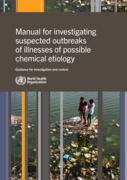
This manual describes methods for investigating clusters or outbreaks that may be of chemical origin and describes the importance of a structured, coordinated, collaborative multidisciplinary, multi-agency approach at local, regional,
...

Introduction Community health workers (CHWs) are increasingly being tasked to prevent and manage cardiovascular disease (CVD) and its risk factors in underserved populations in low-income and middle-income countries (LMICs); however, little is known
...

Indoor residual spraying (IRS) involves applying residual insecticide to potential vector resting sites on the interior surfaces of human dwellings or other buildings. The main aim of IRS is to kill vectors before they are able to transmit pathogens to humans. When carried out correctly, IRS has his
...
Lancet Public health 2022 January 6, 2022 https://doi.org/10.1016/ S2468-2667(21)00249-8
Growth in the number of individuals living with dementia underscores the need for public health planning efforts and policy to address the needs of this group.
...
