
Filter
293
Filtered Results: 293
Text search:
Logistics
Cluster,
WFP
Featured
Recommendations
22
New Publications
128
Language
Document type
No document type
175
Strategic & Response Plan
35
Studies & Reports
27
Situation Updates
20
Guidelines
17
Manuals
14
Training Material
1
Dashboards/Maps
1
Infographics
1
Online Courses
1
Fact sheets
1
Countries / Regions
Sierra Leone
21
South Sudan
17
Nepal
16
Mozambique
16
Myanmar / Burma
14
Congo, Democratic Republic of
12
Liberia
10
Global
9
Syria
8
Haiti
7
Kenya
6
Nigeria
6
Malawi
6
Zimbabwe
6
Philippines
6
Yemen
6
Ethiopia
6
Guinea
5
Bangladesh
5
Uganda
5
Central African Republic
5
Ukraine
3
Rwanda
3
Africa
3
Tanzania
3
West and Central Africa
3
Sudan
3
Pakistan
3
Lesotho
2
Ghana
2
Niger
2
Afghanistan
2
Burundi
2
East and Southern Africa
2
Papua New Guinea
2
Somalia
2
Togo
1
Iran
1
Burkina Faso
1
Peru
1
Asia
1
Venezuela
1
Djibouti
1
Namibia
1
Palestine
1
Bhutan
1
Botswana
1
Zambia
1
Ecuador
1
Madagascar
1
Eswatini/ Swaziland
1
Authors & Publishers
Publication Years
Category
Countries
138
Key Resources
44
Women & Child Health
8
Public Health
7
Capacity Building
5
Clinical Guidelines
4
Toolboxes
Ebola & Marburg
37
COVID-19
36
Natural Hazards
35
Conflict
31
Rapid Response
11
2.0 Rapid Response
11
HIV
8
Planetary Health
7
Refugee
3
Disability
3
TB
2
Caregiver
2
Health Financing Toolbox
2
Zika
2
Polio
2
Typhoon
2
South Sudan
1
Cholera
1
NTDs
1

1 February 2021 to 31 January 2022

January 2020 to December 2021

This Guidance Document provides practical assistance to Country Offices scaling up programmes to manage SAM in young children. It outlines a step-by-step process through which countries can analyse their current situation, identify barriers and bottlenecks through the MoRES approach, and plan action...
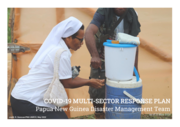
his revision to the Disaster Management Team’s (DMT) multi-sector response plan for COVID-19 is meant to align the multi-sector plan with the Department of Health’s COVID-19 Emergency Response Plan issued on 24 April 2020. Additionally, at the time of this version, the Department of Education an...
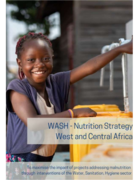
This document was prepared by UNICEF Regional Office for West and Central Africa, under the leadership of Christophe Valingot and the review of Joachim Peeters (WASH Specialist) and Arnaud Laillou (Nutrition Specialist), on behalf of the WASH Regional Group and the Nutrition Regional Group.
This ...
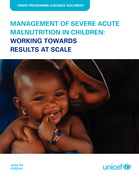
The objectives of this guidance document are to:
1. Strengthen the capacity of country teams to effectively scale up and manage programmes to address severe acute malnutrition
2. Extend the geographic reach of quality treatment for SAM to all vulnerable communities in need
3. Maximize...
1. Strengthen the capacity of country teams to effectively scale up and manage programmes to address severe acute malnutrition
2. Extend the geographic reach of quality treatment for SAM to all vulnerable communities in need
3. Maximize...

An ALNAP Guide. Pilot Version.
This pilot guide is intended to help evaluation managers to commission and oversee, and team leaders to conduct, RTEs of humanitarian operational responses. Drawing on a synthesis of existing good practices, it sets out a flexible approach that can be adapted to a var...
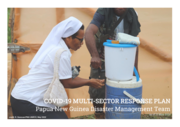
This revision to the Disaster Management Team’s (DMT) multi-sector response plan for COVID-19 is meant to align the multi-sector plan with the Department of Health’s COVID-19 Emergency Response Plan issued on 24 April 2020.
Background paper 7
The Independent Panel for Pandemic Preparedness and Response
May 2021
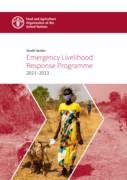
The situation in South Sudan has proven to be unpredictable and volatile. New hotspots of violent conflict and civil unrest have continued to emerge and levels of severe acute food insecurity have become progressively worse. In addition to years of fighting and political instability, the country fac...
The building damage assessment, conducted between March 2010 and February 2011 by the Government of Haiti and the United Nations system, showed that more than 400,000 buildings were damaged or destroyed, of which approximately 218,000 could be occupied without repairs (green category), 105,000 were ...

Ebola Response Roadmap
recommended
The World Health Organization is issuing a "roadmap" to guide and coordinate the international response to the outbreak of Ebola virus disease in West Africa.
The aim is to stop ongoing Ebola transmission worldwide within 6–9 months, while rapidly managing the consequences of any further interna...
In our fourth year of producing The State of Open Humanitarian Data, we can report the highest levels yet for data availability across priority humanitarian operations. These gains can be attributed to the commitment of organizations to sharing and maintaining their data publicly. There was also str...
The Strategic Framework for Emergency Preparedness is a unifying framework which identifies the principles and elements of effective country health emergency preparedness. It adopts the major lessons of previous initiatives and lays out the planning and implementation process by which countries can ...
A STUDY OF THE CHALLENGES FACED BY PERSONS WITH DISABILITIES IN POST-EARTHQUAKE
NEPAL.
This study aims to analyze national and international stakeholders and their initiatives in Early Warning Systems in Myanmar, to identify priority gaps that need to be addressed by all stakeholders. It is presented as a first step towards supporting GoUM in information-gathering under the Myanmar Ac...
