
Filter
233
Text search:
EOC
Featured
26
94
Language
Document type
121
28
25
24
24
6
3
2
Countries
15
14
13
10
10
9
9
8
7
6
6
5
5
5
5
4
4
4
4
4
3
3
3
3
2
2
2
2
2
2
2
2
2
2
2
2
2
1
1
1
1
1
1
1
1
1
1
1
1
1
1
1
1
1
1
1
1
1
1
1
1
1
1
1
Authors & Publishers
Publication Years
Category
114
29
7
7
3
3
Toolboxes
32
32
30
15
10
10
6
5
4
3
2
2
2
1
1
1
1
The Government of Malawi, in fulfilling its primary role of protecting the lives of its vulnerable citizens during disasters and reducing their exposure to risk through preparedness, led the development of a National Coronavirus Disease (COVID-19) Preparedness and Response Plan.

This document compiles best practices in emergency supply chain preparedness so that countries
can respond rapidly and effectively to epidemic and pandemic threats. Such a response requires a well-functioning supply chain

March 2020
The number of African Union Member States reporting COVID-
19 cases is increasing and there is a likelihood of community transmission. The WHO recently modified the COVID-19 suspect case definition to include severe acute respiratory infection and advises testing of all severe acute res
...
This document has been developed for the WHO Regional Office for the Eastern Mediterranean to establish a regional plan of action to support the countries of the Region to rapidly accelerate the scaling up of their capacities for the prevention and early detection of, and
...
Accessed on 21.05.2020
Considering a hotline? This set of tools will help you assess, set up and manage different types of channels to communicate with communities during humanitarian crises.
Monitoring and evaluation framework
recommended
COVID‑19 strategic preparedness and response
Les coronavirus forment une vaste famille de virus qui peuvent être pathogènes chez l’homme et chez l’animal. On sait que, chez l’être humain, plusieurs coronavirus peuvent entraîner des infections respiratoires dont les manifestations vont du simple rhume à des maladies plus graves comme
...

Ethiopia saw a six-fold increase in confirmed COVID-19 cases between June and August, with 5,689 cases by end June compared to 34,058 cases as of 19 August. Ethiopia also registered more than 13,000 recoveries and more than 600 deaths. As of the last week of August, Ethiopia was leading eastern Afri
...
The Bolivarian Republic of Venezuela has been facing a sociopolitical and economic situation that has negatively impacted social and health indicators. There have been intensified population movements both within the country and to other countries, particularly to Argentina, Brazil, Chile, Colombia,
...

The WHO country office for Ghana, began the year 2019 with a 4-day staff retreat at the Busua Beach Resort in the Western Region from 04 to 08 March 2019. The theme for the retreat was ‘Impacting the Health and Lives of the people of Ghana through the Triple Billion Goal”. The staff outlined pri
...
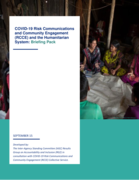
This briefing pack serves this purpose by sharing RCCE/humanitarian coordination experience from country level, feedback from global consultations and addressing frequently asked questions. In parallel, the RCCE Core Group has been working to revise the RCCE Collective Service Strategy. Where possib
...

In Control. A Practical Handbook for Professionals Working in Health Emergencies Internationally
recommended
In Control imparts knowledge, provokes reflection and triggers curiosity. The first half of the book provides an overview of the organisations, principles, frameworks and themes that every professional deploying to health emergencies should be aware of. The second half of the book provides practical
...
1 February 2021 to 31 January 2022
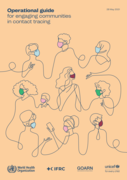
28 May 2021
Contact tracing is a key component of a public health response to infectious disease outbreaks. The purpose of this guidance is to reinforce the place of community engagement and participation in the contact tracing process. The guidance and related products articulate best practice pri
...

A public health emergency operation center (PHEOC) serves as a hub for better coordinating the preparation, response, and recovery for public health emergencies. A functional PHEOC is critical for the implementation of the International Health Regulations (IHR 2005). The Framework for a Public Healt
...
