
Filter
1798
Text search:
sexual
behaviour
Featured
174
550
Language
Document type
1140
207
203
91
69
38
25
12
9
1
1
Countries
120
54
50
50
49
47
47
44
43
40
38
36
29
28
28
27
26
22
20
19
16
15
14
13
13
11
10
10
10
10
9
8
8
7
7
6
6
6
5
5
5
5
4
4
4
4
4
4
4
3
3
3
3
3
3
3
2
2
2
2
2
2
2
2
2
2
2
2
2
2
1
1
1
1
1
1
1
1
1
1
1
1
1
1
1
1
1
1
1
1
1
1
1
Authors & Publishers
Publication Years
Category
753
163
97
85
84
46
1
1
Toolboxes
280
126
75
64
60
49
47
42
37
36
19
15
15
14
13
12
11
11
10
8
7
6
1
1
It aims to enable participants to:
know more about reactions to distress
know what psychological first aid is and what it is not
understand the three action principles of ‘Look, Listen and Link’
have practised providing PFA to someone in distress
have considered comple
...
t aims to enable participants to:
know more about children’s reactions to distress
know what psychological first aid for children is and what it is not
understand the three action principles of ‘Look, Listen and Link’ in relation to children
have practised providing PFA t
...
Psychological first aid is a simple, yet powerful way of helping someone in distress. It involves paying attention to the person’s reactions, active listening and if relevant, practical assistance to help address immediate problems and basic needs. Learning psychological first aid skills and under
...
The toolbox contains guidance and tools (sample templates) for data collection in M&E of PSS programmes. The tools can be adapted to PSS programme, depending upon target group, activities and scope. These are tools that may be useful for your programme and many are drawn from existing PSS programme
...
PARTICIPANT GUIDE.
This Participant Guide has been designed to assist health facilities and community based non-clinicians to develop skills to provide linkage to care, adherence and retention in care services for chronic conditions
The Adult Standard Treatment Guidelines and Essential Medicines List for Hospital Level provide a platform for transparency to enable equitable access to safe, effective, and affordable treatment options at hospital level taking into consideration the changing clinical needs of our population and th
...
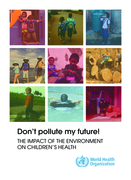
In 2015, 5.9 million children under age five died (1). The major causes of child deaths globally are pneumonia, prematurity, intrapartum-related complications, neonatal sepsis, congenital anomalies, diarrhoea, injuries and malaria (2). Most of these diseases and conditions are at least partially cau
...
The guide is suitable and can be used for the following audiences:
1. nurses and other trained healthcare workers who can use this manual as a self-study tool and then incorporate its guidance into their practice;
2. governmental and non-governmental employers of lay and professional TB treatment
...
The new review paper, The Impacts of Climate Change on Health, identifies the extent to which increasing emissions, extreme weather and temperatures elevate health risks, from infectious disease to malnutrition, and assesses the associated health burden. It concludes that the health burden will exce
...
This report, which involved input from across WaterAid, in particular from the Programme Support Unit (PSU) of WaterAid UK, includes case studies from a variety of countries, including Bangladesh, Burkina Faso, Eswatini, Ethiopia, Ghana, India and Nepal, each demonstrating what must be done now to i
...
mhGAP Humanitarian Intervention Guide (mhGAP-HIG) training of health-care providers. Training manual
recommended
The mhGAP Humanitarian Intervention Guide (mhGAP-HIG) Training of Health-Care Providers manual is designed to guide facilitators in training non-specialist health care providers to manage mental, neurological and substance use conditions in humanitarian emergency settings.
The manual covers sugge
...

The Planetary Health Education Framework is a project of the Planetary Health Alliance (planetaryhealthalliance.org). The Planetary Health Alliance is a consortium of over 250 partners from around the world committed to understanding and addressing the human health impacts of global environmental ch
...
It summarizes guidance on how to manage – and when to refer – children and adolescents presenting with common complaints and conditions. It includes information to enable primary health care providers to coordinate the continued care of children and adolescents with long-term conditions and dise
...

This joint publication by UNAIDS and WHO emphasizes the importance of integrating HIV prevention, testing, treatment and care and mental health services for people living with HIV. It provides a compilation of tools, best practices, recommendations and guidelines that facilitate the integration of i
...
This guide is part of a five-part Caregiver skills training for families of children with developmental delays or disabilities (CST) package providing guidance on caregiver skills training for families of children aged 2–9 years with developmental delays or disabilities.
This guide for facilita
...

The PHC STGs and EML should be used by healthcare workers providing care at clinics, community health centres, and gateway clinics at hospitals.
Pharmaceutical and Therapeutics Committees (PTCs) are responsible for ensuring the availability of medicines listed in the PHC EML at those facilities, as
...
The marathon to eradicate polio is on its final lap: the world is more than 99% of the way to success. After millennia of living with poliovirus and suffering the paralysis it causes, today nearly all the world’s people live in polio-free countries; two of the three strains of wild poliovirus (WPV
...
Monkeypox is an emerging viral zoonosis with symptoms similar to those observed in smallpox patients, although less severe. Since the global eradication of smallpox in 1980, monkeypox has emerged as the most important orthopoxvirus in humans. The Advisory Committee on Variola Virus Research (ACVVR)
...

Lancet 2022; 399: 1155–200 Published Online March 15, 2022 https://doi.org/10.1016/
S0140-6736(21)02488-0

Mental health is critically important to everyone, everywhere. All over the world, mental health needs are high but responses are insufficient and inadequate. The World mental health report: transforming mental health for all is designed to inspire and inform better mental health for everyone everyw
...
