
Filter
2878
Text search:
Health
Care
without
Harm
Featured
Recommendations
328
New Publications
640
Language
Document type
No document type
1525
Guidelines
456
Studies & Reports
433
Manuals
224
Strategic & Response Plan
98
Training Material
67
Fact sheets
43
Situation Updates
15
Infographics
6
Brochures
5
Resource Platforms
2
Online Courses
2
App
1
Countries / Regions
Global
135
India
125
Western and Central Europe
65
Kenya
59
Syria
49
South Africa
47
Ukraine
45
Uganda
41
Nepal
38
Nigeria
34
Myanmar / Burma
34
Ethiopia
32
Bangladesh
31
Latin America and the Carribbean
29
Zambia
28
Tanzania
28
Sierra Leone
27
Namibia
25
Eastern Europe
21
Philippines
20
South–East Asia Region
20
Africa
20
Asia
19
Liberia
18
Ghana
17
South Sudan
16
Indonesia
16
Malawi
14
Rwanda
13
Congo, Democratic Republic of
12
Yemen
12
Germany
11
Lebanon
11
Eastern Europe and Central Asia
11
Cambodia
10
East and Southern Africa
10
Middle East and North Africa
10
Russia
10
Afghanistan
9
West and Central Africa
9
Vietnam
9
Zimbabwe
8
Pakistan
8
Jordan
8
Venezuela
8
Tajikistan
8
USA
7
Thailand
7
Lesotho
7
Haiti
6
Mozambique
6
Western Pacific Region
6
Iraq
5
Colombia
5
Botswana
5
Laos
5
Moldova
5
Georgia
5
Central African Republic
4
Brazil
4
Greece
4
Sri Lanka
4
Albania
4
United Kingdom
4
Guinea
3
Senegal
3
Turkey
3
China
3
Sudan
3
North Macedonia
3
Mexico
3
Poland
3
Iran
3
Kyrgyzstan
3
Somalia
2
Malaysia
2
Benin
2
Eswatini/ Swaziland
2
Serbia
2
Hungary
2
Croatia
2
Fiji
2
Palestine
2
Canada
2
Romania
2
Japan
2
Portugal
2
Spain
2
Morocco
1
Cameroon
1
Egypt
1
Gambia
1
Ireland
1
Singapore
1
Papua New Guinea
1
Argentina
1
Burundi
1
Ecuador
1
Libya
1
Guatemala
1
Madagascar
1
Chile
1
Bhutan
1
Armenia
1
Southern Africa
1
Qatar
1
Estonia
1
Lithuania
1
Uzbekistan
1
Kazakhstan
1
North America
1
Turkmenistan
1
Jamaica
1
Norway
1
Azerbaijan
1
Belarus
1
Bosnia and Herzegovina
1
Latvia
1
Authors & Publishers
Publication Years
Category
Countries
705
Key Resources
237
Women & Child Health
233
Clinical Guidelines
225
Public Health
143
Capacity Building
80
Pharmacy & Technologies
24
Toolboxes
Mental Health
460
HIV
356
COVID-19
212
Conflict
125
Caregiver
114
TB
104
Refugee
102
Planetary Health
99
Disability
89
Pharmacy
73
Global Health Education
56
AMR
49
Ebola & Marburg
44
Rapid Response
42
Specific Hazards
36
Natural Hazards
34
NCDs
30
2.0 Rapid Response
29
NTDs
28
Health Financing Toolbox
22
Social Ethics
19
Malaria
17
Polio
11
Zika
11
Cholera
9
South Sudan
1

Pillar 3 of the Global technical strategy for malaria 2016–2030 calls for the transformation of malaria surveillance into a core intervention in all malaria-endemic countries, as well as in countries which have eliminated malaria but remain susceptible to re-establishment of transmission. This ref
...

This toolkit is a comprehensive set of practical tools and resources designed to support country-level risk communication and community engagement (RCCE) practitioners, decision-makers and partners to plan and implement readiness and response activities for Ebola disease outbreaks. The toolkit conta
...

This toolkit is a comprehensive set of practical tools and resources designed to support country-level risk communication and community engagement (RCCE) practitioners, decision-makers, and partners to plan and implement readiness and response activities for yellow fever outbreaks. The toolkit conta
...

This toolkit is a comprehensive set of practical tools and resources designed to support country-level risk communication and community engagement (RCCE) practitioners, decision-makers, and partners to plan and implement readiness and response activities for yellow fever outbreaks. The toolkit conta
...

The annual bulletin of the Mekong Malaria Elimination (MME) programme is a yearly report that reviews ongoing efforts to combat multidrug resistance and eliminate malaria in the 6 countries of the Greater Mekong subregion (GMS): Cambodia, China (Yunnan province), Lao People's Democratic Republic, My
...

In an era of constrained resources and tightening budgets, strategic prioritization in tuberculosis (TB) programming is more critical than ever. Countries must make informed decisions to allocate limited resources effectively - maximizing impact, preventing avoidable deaths, and sustaining progress
...

These guidelines update earlier WHO recommendations to maximize the HIV prevention impact of safe VMMC services and aim to guide the transition to the sustained provision of interventions with a focus on the health and well-being of both adolescent
...
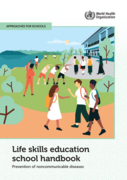
School health programmes are the most cost-effective way to influence health behaviours in young people. The purpose of this two-part handbook is to support schools as they seek to im
...
These guidelines present evidence-based recommendations and best practice statements on use of medically important antimicrobials in food-producing animals, based on the WHO list of critically important antimicrobials for human medicine (WHO CIA List). These guidelines aim primarily to help preserve
...
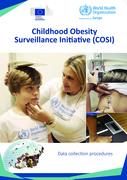
The WHO Regional Office for Europe has established the Childhood Obesity Surveillance Initiative in more than half thecountries in the Region for routine monitoring of the policy response to the emerging obesity epidemic. The aim of the system is to measure trends in overweight and obesity in childr
...
This field guide is a practical tool for improving and maintaining drinking-water safety. It is designed to be used by YOU as a rural community member who shares responsibility for operation and management of the drinking-water supply in your community. It can also be used by YOU as a staff member o
...
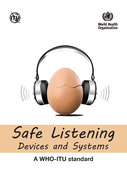
A WHO-ITU Standard.
Nearly 50% of people aged 12-35 years – or 1.1 billion young people – are at risk of hearing loss due to prolonged and excessive exposure to loud sounds, including music they listen to through personal audio devices. Ahead of World Hearing Day (3 March), the World
...
Standard Treatment Guideline
Training on handling, storing and transporting Pfizer BioNTech COVID-19 Vaccine COMIRNATY® (Tozinameran)
recommended
4 August 2021. Currently, Pfizer BioNTech COVID-19 Vaccine COMIRNATY® (Tozinameran) is the only COVID-19 vaccine that should be stored and transported at -60ºC to -86ºC ultra-low temperature (ULT) conditions. Prior to use the vaccine can be transferred to -20ºC freezer or +2-8ºC refrigerator at
...
