
Filter
3797
Text search:
United
Nations
Population
Fund
Featured
Recommendations
252
New Publications
1191
Language
Document type
No document type
2326
Studies & Reports
712
Guidelines
289
Strategic & Response Plan
167
Manuals
148
Situation Updates
45
Fact sheets
42
Training Material
37
Infographics
23
Resource Platforms
5
Brochures
1
Online Courses
1
Countries / Regions
Global
202
Kenya
122
Ethiopia
101
Nepal
100
Myanmar / Burma
100
Nigeria
99
Liberia
88
Sierra Leone
84
Uganda
82
Zambia
73
India
68
Syria
63
Rwanda
62
Malawi
62
Bangladesh
57
Western and Central Europe
54
Africa
53
Namibia
52
Congo, Democratic Republic of
49
Ukraine
49
Tanzania
48
Ghana
46
South Sudan
41
Latin America and the Carribbean
41
South Africa
39
Lesotho
37
Senegal
35
Zimbabwe
35
Indonesia
33
Philippines
32
South–East Asia Region
31
Asia
30
Cambodia
28
Mozambique
27
Yemen
27
Guinea
26
Haiti
26
Eastern Europe
24
Pakistan
21
East and Southern Africa
21
West and Central Africa
20
Afghanistan
19
Venezuela
19
Central African Republic
16
Botswana
16
Middle East and North Africa
16
Cameroon
14
Jordan
14
Lebanon
14
Somalia
12
Madagascar
12
Eastern Europe and Central Asia
12
Burkina Faso
11
Sudan
11
Thailand
10
Benin
10
Sri Lanka
10
Russia
10
Eswatini/ Swaziland
9
Colombia
9
Moldova
9
Vietnam
9
Laos
8
Mali
7
China
7
Albania
7
Germany
6
Peru
6
Brazil
6
North Macedonia
6
Western Pacific Region
6
Palestine
6
Tajikistan
6
Iran
5
Georgia
5
Togo
4
Iraq
4
Turkey
4
Papua New Guinea
4
Mexico
4
Guinea-Bissau
3
Niger
3
Egypt
3
Argentina
3
Hungary
3
Libya
3
Paraguay
3
Bhutan
3
Timor Leste/ East Timor
3
Kyrgyzstan
3
North America
3
Jamaica
3
Bosnia and Herzegovina
3
Chad
2
Gambia
2
Serbia
2
Croatia
2
Burundi
2
Bolivia
2
Greece
2
North Korea
2
Italy
2
Armenia
2
Southern Africa
2
Bulgaria
2
Turkmenistan
2
Japan
2
Mauritius
2
Portugal
2
Côte d’Ivoire / Ivory Coast
1
Morocco
1
USA
1
Malaysia
1
Mauritania
1
Vanuatu
1
Ecuador
1
El Salvador
1
Chile
1
Solomon Islands
1
Poland
1
Djibouti
1
Qatar
1
Estonia
1
Romania
1
Slovakia
1
Uzbekistan
1
Kazakhstan
1
United Kingdom
1
Norway
1
Spain
1
Azerbaijan
1
Authors & Publishers
Publication Years
Category
Countries
1629
Women & Child Health
317
Key Resources
256
Public Health
164
Clinical Guidelines
164
Capacity Building
58
Pharmacy & Technologies
15
Toolboxes
HIV
410
COVID-19
211
Disability
187
Mental Health
173
Conflict
160
TB
154
Planetary Health
142
Health Financing Toolbox
97
Ebola & Marburg
79
Global Health Education
79
Refugee
73
Caregiver
63
Natural Hazards
59
AMR
47
Rapid Response
46
Malaria
35
NTDs
34
Pharmacy
31
2.0 Rapid Response
30
NCDs
27
Polio
22
Cholera
14
Zika
9
Specific Hazards
8
Social Ethics
4
South Sudan
2
Typhoon
2
Afghanistan has one of the largest populations per capita of persons with disabilities in the world. At least one in five Afghan households includes an adult or child with a serious physical, sensory, intellectual, or psychosocial disability. More than 40 years of war have left more than one million
...
WHO has issued a new recommendation on the length of bladder catheterization following surgical repair of a simple obstetric urinary fistula. Currently the length of catheterization is not standard and ranges from 5 to 42 days. The new guidance recommends a 7–10 day period of bladder catheterizati
...
This new guideline on non-clinical interventions to reduce unnecessary caesarean sections incorporates the views, fears and beliefs of both women and health professionals about caesarean sections. It also considers the complex dynamics and limitations of health systems and organizations and relation
...
Financing Global Health 2016: Development Assistance, Public and Private Health Spending for the Pursuit of Universal Health Coverage presents a complete analysis of the resources available for health in 184 countries, with a particular focus on development assistance for health (DAH). DAH was estim
...
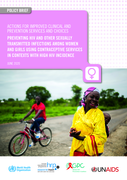
This programmatic brief explores how to expand HIV and STI prevention and contraceptive method options in contraceptive services and, thus, to reduce HIV and STI incidence among adolescent girls and women. It focuses on settings with extremely high HIV prevalence and incidence. This brief complement
...
This executive summary contains all the new recommendations that will be incorporated into the fifth edition of the Medical eligibility criteria (MEC) for contraceptive use. In addition to the recommendations themselves, the summary provides an introduction to the guideline, a description of the met
...
Evidence from a systematic review on antenatal zinc supplementation was evaluated as part of the World Health Organization (WHO) antenatal care (ANC) guideline development process in 2016, and the following recommendation on zinc supplementation was made: “Zinc supplementation for pregnant women i
...
The guidelines address timing, number and place of postnatal contacts, and content of postnatal care for all mothers and babies during the six weeks after birth. The primary audience for these guidelines is health professionals who are responsible for providing postnatal care to women and newborns,
...
Every year, an estimated 15 million babies are born preterm – before 37 weeks of pregnancy. That is more than 1 in 10 live births. Approximately 1 million children die each year worldwide due to complications from their early birth. Those that survive often face a lifetime of ill-health including
...
This publication is designed to be used by programme planners and managers as a resource when designing interventions to integrate postpartum family planning into national and subnational strategies. Postpartum family planning should not be considered a ‘vertical’ programme, but rather as an int
...
Operational Guidelines
The Road Map outlines various strategies which will guide policy makers, development partners, training institutions and service providers in supporting Government efforts towards the attainment of MDGs related to maternal and neonatal health.
Recommendations for a Public Health approach and considerations for policy-makers and managers
The primary audience for the guideline is health programme managers, including governmental and non-governmental organizations, and policy makers who are responsible for designing maternal, newborn and child health programmes, primarily in low-income settings. The guideline is also aimed at health p
...
Planned and regulated task shifting and task sharing can have a range of benefits. It can ensure a rational optimization of the available health workforce, address health system shortages of specialized health-care professionals, improve equity in access to health care and increase the acceptability
...
