Filter
2130
Text search:
health-care
waste
Featured
287
627
Language
Document type
976
424
319
169
124
44
38
18
10
3
3
2
Countries
139
95
88
85
70
69
58
46
44
41
39
37
36
35
34
30
29
26
25
23
22
22
21
20
18
15
15
14
14
13
13
13
11
11
11
11
10
10
9
9
9
8
8
8
8
8
8
8
7
7
7
6
6
6
5
5
5
5
5
4
4
4
4
4
4
3
3
3
3
3
3
3
2
2
2
2
2
2
2
2
2
2
2
2
2
2
1
1
1
1
1
1
1
1
1
1
1
1
1
1
1
1
1
1
1
1
1
1
1
1
Authors & Publishers
Publication Years
Category
919
219
135
101
83
45
41
1
Toolboxes
254
143
126
116
101
79
61
57
51
48
40
39
39
36
36
30
30
25
21
20
19
16
11
6
1
1
1
A guide to support implementation of health service Quality Improvement activities in Ethiopian health facilities
A focus on Cambodia and Ethiopia
o date, little evidence is available on how such integration occurs at country level. To address this knowledge gap, WHO has conducted several in-depth situational analysis in countries that are undertaking actions to improve WASH in
...
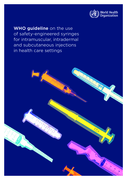
Injection practices worldwide and especially in low- and middle-income countries (LMICs) include multiple, avoidable unsafe practices that ultimately lead to the large-scale transmission of bloodborne viruses among patients, health
...

The report identifies major global gaps in WASH services: one third of health care facilities do not have what is needed to clean hands where care is provided; one in four facilities have no water s
...
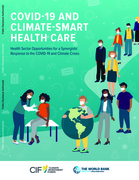
English Analysis on World about Climate Change and Environment, Health and Epidemic; published on 03 Nov 2021 by World Bank

Safe water, sanitation and hygiene (collectively known as WASH) are crucial for human health and well-being. Yet, millions of people globally lack adequate WASH services and consequently suffer from or are exposed to a multitude of preventable illnesses.
Waste Management & Research 39(1) DOI: 10.1177/0734242X211029175
Combined questionnaire Core
Those who clean are the first line of defense against health care-associated infections (HAIs), and support efforts to reduce antimicrobial resistance (AMR).
Strengthening the training of this im
...
Hand hygiene is a simple yet powerful tool in interrupting the transmission of the monkeypox virus (MPXV) and other infectious disease both in healthcare facilities and communities. However millions still lack access to basic hygiene services particularly in vulnerable and resource limited settings.
...
The Department of Health is committed to providing the best quality care to patients and users of health services, in order to meet their expectations and needs, and to improve service delivery.
The main purpose of the National Core Standards is to:
• Develop a common definition of quality of
...

The rapid assessment tool (RAT) is meant to assess health facilities within mpox-affected areas that have at least one inpatient bed. Depending on time and resources available, certain facilities may be prioritized during an mpox outbreak. The RAT evaluates 16 infection prevention and control (IPC)
...
The WHO Quality Health Services: a planning guide focuses on actions required at the national, district and facility levels to enhance quality of health services, providing guidance on implementing key activities at each of these three levels. It highlights the need for a health systems approach to
...

This guidance is intended to be one stop shop to improve the quality and effectiveness of health interventions in emergency, to respond to the most frequent scenarios and conditions.
The main document contains the most common elements to be found in emergencies. As much as possible they are one pag
...

A practical handbook. This Health Cluster Guide (2nd edition, 2020) provides practical advice on how WHO, Health Cluster Coordinators and partners can work together during a humanitarian crisis to achieve the aims of reducing avoidable mortality, morbidity and disability, and restoring the delivery
...

Managers Who Lead empowers health managers at all levels of an organization to lead teams to face challenges and achieve results. It answers questions such as: How can I lead and manage more effectively? How do I create a shared vision and a clear path for achieving it? What can I do to improve work
...

Natural disasters often increase morbidity and mortality rates. Taking appropriate measures to maintain environmental health helps to reduce or eliminate the risks of preventable disease and death. Such measures contribute not only to the health of individuals in and near disaster-stricken areas, bu
...