
Filter
3551
Text search:
causes
of
death
Featured
368
980
Language
3447
110
97
75
63
40
27
18
13
10
8
8
8
7
6
6
5
5
5
5
4
4
4
4
3
3
3
3
3
3
3
3
2
2
2
2
2
2
2
2
2
2
2
2
1
1
1
1
1
1
1
1
1
1
1
1
1
1
1
1
1
1
1
Document type
1962
624
426
191
127
88
73
23
15
11
9
1
1
Countries
185
183
95
88
87
70
70
67
65
64
60
58
58
53
52
51
46
46
45
45
43
32
26
24
21
21
21
21
20
19
19
19
18
17
17
17
17
15
14
14
13
11
11
10
10
10
9
9
9
9
9
8
8
8
7
6
6
6
5
5
5
4
4
4
4
4
4
4
4
4
3
3
3
3
3
3
3
3
3
3
3
3
2
2
2
2
2
2
2
2
2
2
2
1
1
1
1
1
1
1
1
1
1
1
1
1
1
1
1
1
1
1
1
1
1
1
1
1
1
Authors & Publishers
448
165
114
112
90
73
68
48
30
29
27
24
22
21
19
18
18
18
17
16
15
15
14
14
14
13
12
11
10
10
10
10
10
10
9
9
9
9
9
9
9
9
9
9
9
9
8
8
8
8
8
8
8
8
8
8
8
7
7
7
7
7
7
7
7
7
7
7
7
7
7
7
7
6
6
6
6
6
6
6
6
6
6
6
6
6
6
6
5
5
5
5
5
5
5
5
5
5
5
5
5
5
5
5
5
5
5
4
4
4
4
4
4
4
4
4
4
4
4
4
4
4
4
4
4
4
4
4
4
4
4
4
4
4
4
4
4
4
4
4
4
4
4
4
4
4
4
3
3
3
3
3
3
3
3
3
3
3
3
3
3
3
3
3
3
3
3
3
3
3
3
3
3
3
3
3
3
3
3
3
3
3
3
3
3
3
3
3
3
3
3
3
3
3
3
3
3
3
3
3
3
3
3
3
3
3
3
3
3
3
2
2
2
2
2
2
2
2
2
2
2
2
2
2
2
2
2
2
2
2
2
2
2
2
2
2
2
2
2
2
2
2
2
2
2
2
2
2
2
2
2
2
2
2
2
2
2
2
2
2
2
2
2
2
2
2
2
2
2
2
2
2
2
2
2
2
2
2
2
2
2
2
2
2
2
2
2
2
2
2
2
2
2
2
2
2
2
2
2
2
2
2
2
2
2
2
2
2
2
2
2
2
2
2
2
2
2
2
2
2
2
2
2
2
2
2
2
2
2
2
2
2
2
2
2
2
2
2
2
2
2
2
2
2
2
2
2
2
2
2
2
2
2
2
2
2
2
2
2
2
2
2
2
2
2
2
2
2
2
2
2
2
2
2
2
2
2
2
2
2
2
2
2
2
2
2
2
2
2
2
2
2
2
2
2
2
2
2
2
2
2
2
2
2
2
2
2
2
2
2
2
2
2
2
2
2
1
1
1
1
1
1
1
1
1
1
1
1
1
1
1
1
1
1
1
1
1
1
1
1
1
1
1
1
1
1
1
1
1
1
1
1
1
1
1
1
1
1
1
1
1
1
1
1
1
1
1
1
1
1
1
1
1
1
1
1
1
1
1
1
1
1
1
1
1
1
1
1
1
1
1
1
1
1
1
1
1
1
1
1
1
1
1
1
1
1
1
1
1
1
1
1
1
1
1
1
1
1
1
1
1
1
1
1
1
1
1
1
1
1
1
1
1
1
1
1
1
1
1
1
1
1
1
1
1
1
1
1
1
1
1
1
1
1
1
1
1
1
1
1
1
1
1
1
1
1
1
1
1
1
1
1
1
1
1
1
1
1
1
1
1
1
1
1
1
1
1
1
1
1
1
1
1
1
1
1
1
1
1
1
1
1
1
1
1
1
1
1
1
1
1
1
1
1
1
1
1
1
1
1
1
1
1
1
1
1
1
1
1
1
1
1
1
1
1
1
1
1
1
1
1
1
1
1
1
1
1
1
1
1
1
1
1
1
1
1
1
1
1
1
1
1
1
1
1
1
1
1
1
1
1
1
1
1
1
1
1
1
1
1
1
1
1
1
1
1
1
1
1
1
1
1
1
1
1
1
1
1
1
1
1
1
1
1
1
1
1
1
1
1
1
1
1
1
1
1
1
1
1
1
1
1
1
1
1
1
1
1
1
1
1
1
1
1
1
1
1
1
1
1
1
1
1
1
1
1
1
1
1
1
1
1
1
1
1
1
1
1
1
1
1
1
1
1
1
1
1
1
1
1
1
1
1
1
1
1
1
1
1
1
1
1
1
1
1
1
1
1
1
1
1
1
1
1
1
1
1
1
1
1
1
1
1
1
1
1
1
1
1
1
1
1
1
1
1
1
1
1
1
1
1
1
1
1
1
1
1
1
1
1
1
1
1
1
1
1
1
1
1
1
1
1
1
1
1
1
1
1
1
1
1
1
1
1
1
1
1
1
1
1
1
1
1
1
1
1
1
1
1
1
1
1
1
1
1
1
1
1
1
1
1
1
1
1
1
1
1
1
1
1
1
1
1
1
1
1
1
1
1
1
1
1
1
1
1
1
1
1
1
1
1
1
1
1
1
1
1
1
1
1
1
1
1
1
1
1
1
1
1
1
1
1
1
1
1
1
1
1
1
1
1
1
1
1
1
1
1
1
1
1
1
1
1
1
1
1
1
1
1
1
1
1
1
1
1
1
1
1
1
1
1
1
1
1
1
1
1
1
1
1
1
1
1
1
1
1
1
1
1
1
1
1
1
1
1
1
1
1
1
1
1
1
1
1
1
1
1
1
1
1
1
1
1
1
1
1
1
1
1
1
1
1
1
1
1
1
1
1
1
1
1
1
1
1
1
1
1
1
1
1
1
1
1
1
1
1
1
1
1
1
1
1
1
1
1
1
1
1
1
1
1
1
1
1
1
1
1
1
1
1
1
1
1
1
1
1
1
1
1
1
1
1
1
1
1
1
1
1
1
1
1
1
1
1
1
1
1
1
1
1
1
1
1
1
1
1
1
1
1
1
1
1
1
1
1
1
1
1
1
1
1
1
1
1
1
1
1
1
1
1
1
1
1
1
1
1
1
1
1
1
1
1
1
1
1
1
1
1
1
1
1
1
1
1
1
1
1
1
1
1
1
1
1
1
1
1
1
1
1
1
1
1
1
1
1
1
1
1
1
1
1
1
1
1
1
1
1
1
1
1
1
1
1
1
1
1
1
1
1
1
1
1
1
1
1
1
1
1
1
1
1
1
1
1
1
1
1
1
1
1
1
1
1
1
1
1
1
1
1
1
1
1
1
1
1
1
1
1
1
1
1
1
1
1
1
1
1
1
1
1
1
1
1
1
1
1
1
1
1
1
1
1
1
1
1
1
1
1
1
1
1
1
1
1
1
1
1
1
1
1
1
1
1
1
1
1
1
1
1
1
1
1
1
1
1
1
1
1
1
1
1
1
1
1
1
1
1
1
1
1
1
1
1
1
1
1
1
1
1
1
1
1
1
1
1
1
1
1
1
1
1
1
1
1
1
1
1
1
1
1
1
1
1
1
1
1
1
1
1
1
1
1
1
1
1
1
1
1
1
1
1
1
1
1
1
1
1
1
1
1
1
1
1
1
1
1
1
1
1
1
1
1
1
1
1
1
1
1
1
1
1
1
1
1
1
1
1
1
1
1
1
1
1
1
1
1
1
1
1
1
1
1
1
1
1
1
1
1
1
1
1
1
1
1
1
1
1
1
1
1
1
1
1
1
1
1
1
1
1
1
1
1
1
1
1
1
1
1
1
1
1
1
1
1
1
1
1
1
1
1
1
1
1
1
1
1
1
1
1
1
1
1
1
1
1
1
1
1
1
1
1
1
1
1
1
1
1
1
1
1
1
1
1
1
1
1
1
1
1
1
1
1
1
1
1
1
1
1
1
1
1
1
1
1
1
1
1
1
1
1
1
1
1
1
1
1
1
1
1
1
1
1
1
1
1
1
1
1
1
1
1
1
1
1
1
1
1
1
1
1
1
1
1
1
1
1
1
1
1
1
1
1
1
1
1
1
1
1
1
1
1
1
1
1
1
1
1
1
1
1
1
1
1
1
1
1
1
1
1
1
1
1
1
1
1
1
1
1
1
1
1
1
1
1
1
1
1
1
1
1
1
1
1
1
1
1
1
1
1
1
1
1
1
1
1
1
1
1
1
1
1
1
1
1
1
1
1
1
1
1
1
1
1
1
1
1
1
1
1
1
1
1
1
1
1
1
1
1
1
1
1
1
1
1
1
1
1
1
1
1
1
1
1
1
1
1
1
1
1
1
1
1
1
1
1
1
1
1
1
1
1
1
1
1
1
1
1
1
1
1
1
1
1
1
1
1
1
1
1
1
1
1
1
1
1
1
1
1
1
1
1
1
1
1
1
1
1
1
1
1
1
1
1
1
1
1
1
1
1
1
1
1
1
1
1
1
1
1
1
1
1
1
1
1
1
1
1
1
1
1
1
1
1
1
1
1
1
1
1
1
1
1
1
1
1
1
1
1
1
1
1
1
1
1
1
1
1
1
1
1
1
1
1
1
1
1
1
1
1
1
1
1
1
1
1
1
1
1
1
1
1
1
1
1
1
1
1
1
1
1
1
1
1
1
1
1
1
1
1
1
1
1
1
1
1
1
1
1
1
1
1
1
1
1
1
1
1
1
1
1
1
1
1
1
1
1
1
1
1
1
1
1
1
1
1
1
1
1
1
1
1
1
1
1
1
1
1
1
1
1
1
1
1
1
1
1
1
1
1
1
1
1
1
1
1
1
1
1
1
1
1
1
1
1
1
1
1
1
1
1
1
1
1
1
1
1
1
1
1
1
1
1
1
1
1
1
1
1
1
1
1
1
1
1
1
1
1
1
1
1
1
1
1
1
1
1
1
1
1
1
1
1
1
1
1
1
1
1
1
1
1
1
1
1
1
1
1
1
1
1
1
1
1
1
1
1
1
1
1
1
1
1
1
1
1
1
1
1
1
1
1
1
1
1
1
1
1
1
1
1
1
1
1
1
1
1
1
1
1
1
1
1
1
1
1
1
1
1
1
1
1
1
1
1
1
1
1
1
1
1
1
1
1
1
1
1
1
1
1
1
1
1
1
1
1
1
1
1
1
1
1
1
1
1
1
1
1
1
1
1
1
1
1
1
1
1
1
1
1
1
1
1
1
1
1
1
1
1
1
1
1
1
1
1
1
1
1
1
1
1
1
1
1
1
1
1
1
1
1
1
1
1
1
1
1
1
1
1
1
1
1
1
1
1
1
1
1
1
1
1
1
1
1
1
1
1
1
1
1
1
1
1
1
1
1
1
1
1
1
1
1
1
1
1
1
1
1
1
1
1
1
1
1
1
1
1
1
1
1
1
1
1
1
1
1
1
1
1
1
1
1
1
1
1
1
1
1
1
1
1
1
1
1
1
1
1
1
1
1
1
1
1
1
1
1
1
1
1
1
1
1
1
1
1
1
1
1
1
1
1
1
1
1
1
1
1
1
1
1
1
1
1
1
1
1
1
1
1
1
1
1
1
1
1
1
1
1
1
1
1
1
1
1
1
1
1
1
1
1
1
1
1
1
1
1
1
1
1
1
1
1
1
1
1
1
1
1
1
1
1
1
1
1
1
1
1
1
1
1
1
1
1
1
1
1
1
1
1
1
1
1
1
1
1
1
1
1
1
1
1
1
1
1
1
1
1
1
1
1
1
1
1
1
1
1
1
1
1
1
1
1
1
1
1
1
1
1
1
1
1
1
1
1
1
1
1
1
1
1
1
1
1
1
1
1
1
1
1
1
1
1
1
1
1
1
1
1
1
1
1
1
1
1
1
1
1
1
1
1
1
1
1
1
1
1
1
1
1
1
1
1
1
1
1
1
1
1
1
1
1
1
1
1
1
1
1
1
1
1
1
1
1
1
1
1
1
1
1
1
1
1
1
1
1
1
1
1
1
1
1
1
1
1
1
1
1
1
1
1
1
1
1
1
1
1
1
1
1
1
1
1
1
1
1
1
1
1
1
1
1
1
1
1
1
1
1
1
1
1
1
1
1
1
1
1
1
1
1
1
1
1
1
1
1
1
1
1
1
1
1
1
1
1
1
1
1
1
1
1
1
1
1
1
1
1
1
1
1
1
1
1
1
1
1
1
1
1
1
1
1
1
1
1
1
1
1
1
1
1
1
1
1
1
1
1
1
1
1
1
1
1
1
1
1
1
1
1
1
1
1
1
1
1
1
1
1
1
1
1
1
1
1
1
1
1
1
1
1
1
1
1
1
1
1
1
1
1
1
1
1
1
1
1
1
1
1
1
1
1
1
1
1
1
1
1
1
1
1
1
1
1
1
1
1
1
1
1
1
1
1
1
1
1
1
1
1
1
1
1
1
1
1
1
1
1
1
1
1
1
1
1
1
1
1
1
1
1
1
1
1
1
1
1
1
1
1
1
1
1
1
1
1
1
1
1
1
1
1
1
1
1
1
1
1
1
1
1
1
1
1
1
1
1
1
1
1
1
1
1
1
1
1
1
1
1
1
1
1
1
1
1
1
1
1
1
1
1
1
1
1
1
1
1
1
1
1
1
1
1
1
1
1
1
1
1
1
1
1
1
1
1
1
1
1
1
1
1
1
1
1
1
1
1
1
1
1
1
1
1
1
1
1
1
1
1
1
1
1
1
1
1
1
1
1
1
1
1
1
1
1
1
1
1
1
1
1
1
1
1
1
1
1
1
1
1
1
1
1
1
1
1
1
1
1
1
1
1
1
1
1
1
1
1
1
1
1
1
1
1
1
1
1
1
1
1
1
1
1
1
1
1
1
1
1
1
1
1
1
1
1
1
1
1
1
1
1
1
1
1
1
1
1
1
1
1
1
1
1
1
1
1
1
1
1
1
1
1
1
1
1
1
1
1
1
1
1
1
1
1
1
1
1
1
1
1
1
1
1
1
1
1
1
1
1
1
1
1
1
1
1
1
1
1
1
1
1
1
1
1
1
1
1
1
1
1
1
1
1
1
1
1
1
1
1
1
1
1
1
1
1
1
1
1
1
1
1
1
1
1
1
1
1
1
1
1
1
1
1
1
1
1
1
1
1
1
1
1
1
1
1
1
1
1
1
1
1
1
1
1
1
1
1
1
1
1
1
1
1
1
1
1
1
1
1
1
1
1
1
1
1
1
Publication Years
947
2210
375
18
1
Category
1405
339
285
244
184
89
19
2
Toolboxes
355
206
172
153
127
107
95
93
90
86
83
82
81
58
46
46
45
42
38
33
29
26
18
14
12
1
Workplace Pandemic Preparedness. Training Manual
recommended
Ministry of Health Ghana; NADMO Ghana
GiZ Deutsche Gesellschaft für Internationale Zusammenarbeit
(2013)
C1
A training manual for identifying, assessing, preventing and controlling the risks of pandemics in the workplace. This training manual has been developed for both medical and non-medical personnel who may be called upon to lead emergency response,
...
(eg epidemic outbreak, etc), ensure effective containment whiles work continues and essential goods and services continue to be supplied.
The manual provides insight into some of the local epidemics experienced in Ghana such as Cholera, Cerebrospinal meningitis (CSM) and Influenza(s), the causes, signs and symptoms and preventive measures with a view to increasing knowledge among management, staff and their families as well as immediate communities within which they work.
more
About six to seven million people worldwide, mostly in Latin America, are estimated to be infected with
Trypanosoma cruzi, the parasite that causes Chagas disease (WHO data from 2021). Chagas disease is
found mainly in endemic areas
...
of 21 Latin American countries.
more
Guide for the Medical, Veterinary and allied Professions
Bishop, G.; Durrheim, D.; Kloeck, P.
Department: Agriculture, Foresty and Fisheries - Republic of South Africa
(2010)
CC
Rabies is a disease of animals but too often the outcome is gauged in terms of human suffering and
death. Despite this, in areas
...
of the world where rabies is endemic there is often a lack of communication between veterinary and medical professionals, to the extent that the disease continues to thrive and potential victims are not treated. The problem is partly
exacerbated by a lack of awareness and experience of the disease and of what to do when confronted by suspect cases. In these technologically advanced days, although it is possible to learn “all there is to know” about almost any subject, it is sometimes difficult to distil the essence.
more

As a lower-middle-income country (LMIC), South Africa (SA) bears
the burden of maternal and neonatal mortality similar to other sub-
Saharan African countries. According to the Saving Mothers Report
2017/19, there has been a progressive and susta
...
ined reduction
in institutional maternal mortality (iMMR) in the past three triennia
(2010-2019), from 320 per 100,000 live births to 120 per 100,000 live
births.
According to the Rapid Mortality Survey, the country’s infant mortality
rate has declined from 29 deaths per 1000 live births in 2014 to 25
deaths per 1,000 live births in 2018. The institutional neonatal death
rate showed a slight decrease from 12,7 deaths per 1,000 live births in
2016 to the current level of 12 per 1,000 live births and has remained
static at this level for the past three years (saDHIS).
Working towards the Sustainable Development Goal (SDG) of reducing maternal mortality to below 70 per 100 000 live births and neonatal mortality to 12 deaths per 1000 live births, South Africa aims to reduce institutional maternal mortality, neonatal mortality and stillbirths by 50% by 2030.
This Maternal, Perinatal and Neonatal Health Policy provides a
framework for the delivery of quality, comprehensive, and integrated
MNH services and will guide the development and review of guidelines
and related MNH interventions, including strengthening of the service
delivery platform, governance, leadership and accountability for
the provision of quality MNH services, development of advocacy
messages, and guiding civil society priorities and community
initiatives. The policy will also guide the development and review of
academic curricula and the setting of research priorities.
more

Humanitarian crises exacerbate nutritional risks and often lead to an increase in acute malnutrition. Emergencies include both manmade (conflict) and natural disasters (floods, drought, cyclones, typhoons, earthquakes, volcanic eruptions, etc.). Complex emergencies are combinations
...
of both manmade and natural disasters, often of a protracted nature. Millions of people are affected by humanitarian crises every year. The increasing frequency and scale of emergencies requires nutrition to be addressed in all phases of a response.
Crisis situations, whether acute or protracted, impact on a range of factors that can increase the risk of undernutrition, morbidity, and mortality. They may involve: the large-scale destruction of property and infrastructure; the erosion of livelihood strategies and purchasing power; a breakdown of and reduced access to essential services, including health services, water supply, and sanitation; and the displacement of large numbers of people. Emergencies can also disrupt social systems and the quality of care/feeding practices. Household access to food may be negatively affected and people may find themselves in overcrowded settlements with their families divided. As a result, at the individual level, there is often an increased risk of deteriorating health and nutritional status, resulting in a greater likelihood of death.
more
The Public Health Burden of Commercial Tobacco Use
The burden of disease and death from commercial tobacco* use in the United States is
overwhelm
...
ingly caused by cigarettes and other combustible tobacco products.
more
The substantial burden of death and disability that results from interpersonal violence, road traffic injuries, unintentional injuries, occupational health risks, air pollution, climate change, and
...
inadequate water and sanitation falls disproportionally on low- and middle-income countries. Injury Prevention and Environmental Health addresses the risk factors and presents updated data on the burden, as well as economic analyses of platforms and packages for delivering cost-effective and feasible interventions in these settings. The volume's contributors demonstrate that implementation of a range of prevention strategies-presented in an essential package of interventions and policies-could achieve a convergence in death and disability rates that would avert more than 7.5 million deaths a year
more
The purpose of the review was to assign a cause of death, to ascertain the fac-tors that contributed to the
...
death and to identify any systemic issues that could be addressed to prevent future similar deaths. The perinatal mortality audit process in 2019 provided important insights and evidence-based recommendations that can be used both to address system errors and barriers and to identify and praise points of strength. The aim is to pro-vide recommendations for better care for mothers and their infants during pregnancy, childbirth and the neonatal period and improve the quality of care provided throughout the health system.
more
The substantial burden of death and disability that results from interpersonal violence, road traffic injuries, unintentional injuries, occupational health risks, air pollution, climate change, and
...
inadequate water and sanitation falls disproportionally on low- and middle-income countries. Injury Prevention and Environmental Health addresses the risk factors and presents updated data on the burden, as well as economic analyses of platforms and packages for delivering cost-effective and feasible interventions in these settings. The volume's contributors demonstrate that implementation of a range of prevention strategies-presented in an essential package of interventions and policies-could achieve a convergence in death and disability rates that would avert more than 7.5 million deaths a year.
more
Air pollution is one of the leading causes of health complications and mortality worldwide, especially affecting lower-income groups, who tend to b
...
e more exposed and vulnerable. This study documents the relationship between ambient air pollution exposure and poverty in 211 countries and territories. Using the World Health Organization’s (WHO) 2021 revised fine particulate matter (PM2.5) thresholds, we show that globally, 7.3 billion people are directly exposed to unsafe average annual PM2.5 concentrations, 80 percent of whom live in low- and middle-income countries. Moreover, 716 million of the world’s lowest income people (living on less than $1.90 per day) live in areas with unsafe levels of air pollution, especially in Sub-Saharan Africa. Air pollution levels are particularly high in lower-middle-income countries, where economies tend to rely more heavily on polluting industries and technologies. These findings are based on high-resolution air pollution and population maps with global coverage, as well as subnational poverty estimates based on harmonized household surveys.
more
Fertilizing Crops to Improve Human Health: A Scientific Review
IPNI, IFA
International Plant Nutrition Institute, International Fertilizer Industry Association
(2012)
C1
- The Role of Plant Nutrition in Supporting Food Security
- Micronutrient Malnutrition: Causes, Prevalence, Consequences and Interventions
- Fertilizer Application and Nutraceutical Content in
He
...
alth-Functional Foods
- Plant Nutrition and Health Risks Associated with Plant Diseases
- Human Health Issues Associated with Nutrient Use in Organic
and Conventional Crop Production
more
This technical note describes medical certification of cause of death and classification (International Classification
...
of Diseases [ICD] mortality coding) of deaths related to COVID-19. The primary goal is to identify all deaths due to COVID-19 in all countries, including those not yet following WHO international norms and standards for medical certificates of cause of death and ICD mortality coding.
more
BUKO Pharma-Kampagne has investigated the causes and consequences of antibiotic resistance in India, South Africa, Tanzania and Germany. Together with our partners we collected data and did intervie
...
ws with numerous stakeholders. The outcome is presented in a brochure that is now available in English
Resistant bacteria are spreading worldwide. In collaboration with partners in India, Tanzania, South Africa and Germany, we have investigated the causes and consequences of this spread.2 This Pharma-Brief Special presents the results. It examines the risks for humans, animals and the environment. It focuses on local problems and approaches, international interactions and the re-sponsibility of doctors, farmers and consumers.
more
Extreme heat events (EHEs) are a leading cause of weather-related injury and death in the United States, and under a changing climate, these meteorological episodes are predicted to increase in both
...
frequency and intensity. Prolonged heat exposure from EHEs places an increased strain on the heart and may lead to heat-related illness if the cardiovascular system fails to properly thermoregulate internal body temperature. Every individual is susceptible to heat-related illness, however, those with reduced cardiovascular function and pre-existing cardiovascular diseases are at a greater risk for morbidity and mortality during EHEs. This document gives an overview of our current understanding of heat exposure and its impact on cardiovascular health outcomes, an overview of the medications that may exacerbate heat-related cardiovascular illness, and asummary of the interaction between extreme heat and air pollutants, and their collective impact on cardiovascular health. Additionally, this document summarizes epidemiologic evidence and identifies gaps in the extant peer-reviewed literature on the effectiveness of strategies and interventions to protect against heat-related cardiovascular disease and death. This information is intended to aid health departments and other health professionals in understanding and responding to the impacts of heat exposure on cardiovascular health.
more
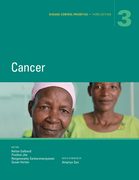
Cancer
recommended
This volume presents the complex patterns of cancer incidence and death around the world and evidence on effective and cost-effective ways to control cancers. The Disease Control Priorities Volume 3
...
evaluation of cancer will indicate where cancer treatment is ineffective and wasteful, and offer alternative cancer care packages that are cost-effective and suited to low-resource settings.
Disease Control Priorities, Third Edition: Volume 3
more

In 2015, the United Nations set important targets to reduce premature
cardiovascular disease (CVD) deaths by 33% by 2030. Africa disproportionately
bears the brunt of CVD burden and has one of the
...
highest risks of dying
from non-communicable diseases (NCDs) worldwide. There is currently
an epidemiological transition on the continent, where NCDs is projected
to outpace communicable diseases within the current decade. Unchecked
increases in CVD risk factors have contributed to the growing burden of three
major CVDs—hypertension, cardiomyopathies, and atherosclerotic diseasesleading to devastating rates of stroke and heart failure. The highest age
standardized disability-adjusted life years (DALYs) due to hypertensive heart
disease (HHD) were recorded in Africa. The contributory causes of heart failure
are changing—whilst HHD and cardiomyopathies still dominate, ischemic
heart disease is rapidly becoming a significant contributor, whilst rheumatic
heart disease (RHD) has shown a gradual decline. In a continent where health
systems are traditionally geared toward addressing communicable diseases,
several gaps exist to adequately meet the growing demand imposed by CVDs.
Among these, high-quality research to inform interventions, underfunded
health systems with high out-of-pocket costs, limited accessibility and
affordability of essential medicines, CVD preventive services, and skill
shortages. Overall, the African continent progress toward a third reduction
in premature mortality come 2030 is lagging behind. More can be done in
the arena of effective policy implementation for risk factor reduction and
CVD prevention, increasing health financing and focusing on strengthening
primary health care services for prevention and treatment of CVDs, whilst
ensuring availability and affordability of quality medicines. Further, investing
in systematic country data collection and research outputs will improve the accuracy of the burden of disease data and inform policy adoption on
interventions. This review summarizes the current CVD burden, important
gaps in cardiovascular medicine in Africa, and further highlights priority
areas where efforts could be intensified in the next decade with potential
to improve the current rate of progress toward achieving a 33% reduction
in CVD mortality.
more
Fact Sheet, May 2018.
Nipah virus (NiV) is a zoonotic virus (it is transmitted from animals to humans) and can also be transmitted through contaminated food or directly between people. In infected people, it causes a range
...
of illnesses from asymptomatic (subclinical) infection to acute respiratory illness and fatal encephalitis. The virus can also cause severe disease in animals such as pigs, resulting in significant economic losses for farmers
more
Guideline ‒ Alternative mass drug administration regimens to eliminate lymphatic filariasis
recommended
Lymphatic filariasis is a vector-borne neglected tropical disease that causes damage of the lymphatic system and can lead to lymphoedema (elephantiasis) and hydrocele in infected individuals. The gl
...
obal baseline estimate of persons affected by lymphatic filariasis is 25 million men with hydrocele and over 15 million people with lymphoedema. At least 36 million persons remain with these chronic disease manifestations. The disease is endemic in 72 countries. In 2016, an estimated total population of 856 million were living in areas with ongoing transmission of the causative filarial parasites and requiring mass drug administration (MDA). Lymphatic filariasis disfigures and disables, and often leads to stigmatization and poverty. Hundreds of millions of dollars are lost annually due to reduced productivity of affected patients. WHO has ranked the disease as one of the world’s leading causes of permanent and long-term disability.
more

COP24 special report: health and climate change
recommended
Exposure to air pollution causes 7 million deaths worldwide every year and costs an estimated US$ 5.11 trillion in welfare losses globally. In the 15 countries that emit the most greenhouse gas emissions, the health impacts
...
of air pollution are estimated to cost more than 4% of their GDP. Actions to meet the Paris goals would cost around 1% of global GDP. The report provides recommendations for governments on how to maximize the health benefits of tackling climate change and avoid the worst health impacts of this global challenge.
It describes how countries around the world are now taking action to protect lives from the impacts of climate change – but that the scale of support remains woefully inadequate, particularly for the small island developing states, and least developed countries. Only approximately 0.5% of multilateral climate funds dispersed for climate change adaptation have been allocated to health projects
more
Excessive consumption of salt (more than 5 g per day) raises blood pressure, a major risk factor for cardiovascular diseases such as heart disease and stroke, and is the leading cause of
...
death in the WHO European Region. Many countries in the Region have initiated national salt reduction strategies, including public awareness campaigns, reformulation, and front-of-pack nutrition labelling. However, despite ongoing efforts, surveillance data indicate that salt intake still far exceeds the limits recommended by WHO to protect health.
more
