
Filter
278
Text search:
World
Humanitarian
Summit
Featured
Recommendations
24
New Publications
86
Language
Document type
No document type
151
Studies & Reports
65
Manuals
22
Strategic & Response Plan
18
Guidelines
14
Fact sheets
4
Training Material
3
Resource Platforms
1
Countries / Regions
Global
23
Syria
8
Myanmar / Burma
8
Africa
8
Sierra Leone
7
South Sudan
7
Nigeria
6
Nepal
6
Guinea
5
Liberia
5
Bangladesh
5
Philippines
4
India
4
Indonesia
4
Laos
4
Ethiopia
3
Ghana
3
Uganda
3
Haiti
3
Kenya
3
Cambodia
3
Ukraine
3
Yemen
3
East and Southern Africa
3
West and Central Africa
3
Jordan
2
Lebanon
2
Zambia
2
Rwanda
2
Sudan
2
Central African Republic
2
Namibia
2
Asia
2
Vietnam
2
Burkina Faso
1
Cameroon
1
Zimbabwe
1
Somalia
1
Iraq
1
Turkey
1
Tanzania
1
Thailand
1
Malaysia
1
Malawi
1
Hungary
1
Burundi
1
Greece
1
Libya
1
Lesotho
1
Middle East and North Africa
1
South–East Asia Region
1
Latin America and the Carribbean
1
Poland
1
Palestine
1
Romania
1
Moldova
1
Japan
1
Belarus
1
Authors & Publishers
Publication Years
Category
Countries
67
Key Resources
46
Women & Child Health
23
Public Health
14
Clinical Guidelines
6
Capacity Building
3
Toolboxes
Disability
37
Conflict
37
Mental Health
19
COVID-19
19
Health Financing Toolbox
17
Planetary Health
16
Refugee
13
Global Health Education
13
HIV
10
2.0 Rapid Response
7
Ebola & Marburg
5
Natural Hazards
4
Caregiver
4
Malaria
4
Specific Hazards
3
NTDs
3
Polio
2
TB
2
Cholera
1
Rapid Response
1
Social Ethics
1
NCDs
1

A discussion paper on the scope of the problem, its drivers, and strategies for moving forward for policy, practice, and research
In many protracted emergencies, the prevalence rates of global acute malnutrition (GAM) regularly exceed the emergency threshold of > 15% of children with acute malnutri
...
The Call to Action on Protection from GBV in Emergencies, formally launched in 2013 by the United Kingdom and Sweden, aims to fundamentally transform the way GBV is addressed in humanitarian operations via the collective action of numerous partners,
...
24 Nov. 2021
Action against gender-based violence being pushed to the outlying margins of the global COVID-19 response
A new Oxfam report shows an undeniable increase in gender-based violence (GBV) during the COVID-19 pandemic around the world t
...

Thirty years ago, the United Nations General Assembly adopted the Convention on the Rights of the Child at a moment of rapid global change marked by the end of apartheid, the fall of the Berlin Wall and the birth of the World Wide Web. These develop
...

In 2006, the Special Session of African Union Health Ministers adopted the Maputo Plan of Action for implementing the Continental Policy Framework on sexual and reproductive health and rights (SRHR), which expired at the end of 2015. The goal was for all stakeholders and partners to join forces and
...
Policy Brief 2 June 2020
The COVID-19 pandemic is a health and human crisis threatening the food security and nutrition of millions of people around the world. Hundreds of millions of people were already suffering from hunger and malnutrition befor
...
The GHS Index is intended to be a key resource in the face of increasing risks of high-consequence and globally catastrophic biological events and in light of major gaps in international financing for preparedness. These risks are magnified by a rapidly changing and interconnected
...

Every five minutes a child dies as the result of violence, according to a ground-breaking report from Unicef UK. The report reveals that the vast majority of children are killed outside warzones and that physical, sexual and emotional abuse is widespread with millions of children unsafe in their hom
...
In 2017, $37.4 billion of development assistance was provided to low- and middleincome countries to maintain or improve health. This amount is down slightly compared to 2016, and since 2010, development assistance for health (DAH) has grown at an annualized rate of 1.0%. While global development ass
...

OECD Development Policy Tools
Recognising that donor policies and responses constantly evolve, this guidance recommends that donors operating in situations of forced displacement prioritise three broad areas of work, where they can best contribute to existing capacities at the national, regiona ...
Recognising that donor policies and responses constantly evolve, this guidance recommends that donors operating in situations of forced displacement prioritise three broad areas of work, where they can best contribute to existing capacities at the national, regiona ...
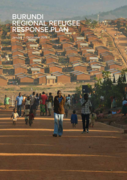
As the Burundi refugee crisis enters its fourth year, some 430,000 Burundian refugees are being hosted across the region by the governments and people of Tanzania, Rwanda, the Democratic Republic of the Congo, and Uganda. Although the spectre of mass violence in Burundi has receded, with the politic
...
Operation update 01/04/2022
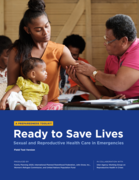
The purpose of the toolkit is to bring together existing learning and guidance as a starting point for stakeholders to begin SRH preparedness work. Within the SRH sector the field of preparedness is relatively new and growing. More collective effort is required to further evaluate the impact of prep
...

Guidance to implement the Framework for Action for Food Security and Nutrition in Protracted Crises (CFS-FFA) | Background Note
Disability. Assessment among Syrian Refugees in Jordan and Lebanon
