
Filter
666
Text search:
World
Health
Organization.
Country
Office
for
Nepal
Featured
Recommendations
70
New Publications
197
Language
Document type
No document type
379
Studies & Reports
128
Guidelines
68
Manuals
49
Strategic & Response Plan
16
Situation Updates
8
Fact sheets
8
Training Material
7
Infographics
3
Countries / Regions
Nepal
98
Global
47
South–East Asia Region
37
Asia
29
India
23
Bangladesh
14
Myanmar / Burma
8
Haiti
6
Pakistan
6
Liberia
5
Uganda
5
Tanzania
5
Thailand
5
Indonesia
5
South Africa
5
Ethiopia
4
Ghana
4
Philippines
4
Zambia
4
Sri Lanka
4
Africa
4
Sierra Leone
3
Afghanistan
3
Syria
3
Kenya
3
Cambodia
3
Mozambique
3
North Macedonia
3
Latin America and the Carribbean
3
Western and Central Europe
3
Russia
3
Vietnam
3
Nigeria
2
Zimbabwe
2
Jordan
2
Lebanon
2
Malawi
2
East and Southern Africa
2
Western Pacific Region
2
Bhutan
2
Laos
2
Georgia
2
Guinea
1
Senegal
1
Congo, Democratic Republic of
1
Morocco
1
Rwanda
1
Central African Republic
1
Argentina
1
Namibia
1
Brazil
1
Hungary
1
Ukraine
1
Colombia
1
Ecuador
1
Mexico
1
Yemen
1
West and Central Africa
1
Middle East and North Africa
1
Eastern Europe and Central Asia
1
Other region
1
Venezuela
1
North Korea
1
Armenia
1
Timor Leste/ East Timor
1
Romania
1
Kyrgyzstan
1
Jamaica
1
Belgium
1
Norway
1
Portugal
1
Belarus
1
Authors & Publishers
Publication Years
Category
Countries
176
Key Resources
76
Clinical Guidelines
56
Women & Child Health
54
Public Health
43
Capacity Building
12
Pharmacy & Technologies
2
Toolboxes
HIV
72
Disability
52
Mental Health
46
COVID-19
32
Planetary Health
31
TB
28
NTDs
28
Global Health Education
20
Natural Hazards
18
Conflict
17
AMR
15
Caregiver
14
2.0 Rapid Response
13
Refugee
11
Pharmacy
10
NCDs
10
Rapid Response
8
Health Financing Toolbox
7
Malaria
5
Polio
4
Specific Hazards
4
Ebola & Marburg
3
Cholera
2
Typhoon
2
Zika
1
Long-term planning for an adequate and safe supply of drinking-water should be set in the context of growing external uncertainties arising from changes in the climate and environment. The water safety plan (WSP) process offers a systematic framewo
...
This report presents, for the first time, a global assessment of the extent to which health care facilities provide essential water, sanitation and hygiene (WASH) services. Drawing on data from 54 l
...

Public health emergencies, including pandemics, highlight the need for health systems and services that are prepared, resilient and ready to respon
...

The Global Action Plan on Antimicrobial Resistance (AMR) calls for making AMR a core component of professional education and training. In 2018, the World
...
In 1997, the Fiftieth World Health Assembly adopted resolution WHA50.29 on the elimination of
lymphatic filariasis as a public health problem. Pre
...
Data on the essential building blocks of mental health systems, including mental health
governance, financing, service delivery, human resources and information, are reported.
...
It is impossible to address the many complex needs of respiratory virus surveillance with a single surveillance system. Multiple systems, investigations and studies must each be fit-for-purpose to specific priority surveillance objectives, and only
...
WHO guideline on health policy and system support to optimize community health worker programmes
recommended
The guideline uses state-of-the-art evidence to identify effective policy options to strengthen community health worker (CHW) programme performance through their proper integration in health systems
...
COP24 special report: health and climate change
recommended
Exposure to air pollution causes 7 million deaths worldwide every year and costs an estimated US$ 5.11 trillion in welfare losses globally. In the 15 countries that emit the most greenhouse gas emissions, the health impacts of air pollution are esti
...

This fourth WHO report on neglected tropical diseases (NTDs) reviews the progress made towards achieving the Roadmap targets for 2020, noting the remaining challenges, then looks beyond 2020 to evaluate the changing global
...
The COVID-19 pandemic has led to large increases in healthcare waste, straining under resourced healthcare facilities and exacerbating environmental impacts from solid waste. This report quantifies the additional COVID-19 healthcare waste generated, describes current healthcare waste management syst
...
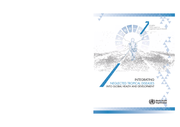
Advances have been made through expanded interventions delivered through five public health approaches: innovative and intensified disease management; preventive chemotherapy; vector ecology and management; veterinary public
...

Every year, nearly 250 million people move across borders temporarily or permanently for a job opportunity, studying, to flee a crisis back home, or for other reasons. Another 750 million move
...

To survive and thrive, children and adolescents need good health, adequate nutrition, security, safety and a supportive clean environment, opportunities for early learning and education, responsive
...

To support the achievement of health equity in the Region, the regional inter-agency movement Every Woman Every Child Latin America and the Caribbean (EWEC-LAC) advocates for and supports the use of
...

Cum să faci ceea ce contează în perioade stresante este un ghid al OMS de gestionare a stresului, pentru a face faţă mai ușor greutăţilor. Acest ghid ilustrat vine în sprijinul implementării recomandărilor OMS pentru gestionarea stresului.

The aim of these Guidelines is to provide a framework for the conservation and sustainable use of plants in medicine. To do this, the Guidelines describe the various tasks that should be carried out to ensure that where medicinal plants are taken fr
...
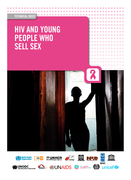
Technical Brief
