
Filter
906
Text search:
World
Health
Organization
Eastern
Mediterranean
Featured
Recommendations
126
New Publications
179
Language
Document type
No document type
312
Studies & Reports
247
Guidelines
143
Manuals
65
Strategic & Response Plan
53
Fact sheets
25
Situation Updates
19
Training Material
16
Resource Platforms
15
Infographics
7
Brochures
1
App
1
Online Courses
1
Videos
1
Countries / Regions
Global
92
Syria
31
Africa
29
Middle East and North Africa
22
Western and Central Europe
18
Somalia
12
Yemen
11
Latin America and the Carribbean
10
Pakistan
9
Sudan
9
Nigeria
8
South–East Asia Region
8
Eastern Europe
8
Congo, Democratic Republic of
6
Afghanistan
6
Lebanon
6
Sierra Leone
5
Liberia
5
Ethiopia
5
India
5
Jordan
5
Kenya
5
Myanmar / Burma
5
West and Central Africa
5
Asia
5
Saudi Arabia
4
Nepal
4
Iraq
4
Rwanda
4
East and Southern Africa
4
Iran
4
Ghana
3
Uganda
3
South Sudan
3
Turkey
3
Egypt
3
China
3
Ukraine
3
Russia
3
Senegal
2
Cambodia
2
Thailand
2
South Africa
2
Benin
2
Greece
2
Madagascar
2
Western Pacific Region
2
Eastern Europe and Central Asia
2
Venezuela
2
Albania
2
Djibouti
2
Guinea
1
Morocco
1
USA
1
Cameroon
1
Niger
1
Philippines
1
Tanzania
1
Indonesia
1
Bangladesh
1
Malawi
1
Brazil
1
North Macedonia
1
Serbia
1
Croatia
1
Colombia
1
Ecuador
1
Libya
1
Sri Lanka
1
Palestine
1
Qatar
1
Georgia
1
Tunisia
1
Authors & Publishers
Publication Years
Category
Countries
127
Clinical Guidelines
119
Public Health
111
Women & Child Health
72
Key Resources
57
Capacity Building
26
Pharmacy & Technologies
19
Toolboxes
Mental Health
107
COVID-19
76
Planetary Health
59
TB
49
NTDs
47
NCDs
44
HIV
42
Global Health Education
38
Conflict
35
AMR
34
Refugee
30
Caregiver
30
Rapid Response
26
Malaria
26
Disability
24
Pharmacy
20
2.0 Rapid Response
19
Ebola & Marburg
17
Polio
16
Cholera
13
Natural Hazards
12
Zika
10
Health Financing Toolbox
8
Specific Hazards
4
Typhoon
1
Social Ethics
1
The threat climate change poses to health, equity, and development has been rigorously documented. However, in an era marked by economic crisis, regional conflicts, natural disasters and growing disparities between rich and poor, the joint global ac
...
WHO's Health in the Green Economy sector briefings examine the health impacts of climate change mitigation strategies considered by the Intergovernmental Panel on Climate Change in their Fourth Asse
...

Guidelines on sanitation and health
recommended
The new WHO Guidelines on Sanitation and Health summarize the evidence on the effectiveness of a range of sanitation interventions and provide a comprehensive framework for health-protecting sanitat
...
This compendium collates current tools and resources on quality improvement developed by the WHO Service Delivery and Safety Department and provides examples of how the tools and resources have been applied in country settings. The target audience for this document are ministries of
...
A toolkit for Implementation. Module 3: Participatory community assessment in maternal and newborn health
WHO guideline on health policy and system support to optimize community health worker programmes
recommended
The guideline uses state-of-the-art evidence to identify effective policy options to strengthen community health worker (CHW) programme performance through their proper integration in health systems
...
The aim of the WHO QualityRights tool kit is to support countries in assessing and
improving the quality and human rights of their mental health and social care facilities.
The tool kit is based on an extensive international review by people with
...
Epilepsy: a public health imperative
recommended
This is the first global report on epilepsy summarizing the available evidence on the burden of epilepsy and the public health response required at global, regional and national levels.
The reports highlights major gaps in awareness, diagnosis, t
...

People younger than 20 years comprise 35% of the global population and 40% of the global population of least-developed nations. The number of children - neonates, infants, children, and adolescents up to 19 years of age - who need pediatric palliative care (PPC) each year may be as high as 21 millio
...
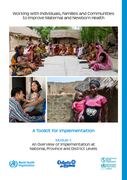
A Toolkit for Implementation. Module 1: An Overview of Implementation at National, Province and District Levels

Providing quality, stigma-free services is essential to equitable health care for all and achieving global HIV goals and broader Sustainable Development Goals related to health. Every person has the
...
This Curriculum Guide accompanies the Refugee and Migrant Health: Global Competency Standards for Health Workers and the Knowledge Guide to support the operationalization of the Standards. The Curri
...

The report “Dementia: a public health priority” has been jointly developed by WHO and Alzheimer's Disease International. The purpose of this report is to raise awareness of dementia as a public health
...
This manual presents a compelling case for action on carbapenem-resistant organisms (CROs) and describes the linkages between the prevention and control of CROs and the Global Action Plan on Antimicrobial Resistance (AMR). It describes how the eight recommendations contained within the
...
The Knowledge Guide provides guidance on how health workers can apply the Standards to their own practice. For each of the nine competencies and their specific behaviours in the Standards, the Knowledge Guide examines in detail how a
...
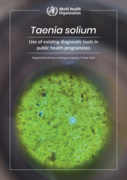
Taeniasis and cysticercosis caused by the parasite T. solium affect vulnerable populations,
mainly in Latin America, sub-Saharan Africa and Asia, where pigs (the intermediate host) roam
free and poor sanitation allows pigs access to human faeces.
8 January 2021
Sequencing enabled the world to rapidly identify SARS-CoV-2 and develop diagnostic tests and other tools for outbreak management. Continued genome sequencing supports the monitoring of the disease’s spread and evolution of the viru
...
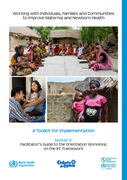
A Toolkit for Implementation. Module 2: Facilitator’s guide to the orientation workshop on the IFC framework;
Progress Report
