
Filter
157
Text search:
Smoke
Disaster
Featured
20
40
Language
Document type
79
26
21
20
7
3
Countries
11
9
6
6
6
5
3
3
3
3
2
2
2
2
1
1
1
1
1
1
1
1
1
1
1
1
1
1
1
1
1
1
Authors & Publishers
Publication Years
Category
49
28
7
6
3
Toolboxes
31
15
14
8
6
5
4
3
3
3
3
2
2
2
2
1
1
1

Current evidence that the climate is changing is overwhelming. Impacts of climate change and variability are being observed: more intense heat-waves, fires and floods; and increased prevalence of food- water- and vector-borne diseases. Climate change will put pressure on environmental and health det
...
In 2013 the World Health Organization (WHO) published the report Protecting health from climate change:vulnerability and adaptation assessment. The aim was to provide basic and flexible guidance on conducting national or subnational assessments of current and future vulnerability (the susceptibilit
...
The Government recognizes the critical role of the built environment in addressing climate change and environmental degradation. To this end, it has identified and empowered the Kenya Building Research Centre to champion and coordinate the government’s green building agenda in relation to climate
...

Environmental pollution, protection, quality and sustainability
JOIN European First Aid Guidelines
recommended
In the event of an accident or medical emergency, First Aid saves lives. Keeping the patient alive and safe until the arrival of expert professional help is a vital part of the chain of care which leads to recovery. The principle of First Aid must be simple skills, clearly taught and capable of bein
...

Over the ages, human societies have altered local ecosystems and modified regional climates. Today the human influence has attained a global scale. This reflects the recent rapid increase in population size, energy consumption, intensity of land use, international trade and travel, and other human a
...
Human activities are driving fundamental changes to the biosphere and disrupting many of our planet’s natural systems. There is increasing scientific evidence that the unfolding climate crisis, global pollution, unprecedented levels of biodiversity loss, and pervasive changes in land use and cover
...
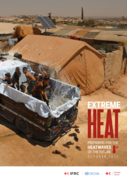
Climate change is already having severe impacts across our planet, bringing new and previously unimaginable challenges to the people least responsible for greenhouse gas emissions.
This report, the first we’ve released jointly in the history of our organizations, provides a sobering review of h
...

Patient safety standards are critical for the establishment and assessment of patient safety programmes within hospitals. This third edition of the Patient safety assessment manual provides an updated set of standards and assessment criteria that reflect current best practice and WHO guidance. The m
...

“We must not forget that no matter where we are or how old we are, we can all work for life and take action.” Francisco Vera, 15, UNICEF Child Advocate
The Young Climate Activists toolkit was created by advocates of all ages who, like you, are deeply concerned about our planet's future. Havin
...

Caring for burns patients from the incident scene to definitive treatment can be a complex, resource-consuming process with the potential to overwhelm health system capacity.This document provides practical guidance for building capacity and capability for burns care from clinical, human resources a
...

The social protection landscape for people affected by TB in the WHO South-East Asia Region

Every day, schools engage in numerous activities that help promote the health and well-being of students, families, and communities. There is clear evidence of the benefits of the health-promoting schools (HPS) approach, not only for improving overall health outcomes (physical, mental, and social) i
...

Fragile Beginnings. The Fragile Beginnings series examines the growing body of research on the unique vulnerabilities of children: in utero and at birth, during infancy and childhood and throughout adolescence. Its purpose is to enable evidence-based advocacy and action on children’s environmental
...

This policy brief presents a summary of current evidence on vulnerability to TB and proposes interventions for equitable, person-centred, and human rights-based TB prevention and care. It aligns with WHO policies and guidance on TB prevention and screening, management of TB and comorbidities, access
...

Drawing on the World Health Organization’s package of NCD best buys, the report demonstrates how these evidence-based measures can help countries reduce premature deaths, strengthen health systems, and advance progress towards the Sustainable Development Goals. It provides policymakers, donors, ad
...
This document, with a focus on the built environment and health care facilities, intends to guide the audience in preparing for and responding to SARI pandemics caused by existing and novel pathogens. It provides technical guidance on designing, establishing, and managing health care facilities for
...
