
Filter
325
Text search:
Morris,
J.
Featured
Recommendations
34
New Publications
40
Language
Document type
No document type
144
Studies & Reports
75
Guidelines
73
Manuals
16
Fact sheets
10
Strategic & Response Plan
4
Situation Updates
2
Training Material
1
Countries / Regions
Russia
15
Western and Central Europe
13
Latin America and the Carribbean
10
Global
9
India
8
Kenya
6
Ukraine
6
Eastern Europe and Central Asia
5
Eastern Europe
5
Liberia
4
Germany
4
Rwanda
4
Mozambique
4
Brazil
4
Middle East and North Africa
4
Uganda
3
Syria
3
South Africa
3
Bangladesh
3
Yemen
3
Ethiopia
2
Cameroon
2
Zimbabwe
2
Nepal
2
South Sudan
2
Indonesia
2
Sudan
2
Mexico
2
Myanmar / Burma
2
West and Central Africa
2
South–East Asia Region
2
Asia
2
Africa
2
Vietnam
2
Jamaica
2
Spain
2
Burkina Faso
1
Sierra Leone
1
Nigeria
1
Congo, Democratic Republic of
1
USA
1
Haiti
1
Pakistan
1
Afghanistan
1
Zambia
1
China
1
Malawi
1
Argentina
1
Colombia
1
Botswana
1
Lesotho
1
Sri Lanka
1
East and Southern Africa
1
Paraguay
1
Venezuela
1
Estonia
1
Kyrgyzstan
1
France
1
Authors & Publishers
Publication Years
Category
Countries
85
Clinical Guidelines
37
Public Health
25
Women & Child Health
22
Key Resources
12
Pharmacy & Technologies
2
Capacity Building
1
Toolboxes
COVID-19
72
Mental Health
59
HIV
20
Planetary Health
14
Disability
13
NCDs
12
TB
11
AMR
8
Caregiver
8
Cholera
6
Refugee
6
Ebola & Marburg
5
Rapid Response
3
Global Health Education
3
Pharmacy
3
NTDs
3
Zika
2
Conflict
1
Natural Hazards
1
Malaria
1
2.0 Rapid Response
1

Journal of Child Psychology and Psychiatry60:5 (2019), pp 500–515
The main objective of this guidance is to provide scientific advice on public health principles and considerations for infection and prevention control of COVID-19 in migrant and refugee reception and detention centres in the European Union and European Economic Area (EU/EEA) and the United Kingdom
...
Laboratory biosafety guidance related to coronavirus disease (COVID-19): Interim guidance, 28 January 2021
recommended
The latest update (28 January 2021) includes the following addition and revision:
biosafety aspects for working with antigen-detecting rapid diagnostic test;
handling new variants of SARS-CoV-2 in the laboratory;
updated assay decontamination before disposal;
personal protectiv
...
This brief summarizes current evidence and guidance for maintaining safe and effective care across the spectrum of maternal, newborn and infant care while protecting mother and child and health care providers during COVID-19. Furthermore, implications of the principle of “do no harm” are reviewe
...
INTRODUCTION: The COVID-19 pandemic has disrupted health systems around the world. The objectives of this study are to estimate the overall effect of the pandemic on essential health service use and outcomes in Mexico, describe observed and predicted trends in services over 24 months, and to estimat
...
A Joint Position Statement of the Indian Society of Critical Care Medicine (ISCCM) and the Indian
Association of Palliative Care (IAPC)
Indian Journal of Critical Care Medicine September 2014 Vol 18 Issue 9
Limpieza y desinfección de las superficies del entorno inmediato en el marco de la COVID-19
recommended
El propósito de este documento es proporcionar orientación sobre la limpieza y desinfección de las superficies ambientales en el contexto de COVID-19. Esta orientación está destinada a los profesionales de la salud, los profesionales de la salud pública y las autoridades sanitarias que están
...
This Rapid Advice Guideline updates the Interim Guidance on the “Assessment of infants with microcephaly in the context of Zika virus” published in February 2016 (WHO/ZIKV/MOC/16.3). The recommendations provides guidance on the screening, clinical assessment, neuroimaging, laboratory investigati
...
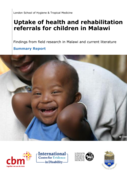
Findings from field research in Malawi and current literature.
The WHO Framework Convention on Tobacco Control (WHO FCTC) is an evidence-based treaty that reaffirms the right of all people to the highest standard of health and was developed in response to the globalization of the tobacco epidemic. Member States of the WHO South-East Asia Region have made
...
The primary audience for these recommendations includes health professionals who are responsible for developing national and local health-care guidelines and protocols and health workers involved in the provision of care to women and their newborns during pregnancy, labour and childbirth; this inclu
...

The Coronavirus Disease 2019 (COVID-19) has had a continuous and robust impact on world health. The resulting COVID-19 pandemic has had a devastating physical, mental and fiscal impact on the millions of people living with noncommunicable diseases (NCDs), as they have a higher risk of severe illness
...
Background: Little is known about post-traumatic stress (PTSD) prevalence rates in community samples. This is especially true for the African continent where child-soldiers, HIV/AIDS affected and orphans have been the target for PTSD prevalence studies. Objectives: The aim of this study is to invest
...

UNAIDS 2018 / Guidance
Guidance for policy-makers, and people living with, at risk of or affected by HIV
Undernutrition increases the risk of tuberculosis (TB) and in turn TB can lead to malnutrition. Undernutrition is therefore highly prevalent among people with TB. It has been demonstrated that undernutrition is a risk factor for progression from TB infection to active TB disease and that undernutrit
...
The World Health Organization’s comprehensive antenatal care (ANC) guideline WHO recommendations on antenatal care for a positive pregnancy experience was first published in 2016 with the objective of improving the quality of routine health care that all women and adolescent girls receive during p
...
The knowledge guide is the second publication in the Self-care competency framework to support health and care workers.
This describes how health and care workers can apply each of the 10 competency standards in their work, detailing the necessary knowledge, skills and attitudes that underpin the
...
