Filter
293
Filtered Results: 293
Text search:
Logistics
Cluster,
WFP
Featured
Recommendations
22
New Publications
128
Language
Document type
No document type
175
Strategic & Response Plan
35
Studies & Reports
27
Situation Updates
20
Guidelines
17
Manuals
14
Training Material
1
Dashboards/Maps
1
Infographics
1
Online Courses
1
Fact sheets
1
Countries / Regions
Sierra Leone
21
South Sudan
17
Nepal
16
Mozambique
16
Myanmar / Burma
14
Congo, Democratic Republic of
12
Liberia
10
Global
9
Syria
8
Haiti
7
Kenya
6
Nigeria
6
Malawi
6
Zimbabwe
6
Philippines
6
Yemen
6
Ethiopia
6
Guinea
5
Bangladesh
5
Uganda
5
Central African Republic
5
Ukraine
3
Rwanda
3
Africa
3
Tanzania
3
West and Central Africa
3
Sudan
3
Pakistan
3
Lesotho
2
Ghana
2
Niger
2
Afghanistan
2
Burundi
2
East and Southern Africa
2
Papua New Guinea
2
Somalia
2
Togo
1
Iran
1
Burkina Faso
1
Peru
1
Asia
1
Venezuela
1
Djibouti
1
Namibia
1
Palestine
1
Bhutan
1
Botswana
1
Zambia
1
Ecuador
1
Madagascar
1
Eswatini/ Swaziland
1
Authors & Publishers
Publication Years
Category
Countries
138
Key Resources
44
Women & Child Health
8
Public Health
7
Capacity Building
5
Clinical Guidelines
4
Toolboxes
Ebola & Marburg
37
COVID-19
36
Natural Hazards
35
Conflict
31
Rapid Response
11
2.0 Rapid Response
11
HIV
8
Planetary Health
7
Refugee
3
Disability
3
TB
2
Caregiver
2
Health Financing Toolbox
2
Zika
2
Polio
2
Typhoon
2
South Sudan
1
Cholera
1
NTDs
1

The duration of breastfeeding and support from health services to improve feeding practices among mothers living with HIV
This operational guidance, developed by WHO, UNICEF and ENN, outlines the duration of breastfeeding and support from health services to improve infant feeding practices amon...
This operational guidance, developed by WHO, UNICEF and ENN, outlines the duration of breastfeeding and support from health services to improve infant feeding practices amon...
The magnitude of urban disasters, high population densities, and a complex social, political and institutional environment has challenged the manner in which humanitarian agencies are used to working. Humanitarian agencies are now grappling with how to change their approaches to this reality. This d...
Report commissioned by the IASC Inter-Agency Humanitarian Evaluations Steering Group as part of the Syria Coordinated Accountability and Lessons Learning Initiative
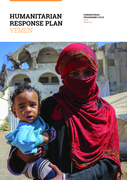

English Analysis on World about Disaster Management and Protection and Human Rights; published on 12 Jan 2021 by IFRC

While the full extent of Cyclone Ida’s impact is still being assessed, early reports indicate significant damage to infrastructure and livelihoods, with an estimated 3,000km2 of land submerged. Preliminary government reports as of 24 March indicate that more than 58,600 houses have been damaged, i...
n Autumn 2013, HHI Executive Director, Vincenzo Bollettino, traveled to the Philippines to participate in an assessment of civil-military engagement in the humanitarian response to Typhoon Haiyan. The report was sponsored by the Center for Excellence in Disaster Management and Humanitarian Assistanc...
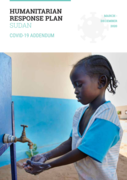
Sudan recorded the first COVID-19 case on 13 March 2020 and, at the beginning of July, the Federal Ministry of Health had confirmed that nearly 10,000 people had contracted the virus, including over 600 who died from the disease across the country. Although more than 70 per cent of the confirmed cas...

This document is produced by the Humanitarian Country Team and the United Nations Resident
Coordinator’s Office in Mozambique, with the support of the United Nations Office for the Coordination of
Humanitarian Affairs (OCHA). The projects reflected here support the national government. It covers...
There has been a significant reduction in the number of displaced people - with 73,296 people currently hosted in 70 accommodation centres; down from 142,327 people the week before.
A total of 4,979 cholera cases were recorded in Beira, Dondo, Buzi and Nhamatanda and the death toll has reached eigh...

The Sphere Handbook in Ukrainian
recommended
The Ukrainian translation of the Handbook was done by the Rev Marian and Dr Roman Curkowskyj Foundation. Established in 1990 in Toronto, Canada, the Foundation supports the advancement of education, notably through the publication of works in Ukrainian. 2011 Edition.
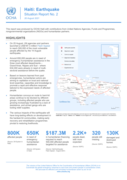
On 25 August, UN agencies and partners launched a US$187.3 million Flash Appeal to reach 500,000 of the most vulnerable people affected by the 14 August earthquake.
Around 650,000 people are in need of emergency humanitarian assistance in the three most affected departments – Grand’Anse, Nipp...

The module is currently available in English, French, Nepali, Portuguese, Russian, and Spanish