
Filter
3842
Text search:
Food
Security
Featured
324
1168
Language
3690
110
85
56
53
28
26
20
10
8
7
6
5
4
4
4
4
4
3
3
3
3
3
3
3
2
2
2
2
2
2
2
2
2
2
2
2
2
2
2
1
1
1
1
1
1
1
1
1
1
1
1
1
1
1
1
1
1
Document type
1918
820
412
219
214
90
73
64
12
9
6
2
2
Countries
187
117
114
114
111
104
87
87
75
75
73
69
68
66
62
56
50
49
45
44
43
43
43
41
40
38
38
37
36
31
30
28
27
27
25
24
23
22
22
22
20
19
19
17
17
16
16
15
14
13
13
12
12
12
12
12
12
11
11
11
11
10
10
9
9
8
8
8
7
6
6
6
6
6
6
5
5
4
4
4
4
4
4
4
4
4
3
3
3
3
3
3
3
3
3
2
2
2
2
2
2
2
2
2
2
2
2
2
2
1
1
1
1
1
1
1
1
1
1
1
1
1
1
1
1
1
1
1
1
1
1
1
1
1
1
1
1
1
Authors & Publishers
372
106
101
91
79
71
60
46
39
37
35
32
32
31
30
29
28
27
25
24
22
21
21
19
19
18
18
17
16
15
15
15
15
15
14
14
14
14
14
14
13
13
12
12
11
11
11
10
10
10
10
10
9
9
9
9
9
9
9
9
8
8
8
8
8
8
7
7
7
7
7
7
7
7
7
7
7
7
7
7
7
6
6
6
6
6
6
6
6
6
6
6
6
6
6
6
6
6
6
5
5
5
5
5
5
5
5
5
5
5
5
5
5
5
5
5
5
5
5
5
5
5
5
5
5
5
5
5
4
4
4
4
4
4
4
4
4
4
4
4
4
4
4
4
4
4
4
4
4
4
4
4
4
4
4
4
4
4
4
4
4
4
4
4
4
4
4
4
4
4
4
4
3
3
3
3
3
3
3
3
3
3
3
3
3
3
3
3
3
3
3
3
3
3
3
3
3
3
3
3
3
3
3
3
3
3
3
3
3
3
3
3
3
3
3
3
3
3
3
3
3
3
3
3
3
3
3
3
3
3
3
3
3
3
3
3
3
3
3
3
3
3
3
3
3
3
3
3
3
3
3
3
3
3
3
3
3
3
3
3
3
3
3
3
2
2
2
2
2
2
2
2
2
2
2
2
2
2
2
2
2
2
2
2
2
2
2
2
2
2
2
2
2
2
2
2
2
2
2
2
2
2
2
2
2
2
2
2
2
2
2
2
2
2
2
2
2
2
2
2
2
2
2
2
2
2
2
2
2
2
2
2
2
2
2
2
2
2
2
2
2
2
2
2
2
2
2
2
2
2
2
2
2
2
2
2
2
2
2
2
2
2
2
2
2
2
2
2
2
2
2
2
2
2
2
2
2
2
2
2
2
2
2
2
2
2
2
2
2
2
2
2
2
2
2
2
2
2
2
2
2
2
2
2
2
2
2
2
2
2
2
2
2
2
2
2
2
2
2
2
2
2
2
2
2
2
2
2
2
2
2
2
2
2
2
2
2
2
2
2
2
2
2
2
2
2
2
2
2
2
2
2
2
2
2
2
2
2
2
2
2
2
1
1
1
1
1
1
1
1
1
1
1
1
1
1
1
1
1
1
1
1
1
1
1
1
1
1
1
1
1
1
1
1
1
1
1
1
1
1
1
1
1
1
1
1
1
1
1
1
1
1
1
1
1
1
1
1
1
1
1
1
1
1
1
1
1
1
1
1
1
1
1
1
1
1
1
1
1
1
1
1
1
1
1
1
1
1
1
1
1
1
1
1
1
1
1
1
1
1
1
1
1
1
1
1
1
1
1
1
1
1
1
1
1
1
1
1
1
1
1
1
1
1
1
1
1
1
1
1
1
1
1
1
1
1
1
1
1
1
1
1
1
1
1
1
1
1
1
1
1
1
1
1
1
1
1
1
1
1
1
1
1
1
1
1
1
1
1
1
1
1
1
1
1
1
1
1
1
1
1
1
1
1
1
1
1
1
1
1
1
1
1
1
1
1
1
1
1
1
1
1
1
1
1
1
1
1
1
1
1
1
1
1
1
1
1
1
1
1
1
1
1
1
1
1
1
1
1
1
1
1
1
1
1
1
1
1
1
1
1
1
1
1
1
1
1
1
1
1
1
1
1
1
1
1
1
1
1
1
1
1
1
1
1
1
1
1
1
1
1
1
1
1
1
1
1
1
1
1
1
1
1
1
1
1
1
1
1
1
1
1
1
1
1
1
1
1
1
1
1
1
1
1
1
1
1
1
1
1
1
1
1
1
1
1
1
1
1
1
1
1
1
1
1
1
1
1
1
1
1
1
1
1
1
1
1
1
1
1
1
1
1
1
1
1
1
1
1
1
1
1
1
1
1
1
1
1
1
1
1
1
1
1
1
1
1
1
1
1
1
1
1
1
1
1
1
1
1
1
1
1
1
1
1
1
1
1
1
1
1
1
1
1
1
1
1
1
1
1
1
1
1
1
1
1
1
1
1
1
1
1
1
1
1
1
1
1
1
1
1
1
1
1
1
1
1
1
1
1
1
1
1
1
1
1
1
1
1
1
1
1
1
1
1
1
1
1
1
1
1
1
1
1
1
1
1
1
1
1
1
1
1
1
1
1
1
1
1
1
1
1
1
1
1
1
1
1
1
1
1
1
1
1
1
1
1
1
1
1
1
1
1
1
1
1
1
1
1
1
1
1
1
1
1
1
1
1
1
1
1
1
1
1
1
1
1
1
1
1
1
1
1
1
1
1
1
1
1
1
1
1
1
1
1
1
1
1
1
1
1
1
1
1
1
1
1
1
1
1
1
1
1
1
1
1
1
1
1
1
1
1
1
1
1
1
1
1
1
1
1
1
1
1
1
1
1
1
1
1
1
1
1
1
1
1
1
1
1
1
1
1
1
1
1
1
1
1
1
1
1
1
1
1
1
1
1
1
1
1
1
1
1
1
1
1
1
1
1
1
1
1
1
1
1
1
1
1
1
1
1
1
1
1
1
1
1
1
1
1
1
1
1
1
1
1
1
1
1
1
1
1
1
1
1
1
1
1
1
1
1
1
1
1
1
1
1
1
1
1
1
1
1
1
1
1
1
1
1
1
1
1
1
1
1
1
1
1
1
1
1
1
1
1
1
1
1
1
1
1
1
1
1
1
1
1
1
1
1
1
1
1
1
1
1
1
1
1
1
1
1
1
1
1
1
1
1
1
1
1
1
1
1
1
1
1
1
1
1
1
1
1
1
1
1
1
1
1
1
1
1
1
1
1
1
1
1
1
1
1
1
1
1
1
1
1
1
1
1
1
1
1
1
1
1
1
1
1
1
1
1
1
1
1
1
1
1
1
1
1
1
1
1
1
1
1
1
1
1
1
1
1
1
1
1
1
1
1
1
1
1
1
1
1
1
1
1
1
1
1
1
1
1
1
1
1
1
1
1
1
1
1
1
1
1
1
1
1
1
1
1
1
1
1
1
1
1
1
1
1
1
1
1
1
1
1
1
1
1
1
1
1
1
1
1
1
1
1
1
1
1
1
1
1
1
1
1
1
1
1
1
1
1
1
1
1
1
1
1
1
1
1
1
1
1
1
1
1
1
1
1
1
1
1
1
1
1
1
1
1
1
1
1
1
1
1
1
1
1
1
1
1
1
1
1
1
1
1
1
1
1
1
1
1
1
1
1
1
1
1
1
1
1
1
1
1
1
1
1
1
1
1
1
1
1
1
1
1
1
1
1
1
1
1
1
1
1
1
1
1
1
1
1
1
1
1
1
1
1
1
1
1
1
1
1
1
1
1
1
1
1
1
1
1
1
1
1
1
1
1
1
1
1
1
1
1
1
1
1
1
1
1
1
1
1
1
1
1
1
1
1
1
1
1
1
1
1
1
1
1
1
1
1
1
1
1
1
1
1
1
1
1
1
1
1
1
1
1
1
1
1
1
1
1
1
1
1
1
1
1
1
1
1
1
1
1
1
1
1
1
1
1
1
1
1
1
1
1
1
1
1
1
1
1
1
1
1
1
1
1
1
1
1
1
1
1
1
1
1
1
1
1
1
1
1
1
1
1
1
1
1
1
1
1
1
1
1
1
1
1
1
1
1
1
1
1
1
1
1
1
1
1
1
1
1
1
1
1
1
1
1
1
1
1
1
1
1
1
1
1
1
1
1
1
1
1
1
1
1
1
1
1
1
1
1
1
1
1
1
1
1
1
1
1
1
1
1
1
1
1
1
1
1
1
1
1
1
1
1
1
1
1
1
1
1
1
1
1
1
1
1
1
1
1
1
1
1
1
1
1
1
1
1
1
1
1
1
1
1
1
1
1
1
1
1
1
1
1
1
1
1
1
1
1
1
1
1
1
1
1
1
1
1
1
1
1
1
1
1
1
1
1
1
1
1
1
1
1
1
1
1
1
1
1
1
1
1
1
1
1
1
1
1
1
1
1
1
1
1
1
1
1
1
1
1
1
1
1
1
1
1
1
1
1
1
1
1
1
1
1
1
1
1
1
1
1
1
1
1
1
1
1
1
1
1
1
1
1
1
1
1
1
1
1
1
1
1
1
1
1
1
1
1
1
1
1
1
1
1
1
1
1
1
1
1
1
1
1
1
1
1
1
1
1
1
1
1
1
1
1
1
1
1
1
1
1
1
1
1
1
1
1
1
1
1
1
1
1
1
1
1
1
1
1
1
1
1
1
1
1
1
1
1
1
1
1
1
1
1
1
1
1
1
1
1
1
1
1
1
1
1
1
1
1
1
1
1
1
1
1
1
1
1
1
1
1
1
1
1
1
1
1
1
1
1
1
1
1
1
1
1
1
1
1
1
1
1
1
1
1
1
1
1
1
1
1
1
1
1
1
1
1
1
1
1
1
1
1
1
1
1
1
1
1
1
1
1
1
1
1
1
1
1
1
1
1
1
1
1
1
1
1
1
1
1
1
1
1
1
1
1
1
1
1
1
1
1
1
1
1
1
1
1
1
1
1
1
1
1
1
1
1
1
1
1
1
1
1
1
1
1
1
1
1
1
1
1
1
1
1
1
1
1
1
1
1
1
1
1
1
1
1
1
1
1
1
1
1
1
1
1
1
1
1
1
1
1
1
1
1
1
1
1
1
1
1
1
1
1
1
1
1
1
1
1
1
1
1
1
1
1
1
1
1
1
1
1
1
1
1
1
1
1
1
1
1
1
1
1
1
1
1
1
1
1
1
1
1
1
1
1
1
1
1
1
1
1
1
1
1
1
1
1
1
1
1
1
1
1
1
1
1
1
1
1
1
1
1
1
1
1
1
1
1
1
1
1
1
1
1
1
1
1
1
1
1
1
1
1
1
1
1
1
1
1
1
1
1
1
1
1
1
1
1
1
1
1
1
1
1
1
1
1
1
1
1
1
1
1
1
1
1
1
1
1
1
1
1
1
1
1
1
1
1
1
1
1
1
1
1
1
1
1
1
1
1
1
1
1
1
1
1
1
1
1
1
1
1
1
1
1
1
1
1
1
1
1
1
1
1
1
1
1
1
1
1
1
1
1
1
1
1
1
1
1
1
1
1
1
1
1
1
1
1
1
1
1
1
1
1
1
1
1
1
1
1
1
1
1
1
1
1
1
1
1
1
1
1
1
1
1
1
1
1
1
1
1
1
1
1
1
1
1
1
1
1
1
1
1
1
1
1
1
1
1
1
1
1
1
1
1
1
1
1
1
1
1
1
1
1
1
1
1
1
1
1
1
1
1
1
1
1
1
1
1
1
1
1
1
1
1
1
1
1
1
1
1
1
1
1
1
1
1
1
1
1
1
1
1
1
1
1
1
1
1
1
1
1
1
1
1
1
1
1
1
1
1
1
1
1
1
1
1
1
1
1
1
1
1
1
1
1
1
1
1
1
1
1
1
1
1
1
1
1
1
1
1
1
1
1
1
1
1
1
1
1
1
1
1
1
1
1
1
1
1
1
1
1
1
1
1
1
1
1
1
1
1
1
1
1
1
1
1
1
1
1
1
1
1
1
1
1
1
1
1
1
1
1
1
1
1
1
1
1
1
1
1
1
1
1
1
1
1
1
1
1
1
1
1
1
1
1
1
1
1
1
1
1
1
1
1
1
1
1
1
1
1
1
1
1
1
1
1
1
1
1
1
1
1
1
1
1
1
1
1
1
1
1
1
1
1
1
1
1
1
1
1
1
1
1
1
1
1
1
1
1
1
1
1
1
1
1
1
1
1
1
1
1
1
1
1
1
1
1
1
1
1
1
1
1
1
1
1
1
1
1
1
1
1
1
1
1
1
1
1
1
1
1
1
1
1
1
1
1
1
1
1
1
1
1
1
1
1
1
1
1
1
1
1
1
1
1
1
1
1
1
1
1
1
1
1
1
1
1
1
1
1
1
1
1
1
1
1
1
1
1
1
1
1
1
1
1
1
1
1
1
1
1
1
1
1
1
1
1
1
1
1
1
1
1
1
1
1
1
1
1
1
1
1
1
1
1
1
1
1
1
1
1
1
1
1
1
1
1
1
1
1
1
1
1
1
1
1
1
1
1
1
1
1
1
1
1
1
1
1
1
1
1
1
1
1
1
1
1
1
1
1
1
1
1
1
1
1
1
1
1
1
1
1
1
1
1
1
1
1
1
1
1
1
1
1
1
1
1
1
1
1
1
1
1
1
1
1
1
1
1
1
1
1
1
1
1
1
1
1
1
1
1
1
1
1
1
1
1
1
1
1
1
1
1
1
1
1
1
1
1
1
1
1
1
1
1
1
1
1
1
1
1
1
1
1
1
1
1
1
1
1
1
1
1
1
1
1
1
1
1
1
1
1
1
1
1
1
1
1
1
1
1
1
1
1
1
1
1
1
1
1
1
1
1
1
1
1
1
1
1
1
1
1
1
1
1
1
1
1
1
1
1
1
1
1
1
1
1
1
1
1
1
1
1
1
1
1
1
1
1
1
1
1
1
1
1
1
1
1
1
1
1
1
1
1
1
1
1
1
1
1
1
1
1
1
1
1
1
1
1
1
1
1
1
1
1
1
1
1
1
1
1
1
1
1
1
1
1
1
1
1
1
Publication Years
1289
2233
304
15
1
Category
1513
477
165
161
112
61
10
Toolboxes
379
332
312
196
162
140
130
123
123
109
105
77
68
63
61
49
41
38
37
30
26
16
16
14
7
7
2
Baby Friendly Community Initiative. A Training Manual for Community Health Volunteers (c-BFCI) Part II
Ministry of Health, Kenya; UNICEF; World Health Organization WHO
Ministry of Health, Kenya; UNICEF; World Health Organization WHO
(2020)
C_WHO
The community-BFCI (c-BFCI) manual has been developed to facilitate training of CHVs and stakeholders providing nutrition sensitive services at community level. The manual covers a wide range of topics: basic nutrition, exclusive breastfeeding, complementary feeding, Breast Milk Substitutes Act, gro
...
wth monitoring and promotion, early childhood development and stimulation, household food and nutrition security and establishment of baby friendly communities.
more
Throughout the region, heavy rains that intensified in late April have resulted in excessive flooding, affecting more than half a million people; damaging infrastructure and livelihoods and caused over 370 deaths. Although the rains have also brought relief to some areas that have been affected by t
...
he worst drought in decades, namely; parts of Ethiopia, Puntland, Somaliland and a number of countries in southern Africa, the food security situation in these areas is not expected to significantly improve, due to the scale and intensity of the El Nino-induced drought that has already depleted coping mechanisms.
more
This version of the Sphere training pack was developed by the Sphere community to strengthen the capacity of humanitarian staff working in and around Syria. It seeks to help them professionalise and improve the effectiveness, quality and accountability of the response.
The training package includes
...
the following modules:
What is Sphere?; The Humanitarian Charter; Protection Principles; The Core Humanitarian Standard (which replaces the six Core Standards of the 2011 edition of the Sphere Handbook); Sessions on each sectoral chapter of the Sphere Handbook (Water supply, sanitation and hygiene promotion; Food security and nutrition; Health action; Shelter, settlement and non-food items)
Please download directly from the webiste 50 MB!!!
more

This operational guidance on MHPSS provides a practical orientation and tools for UNHCR country operations. It covers specific points of good practice to consider when developing MHPSS programming and offers advice on priority issues and practical difficulties, while also providing some background i
...
nformation and definitions. Since MHPSS is a cross cutting concept this operational guidance is relevant for programming in various sectors, including health, community based protection, education, shelter, nutrition, food security and livelihoods.
The focus of this operational guidance is on refugees and asylum seekers, but it may apply to other persons of concern within UNHCR operations such as stateless persons, internally displaced persons and returnees. The guidance is meant for operations in both camp and non-camp settings, and in both rural and urban settings in low and middle-income countries with a UNHCR presence.
The guidance should be adapted according to different contexts. A standardized format for programme implementation cannot be offered because this depends to a large extent on existing national capacities and local opportunities.
more
Antimicrobials have been a critical public health tool since the discovery of penicillin in 1928, saving the lives of millions of people around the world. Today, however, the emergence of drug resistance is reversing the miracles of the past eighty years, with drug choices for the treatment of many
...
infections becoming increasingly limited, expensive, and, in some cases, non-existent.
Conscious of the public health threats of AMR to both humans, animals and the environment, the ministries of health and sanitation, agriculture forestry and food security and the environmental protection agency put together a national multi-sectoral coordinating group tasked with the responsibility of establishing mechanisms to integrate all initiatives into a single concerted action and development of the national AMR strategic plan (2018-2022). The National Strategic Plan on Antimicrobial Resistance is the first approach which addresses AMR specifically.
more
According to the Report, cascading and interlinked crises are putting the 2030 Agenda for Sustainable Development in grave danger, along with humanity’s very own survival. The Report highlights the severity and magnitude of the challenges before us. The confluence of crises, dominated by COVID-19,
...
climate change, and conflicts, are creating spin-off impacts on food and nutrition, health, education, the environment, and peace and security, and affecting all the Sustainable Development Goals (SDGs). The Report details the reversal of years of progress in eradicating poverty and hunger, improving health and education, providing basic services, and much more. It also points out areas that need urgent action in order to rescue the SDGs and deliver meaningful progress for people and the planet by 2030.
more
Climate change is a verified, global phenomenon, but its consequences will not be evenly distributed. Developing countries and small island nations will be the most affected. Countries will experience more frequent extreme weather events and resulting changes in water quality and availability, incre
...
ased contamination of air, and food security problems. Health impact due to climate change include diarrhoeal diseases, vector-borne diseases, heat stress, malnutrition, deaths and injuries due to extreme weather events and mental stress.
more
Ocean plastic pollution has reached crisis level: every minute, more than an entire garbage truck of plastic makes its way into the world’s oceans—roughly 11 million metric tons annually. While plastic waste presents an immediate threat to marine wildlife and ecosystems, this global challenge al
...
so has implications for major industries such as fishing and tourism, impacting the livelihoods of millions of people. The drivers and impacts of ocean plastic pollution also contribute to global challenges in food security, human health, and climate change.
more
China is one of the major countries for the production and use of antibacterial agents. Antibacterial agents are widely used in healthcare and animal husbandry. It plays a significant role in treating infections and saving patient lives, preventing and treating animal diseases, improving farming ef
...
ficiency, and guaranteeing public health security. However, antimicrobial resistance has become increasingly prominent due to insufficient research and development capacity of new antimicrobials, sales of antimicrobials without prescriptions in pharmacies, irrational use of antibacterial agents in medical and food animal sectors, non-compliant waste emissions of pharmaceutical enterprises, as well as lack of public awareness toward rational use of antimicrobials. Bacterial resistance ultimately affects human health, but the cause of bacterial resistance and consequences are beyond the health sector. Antimicrobial resistance brings increasing biosecurity threats, worsens environmental pollution, constrains economic development and other adverse effects to human society, thus, there is an urgent need to strengthen multi-sectoral and multi-domain collaborative planning to jointly cope with this issue.
more
Earthquake Haiti: Guidelines and Resources
recommended
25 August 2021. The earthquake on August 14, 2021 was almost as strong as the severe quake in 2010, which killed about 300,000 people. The current number of victims is more than 2,200 people, and more than 12,000 people have been injured. More than 52,000 houses were destroyed and more than 77,000
...
damaged. Thousands of families were affected! The magnitude 7.2 earthquake struck southwest Haiti at 8:30 a.m. local time at a depth of about 10 km. The epicentre was measured about 12 km northeast of Saint-Louis-du-Sud, about 125 km west of the capital Port-auPrince. The situation on the ground remains chaotic and the extent of the disaster cannot yet be predicted. In addition, heavy rainfall and the unstable security situation are complicating relief efforts. What is needed most now is food and drinking water, tents and primary health care. MEDBOX has already created the Natural Hazard Toolbox after the severe earthquake in 2010 and has collected many essential materials on health care, shelter & reconstruction after an earthquake in English, French and Kreyol there. In this issue brief, we provide a quick
overview of the most important information.
more

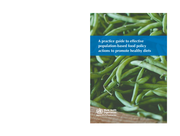
This publication provides directions for a logical, evidence informed approach to selecting, developing, implementing and monitoring population-based interventions within the context of the double-burden of malnutrition in South-East Asia. The focus of this guide is on processed or ultra-processed p
...
re-packaged foods.
more
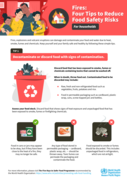
Fires, explosions and volcanic eruptions can damage and contaminate food and water due to heat, smoke, fumes and chemicals. These flyers include tips to reduce food safety risks during a fire incide
...
nt for households, food suppliers, vendors, food industry inspectors and workers.
more

Lancet Planet Health 2022;6: e760–68
The emergence of COVID-19 has drawn the attention of health researchers sharply back to the role that food systems can play in generating human disease burden. But emerging pandemic threats are just one dimens
...
ion of the complex relationship between agriculture and infectious disease, which is evolving rapidly, particularly in low-income and middle-income countries (LMICs) that are undergoing rapid food system transformation. This changing relationship is examined through four current disease issues.
more

Conflict, climate change, the COVID-19 pandemic, and the economic effects of the Ukraine crisis are interacting to create new and worsen existing hunger hotspots, reversing the gains families had made to escape poverty.
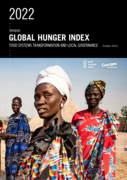
This is the seventeenth annual publication of the Global Hunger Index (GHI), a report jointly published by Concern Worldwide and Welthungerhilfe.
The 2022 Global Hunger Index (GHI) brings us face to face with a grim reality. The toxic cocktail of conflict, climate change, and the COVID-19 pandemi
...
c had already left millions exposed to food price shocks and vulnerable to further crises. Now the conflict in Ukraine—with its knock-on effects on global supplies of and prices for food, fertilizer, and fuel—is turning a crisis into a catastrophe. But the speed and severity of the global food crisis reflects the fact that millions of people were already living on the precarious edge of hunger—a legacy of past failures to build more just, sustainable, and resilient food systems. This year’s report therefore focuses on food systems transformation and local governance.
According to the 2022 GHI, Hunger is at alarming levels in 5 countries—Central African Republic, Chad, Democratic Republic of the Congo, Madagascar, and Yemen— and is provisionally considered *alarming *in 4 additional countries— Burundi, Somalia, South Sudan, and Syria. In a further 35 countries, hunger is considered serious, based on 2022 GHI scores and provisional designations.
more
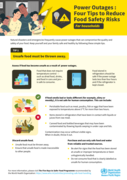
Natural disasters and emergencies frequently cause power outages that can compromise the quality and safety of food. These flyers include tips to reduce food safety risks during a power outage for h
...
ouseholds, food suppliers, vendors, food industry inspectors and workers.
more
Food inspection is crucial for ensuring food safety, using risk-based approaches to target high-risk products and businesses. This guidance aids national authorities in designing and implementing ri
...
sk-based systems, offering step-by-step instructions, examples, and tools for prioritization and inspection frequency estimation. It emphasizes adapting to individual country needs and recognizing variations in food risks and production chain characteristics. The document underscores resource-efficient, risk-based food inspection systems, prioritizing high-risk products and businesses to prevent safety incidents proactively. It suggests designing models based on relevant information and periodically adjusting them for continuous improvement.
more
