
Filter
1294
Text search:
Colombia
Featured
83
261
Language
Document type
519
365
141
70
58
30
29
22
22
18
13
4
2
Countries
193
167
111
91
26
23
23
21
18
18
12
11
11
11
9
7
7
7
7
7
7
6
6
6
6
6
6
6
6
6
6
5
5
5
5
5
5
5
4
4
4
4
4
4
4
3
3
3
3
3
3
3
3
3
3
2
2
2
2
2
2
2
2
2
2
2
2
2
1
1
1
1
1
1
1
1
1
1
1
1
1
1
1
1
1
1
1
1
1
1
1
Authors & Publishers
Publication Years
Category
440
80
71
71
66
18
9
1
Toolboxes
191
162
98
82
74
49
46
39
27
27
25
24
21
21
20
15
13
10
10
10
7
5
4
2
1
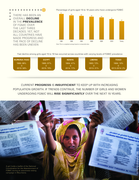
This brochure draws on data from more than 90 nationally representative surveys making it the most up-to-date compilation of statistics on FGM/C. Available data show that the practice of FGM/C is highly concentrated in a swath of countries from the Atlantic coast to the Horn of Africa, in areas of t
...
The Region of the Americas comprises 46 countries and territories and Brazil and Peru are among the WHO high- TB burden
countries. T o illustrate the recent increase in TB incidence in the region, we selected 12 countries from Latin America (Argentina,
Brazil, Chile,
...
Unfortunately, current data available on SDG financing are not sufficient to quantify the distribution of financing for the SDGs.
AidData’s methodology for measuring financing to the SDGs attempts to fill this gap by analyzing development project documentation to estimate project-level contributi
...
In the Region of the Americas, as of 24 February 2023 (16:00 EST), there are a total of 58,578 confirmed cases of mpox (Table 1, Figure 2) were reported from 31 countries and territories, including 76 deaths in: United States of America (34), Brazil (15), Peru (15), Mexico (4), Chile (2), Ecuador (3
...
In 2023, the partnership between the Government of Canada and PAHO was launched to implement the project to improve the health of communities, women, and children by eliminating trachoma as a public health problem. In this initiative, through a contribution of 15 million Canadian dollars, the Govern
...

Noncommunicable diseases (NCDs) (e.g., cardiovascular diseases, cancers, diabetes, and chronic respiratory diseases) and mental health conditions (e.g., Alzheimer’s disease and related dementias, depression, anxiety, autism spectrum disorders) are the world’s leading cause of preventable illness
...
Las enfermedades no transmisibles (ENT) (por ejemplo, las enfermedades cardiovasculares, el cáncer, la diabetes y las enfermedades respiratorias crónicas) y los problemas de salud mental (por ejemplo, la enfermedad de Alzheimer y las demencias relacionadas, la depresión, la ansiedad y los trastor
...
Antimicrobial resistance (AMR) represents a major global threat across human, animal, plant food and environmental sectors, threatening the effective treatment of an ever-increasing range of infections caused by bacteria, parasites, viruses and fungi, resulting in prolonged illness and increased mor
...

Este año cumplimos 150 años de historia... Tal vez nuestros antecesores no imaginaron que, siglo y medio después, la escuela que fundaron seguiría firme no solo en un valle rodeado de montañas, sino también en el espíritu de cada uno de sus hijos más allá de las fronteras: estudiantes, prof
...
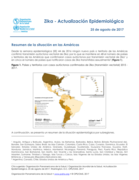


Difteria en las Américas – Resumen de la situación
En el año 2007, los países de la Región de las Américas aprobaron la Agenda de Salud para las Américas 2008-2017 en la que se consideraba a la salud mental como una de las prioridades. En 2014, en el Plan de acción sobre salud mental (2015-2020), aprobado por la Organización Panamericana de l
...
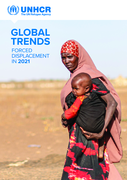
Continuing a worrying decade-long rising trend, the number of people forced to flee due to persecution, conflict, violence, human rights violations and events seriously disturbing public order climbed to 89.3 million by the end of 2021. This is more than double the 42.7 million people who remained f
...
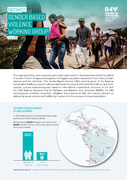
The ongoing political, socio-economic and human rights events in Venezuela have led to the outflow of almost 4 million refugees and migrants, the biggest population movement in the history of Latin America and the Caribbean. The Gender-Based Violence (GBV) working group of the Regional Coordination
...
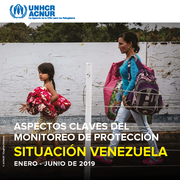
Este informe proporciona una explicación descriptiva sobre los hallazgos de las actividades de monitoreo de protección llevadas a cabo por el ACNUR y sus socios de enero a junio de 2019. La estructura de este informe refleja la secuencia de las preguntas formuladas a las personas participantes. Es
...
