Filter
1555
Text search:
Billion
Lives
Featured
Recommendations
115
New Publications
377
Language
Document type
No document type
680
Studies & Reports
512
Strategic & Response Plan
115
Guidelines
99
Manuals
65
Fact sheets
30
Situation Updates
19
Training Material
12
Resource Platforms
10
Infographics
7
Brochures
4
Online Courses
1
Videos
1
Countries / Regions
Global
172
India
38
Syria
34
Africa
34
Kenya
33
Ethiopia
30
Nigeria
28
Asia
26
Myanmar / Burma
25
Nepal
24
Latin America and the Carribbean
23
Uganda
21
South Africa
20
Bangladesh
20
Western and Central Europe
20
South–East Asia Region
19
Liberia
17
South Sudan
16
Yemen
15
Sierra Leone
14
Zambia
14
Ukraine
14
Rwanda
13
Tanzania
12
Malawi
12
Pakistan
11
Namibia
11
Afghanistan
10
East and Southern Africa
10
Guinea
9
Philippines
9
West and Central Africa
9
Congo, Democratic Republic of
8
Central African Republic
8
Mozambique
7
Middle East and North Africa
7
USA
6
Ghana
6
Zimbabwe
6
Thailand
6
Indonesia
6
Sudan
6
Eastern Europe and Central Asia
6
Senegal
5
Somalia
5
Jordan
5
Lebanon
5
Cambodia
5
Western Pacific Region
5
Venezuela
5
Eastern Europe
5
Turkey
4
Egypt
4
Brazil
4
Sri Lanka
4
Cameroon
3
China
3
Papua New Guinea
3
Eswatini/ Swaziland
3
Colombia
3
Lesotho
3
Iran
3
Vietnam
3
Mali
2
Niger
2
Haiti
2
Iraq
2
Germany
2
Ecuador
2
Botswana
2
Libya
2
Guatemala
2
Bhutan
2
Palestine
2
Djibouti
2
Laos
2
Timor Leste/ East Timor
2
Kazakhstan
2
North America
2
Jamaica
2
Burkina Faso
1
Guinea-Bissau
1
Saudi Arabia
1
Chad
1
Benin
1
Argentina
1
Switzerland
1
Honduras
1
Greece
1
Chile
1
Fiji
1
Italy
1
Russia
1
Qatar
1
Moldova
1
Kyrgyzstan
1
Japan
1
United Kingdom
1
Morocco
1
Azerbaijan
1
Authors & Publishers
Publication Years
Category
Countries
456
Key Resources
113
Public Health
92
Women & Child Health
75
Clinical Guidelines
71
Capacity Building
14
Pharmacy & Technologies
5
Toolboxes
COVID-19
168
Planetary Health
151
HIV
113
Mental Health
100
Global Health Education
79
Disability
77
Health Financing Toolbox
72
Conflict
66
NCDs
47
TB
43
AMR
40
Refugee
39
Natural Hazards
37
NTDs
35
Caregiver
25
Ebola & Marburg
20
Malaria
18
Pharmacy
15
Social Ethics
13
2.0 Rapid Response
13
Rapid Response
12
Cholera
6
Polio
6
Specific Hazards
4
Zika
3
Typhoon
2
The seventh WHO Report on the global tobacco epidemic analyses national efforts to implement the most effective measures from the WHO Framework Convention on Tobacco Control (WHO FCTC) that are proven to reduce demand for tobacco.
The report showed that while only 23 countries have implemented ce
...
The report identifies major global gaps in WASH services: one third of health care facilities do not have what is needed to clean hands where care is provided; one in four facilities have no water services, and 10% have no sanitation services. This means that 1.8
...
The Sendai Framework for Disaster Risk Reduction 2015-2030 outlines seven clear targets and four priorities for action to prevent new and reduce existing disaster risks: (i) Understanding disaster risk; (ii) Strengthening disaster risk governance to manage disaster risk; (iii) Investing in disaster
...
The Second Economic Development and Poverty Reduction Strategy (EDPRS 2) is a launch into the home strait of our Vision 2020. We are faced with new challenges of ensuring greater self reliance and developing global competitiveness. Conscious of these challenges, we forge ahead knowing that working t
...
The WHO/UNICEF JMP report, WASH in Health Care Facilities, is the first comprehensive global assessment of water, sanitation and hygiene (WASH) in health care facilities. It also finds that 1 in 5 health care facilities has no sanitation service*, impacting 1.5
...

The Commission on Macroeconomics and Health (CMH) was established by World Health Organization Director-General Gro Harlem Brundtland in January 2000 to assess the place of health in global economic development. Although health is widely understood to be both a central goal and an important outcome
...
The report examines financing in the battle against malaria, focusing on the role of foreign aid. It analyzes whether or not a disease such as malaria can be controlled or eliminated in Africa without health aid. It also presents a theoretical model of the economics of malaria and shows how health a
...
Working towards better COVID-19 outcomes in the WHO European Region.From the first COVID-19 cases in Europe reported on
24 January 2020, the pandemic reached 1 million cases
within 3 months, 10 million cases within 8 months, and
100 million cases in Europe alone within 2 years. Over
the course o
...

Advances have been made through expanded interventions delivered through five public health approaches: innovative and intensified disease management; preventive chemotherapy; vector ecology and management; veterinary public health services; and the provision of safe water, sanitation and hygiene. I
...
More than 20 million people in North-East Nigeria, South Sudan, Yemen and Somalia are facing famine or a credible risk of famine over the coming six
months. Some 1.4 million children are currently at imminent risk of death from malnutrition. To avert a major humanitarian catastrophe the United Nat
...
IHME’s Financing Global Health report provides an overview of health spending around the world, with a special focus on investments in health in low- and middle-income countries. The report examines how this funding for health is changing each year and forecasts how it may change in the future. Fi
...

Africa’s health sector is facing an unprecedented financing crisis, driven by a sharp decline of 70% in Official Development Assistance (ODA) from 2021 to 2025 and deep-rooted structural vulnerabilities. This collapse is placing immense pressure on Africa’s already fragile health systems as ODA
...
The chapter Dementia in Latin America and the Caribbean: Prevalence, Incidence, Impact, and Trends over Time, is part of the publication series titled “Decade of Healthy Aging: situation and challenges”. This document aims to provide an outline of the current situation in Latin America and the C
...

The United Nations Children's Fund (UNICEF), the International Organization for Migration (IOM), Georgetown University, and the United Nations University have today launched new guidelines to provide the first-ever global policy framework that will help protect, include, and empower children on the
...

The Malaria Ministerial Conference, co-hosted by WHO and the Government of Cameroon on 6 March 2024, brought together more than 400 stakeholders, including Ministers of Health and senior representatives from the African countries hardest hit by malaria, global health leaders, scientists, civil socie
...
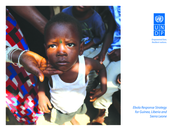
The only way to prevent future Ebola epidemics of this magnitude is to address the fundamental social and political vulnerabilities that have allowed the virus to flourish, such as weak health systems and local services, poor governance, chronic poverty, and a legacy of conflict and social divisions
...
Healthcare Waste Management Toolkit for Global Fund Practitioners and Policy Makers. Part B
Healthcare Waste Management Toolkit for Global Fund Practitioners and Policy Makers: Part A