
Filter
280
Text search:
A.
Armstrong
Featured
Recommendations
32
New Publications
39
Language
Document type
No document type
135
Studies & Reports
72
Guidelines
42
Manuals
11
Training Material
9
Strategic & Response Plan
8
Fact sheets
3
Countries / Regions
Global
21
India
7
Kenya
7
Brazil
7
Africa
6
Russia
6
South Africa
5
Tanzania
3
Nigeria
2
USA
2
Ethiopia
2
China
2
Malawi
2
Mozambique
2
Namibia
2
Ukraine
2
Colombia
2
East and Southern Africa
2
Latin America and the Carribbean
2
Eastern Europe and Central Asia
2
Western and Central Europe
2
Asia
2
Guinea
1
Burkina Faso
1
Sierra Leone
1
Liberia
1
Guinea-Bissau
1
Cameroon
1
Uganda
1
Zimbabwe
1
Philippines
1
Syria
1
Singapore
1
Sudan
1
El Salvador
1
Angola
1
Myanmar / Burma
1
Yemen
1
Middle East and North Africa
1
South–East Asia Region
1
Western Pacific Region
1
Eastern Europe
1
Authors & Publishers
Publication Years
Category
Countries
56
Clinical Guidelines
31
Public Health
27
Women & Child Health
16
Key Resources
12
Capacity Building
11
Pharmacy & Technologies
1
Toolboxes
HIV
46
Disability
29
Mental Health
24
Planetary Health
24
COVID-19
22
NCDs
17
Caregiver
16
TB
13
Pharmacy
6
Global Health Education
5
Ebola & Marburg
4
Refugee
4
Health Financing Toolbox
4
Rapid Response
3
AMR
3
Zika
2
Social Ethics
2
Malaria
2
Conflict
1
Natural Hazards
1
2.0 Rapid Response
1
Lancet Glob Health 2015; 3: e396–409. Open Access
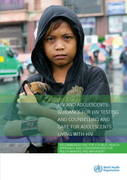
These guidelines provide specific recommendations and expert suggestions — for national policy-makers and programme managers and their partners and stakeholders— on prioritizing, planning and providing HIV testing, counselling, treatment and care services for adolescents

Women, girls and marginalized groups who are largely dependent on natural resources for livelihoods are among the hardest hit by extreme weather patterns. These weather patterns limit their access to food, water, shelter, education and access to essential health services, including those that addres
...
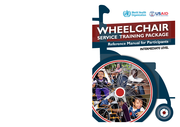
Following the release of the Wheelchair Service Training Package – Basic level (WSTP-B), WHO in partnership with United States Agency for International Development (USAID) has developed the Wheelchair Service Training Package – Intermediate Level (WSTP-I). WSTP-I is the second part of the WHO w
...
Wheelchair Service Training Package - Basic level | The main purpose of the training package is to develop the minimum skills and knowledge required by personnel involved in wheelchair service delivery. An important aim of the training package is to get it integrated into the regular paramedical/reh
...
The purpose of the Participant’s Workbook is to develop the skills and knowledge of personnel involved in wheelchair service delivery. The Participant’s Workbook contains exercises which will help to test and develop participants’ knowledge and skills. The Participant’s Workbook contains mat
...
The main purpose of the training package is to develop the minimum skills and knowledge required by personnel involved in wheelchair service delivery. An important aim of the training package is to get it integrated into the regular paramedical/rehabilitation training programs such as physiotherapy,
...
Wheelchair Service Training Package - Basic level | The main purpose of the training package is to develop the minimum skills and knowledge required by personnel involved in wheelchair service delivery. An important aim of the training package is to get it integrated into the regular paramedical/reh
...
WSTP-I is the second part of the WHO wheelchair service training package series and focusses more on addressing the needs of people who have severe difficulties in walking and moving around and also having poor postural control .
The main purpose of the training package is to develop the minimum skills and knowledge required by personnel involved in wheelchair service delivery. An important aim of the training package is to get it integrated into the regular paramedical/rehabilitation training programs such as physiotherapy,
...
The main purpose of the training package is to develop the minimum skills and knowledge required by personnel involved in wheelchair service delivery. An important aim of the training package is to get it integrated into the regular paramedical/rehabilitation training programs such as physiotherapy,
...
Other
Chapter H.4
2015 edition
The Director’s guide contains all the information that the course director needs in order to plan and prepare for the course, to decide which modules and sessions will be included in the training, and to select trainers and participants, starting several months before the actual training. It conta
...


Lancet Public Health 2018 Published Online September 12, 2018 http://dx.doi.org/10.1016/ S2468-2667(18)30138-5
BMC Medicine (2015) 13:42 DOI 10.1186/s12916-014-0263-6
