
Filter
1481
Text search:
Глобальный
Featured
59
47
Language
Document type
463
264
151
130
122
79
73
55
44
31
21
18
12
11
7
Countries
1474
25
16
14
12
12
9
9
8
8
8
7
7
7
6
6
6
5
5
5
4
4
4
4
4
4
4
3
3
3
3
2
2
2
2
2
2
2
2
2
2
2
2
2
2
1
1
1
1
1
1
1
1
1
1
1
1
1
1
1
1
1
1
1
1
1
1
1
1
1
1
1
1
1
1
1
1
1
1
1
1
Authors & Publishers
Publication Years
Category
437
212
77
66
63
47
14
Toolboxes
384
207
183
147
107
79
68
53
36
32
23
22
21
18
14
12
10
9
9
8
4
3
1
1
Let’s take feelings one step further. Feelings stem from experience. “Tracing feelings back” means
tracing an uncomfortable feeling back to the source: an argument, a disappointment, a change,
an event or situation. Doing this allows you keep you feelings in check, helps you learn about your
...
Distributing immediate, lifesaving assistance is one of the most urgent actions in an emergency response and can significantly improve the safety and wellbeing of individuals. Non-Food Items (NFI), Food Security, WASH and Shelter in-kind assistance actors can help reduce and mitigate pr
...
Presently, there is no evidence that the virus responsible for the current COVID-19 pandemic is carried by domestic food-producing animals, such as chickens, ducks, other poultry, pigs, cattle, camels, horses, sheep, goats, rabbits, guinea pigs or fish. While live animals can be a source of pathogen
...
As the COVID-19 pandemic continues to threaten health and food systems around the world, the 2020 Global Nutrition Report calls on governments, businesses and civil society to step up efforts to address malnutrition in all its forms.

The Covid-19 pandemic has the significant potential to affect the quality and scale up of nutrition, health and other lifesaving interventions. The restrictions on mobility and recommendations on social distancing will affect the way we work in our nutrition programmes and measures are needed to mit
...
Countries have shut down the economy to slow the spread of the coronavirus. Supermarket shelves remain stocked for now. But a protracted pandemic crisi s could quickly put a strai n on the f ood supply chains, a complex web of interactions involving farmers, agricultu
...
The United Nations Environment Programme (UNEP) is stepping up its work on mapping zoonotic threat and protecting the environment to reduce the risk of future pandemics, such as the COVID-19 crisis currently sweeping the globe.

Le Programme des Nations Unies pour l’environnement (PNUE) soutient les milliards de personnes touchées par la pandémie de COVID-19. Dans l’immédiat, la priorité est de les protéger. Toutefois, il incombe également au PNUE d’aider les pays à se reconstruire après la pandémie pour quâ€
...
Unlike foot and mouth disease, the avian flu, e-coli or listeria, the COVID-19 pandemic has not spread directly through livestock or agriculture commodities, and has therefore not directly disrupted on-farm production. However, the crisis is undermining the ability of farms and agri-enterprises to e
...
The global COVID-19 outbreak is leading to an acute and drastic shortage of essential supplies, including personal protective equipment, diagnostics and clinical management. At the request of the UN Secretary-General and in support of the UN Crisis Management Team, a Supply Chain Tas
...
Welcome to the online course on the basics of tobacco product regulation. Although tobacco use is a major public health problem, tobacco products are one of the few openly available consumer products that are virtually unregulated in many countries for contents, emissions and design features. In rec
...
WHO has launched an online course on tobacco product regulation in response to the need for clear, practical advice on building laboratory testing capacity. This course is based on the Tobacco Product Regulation: Building Laboratory Testing Capacity handbook, launched during the 2018 World Conferenc
...
Las mejores prácticas de agua, saneamiento e higiene, en particular el lavado de manos con jabón y agua limpia, deben aplicarse y mantenerse estrictamente, ya que constituyen una barrera adicional importante para la transmisión de COVID-19 y para la transmisión de enfermedades infecciosas en gen
...
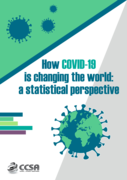
COVID-19 has turned the world upside down. Everything has been impacted. How we live and interact with each other, how we work and communicate, how we move around and travel. Every aspect of our lives has been affected.
This guidance note aims to provide practical support to service providers operating Women and Girls Safe Spaces (WGSS) on how to adapt programming in the context of the COVID-19 pandemic.
This note provides a few ideas to a challenging problem of reaching survivors who cannot easily access phone-based GBV support. It is very much a living document given the evolving nature of the pandemic and may be adapted as more evidence, insights and lessons become available. It is intended to sp
...
In humanitarian settings, tailoring community engagement interventions for gender, language, and local culture improves communities’ uptake with interventions. Measures taken to prevent and respond to COVID-19 pandemic such as confinement may increase GBV, especially domestic violence and Intimate
...

This note provides information and practical guidance to support gender-based violence (GBV) practitioners to integrate attention to disability into GBV prevention, risk mitigation and response efforts during the COVID-19 pandemic. This document complements other resources relating to GBV and COVID-
...

Considerations for public health and social measures in the workplace in the context of COVID-19
recommended
Annex to Considerations in adjusting public health and social measures in the context of COVID-19

Public health criteria to adjust public health and social measures in the context of COVID-19
recommended
In response to COVID-19, countries around the globe have implemented several public health and social measures (PHSM), including large scale measures such as movement restrictions, closure of schools and businesses, geographical area quarantine, and international travel restrictions.
