Filter
4220
Filtered Results: 4220
Text search:
Agency
for
Integrated
Care
Featured
Recommendations
376
New Publications
1226
Language
Document type
No document type
2458
Studies & Reports
671
Guidelines
477
Manuals
251
Strategic & Response Plan
211
Training Material
62
Situation Updates
39
Fact sheets
36
Resource Platforms
7
Infographics
5
Brochures
1
App
1
Online Courses
1
Countries / Regions
Global
193
Kenya
150
India
112
Nigeria
109
Ethiopia
108
Nepal
101
Western and Central Europe
93
Liberia
93
Uganda
83
Myanmar / Burma
81
Zambia
77
Sierra Leone
76
Malawi
70
Bangladesh
66
Tanzania
63
Syria
62
South Africa
62
Africa
60
Rwanda
59
Namibia
57
Ukraine
55
Ghana
52
Latin America and the Carribbean
50
South Sudan
44
Philippines
41
Eastern Europe
37
Congo, Democratic Republic of
34
Indonesia
34
Haiti
30
South–East Asia Region
30
Zimbabwe
29
Cambodia
27
Senegal
26
Guinea
26
Asia
26
Lesotho
25
Mozambique
23
Botswana
21
Pakistan
19
Yemen
18
East and Southern Africa
16
Jordan
15
Eastern Europe and Central Asia
14
Eswatini/ Swaziland
14
Burkina Faso
13
Afghanistan
13
Venezuela
13
West and Central Africa
13
Lebanon
13
Somalia
13
Cameroon
12
Middle East and North Africa
12
Brazil
12
Thailand
11
Benin
11
Laos
11
Germany
11
Vietnam
11
Russia
11
Sudan
11
Central African Republic
11
Colombia
10
Madagascar
10
Iraq
9
USA
8
Burundi
7
Sri Lanka
7
Turkey
6
Iran
6
Moldova
6
Albania
5
Côte d’Ivoire / Ivory Coast
5
Georgia
5
Mali
5
Timor Leste/ East Timor
4
China
4
Chile
4
Peru
4
Western Pacific Region
4
Paraguay
4
Papua New Guinea
4
Chad
4
Tajikistan
3
Serbia
3
Togo
3
Niger
3
North America
3
Portugal
3
Bolivia
3
Argentina
3
Romania
3
Greece
3
Palestine
3
Poland
3
Angola
3
Libya
3
Bhutan
3
North Macedonia
2
Mexico
2
El Salvador
2
Gambia
2
Canada
2
Fiji
2
Singapore
2
Kyrgyzstan
2
Malaysia
2
Armenia
2
Croatia
2
Hungary
2
Turkmenistan
2
United Kingdom
2
Spain
2
Belarus
2
Bosnia and Herzegovina
2
Southern Africa
2
Egypt
2
Guatemala
2
North Korea
1
Estonia
1
Vanuatu
1
Morocco
1
Mongolia
1
Bulgaria
1
Mauritania
1
Italy
1
Dominican Republic
1
Guinea-Bissau
1
Ireland
1
Saudi Arabia
1
Japan
1
Denmark
1
Belgium
1
Maldives
1
Mauritius
1
Tunisia
1
Azerbaijan
1
Israel
1
Belize
1
Costa Rica
1
Guyana
1
Panama
1
Nicaragua
1
Honduras
1
Ecuador
1
Solomon Islands
1
Authors & Publishers
Publication Years
Category
Countries
1647
Key Resources
372
Women & Child Health
285
Clinical Guidelines
247
Public Health
236
Capacity Building
92
Pharmacy & Technologies
34
Toolboxes
HIV
316
Mental Health
276
COVID-19
222
TB
212
Disability
189
Conflict
187
Planetary Health
168
AMR
115
Caregiver
109
Refugee
100
Rapid Response
95
Ebola & Marburg
91
Natural Hazards
82
NTDs
77
Global Health Education
70
2.0 Rapid Response
51
NCDs
49
Pharmacy
48
Health Financing Toolbox
42
Malaria
42
Specific Hazards
36
Zika
25
Polio
22
Cholera
13
Social Ethics
13
Typhoon
3
South Sudan
2
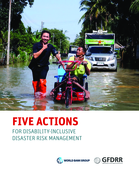
A recent survey of the literature and experience identified five broad actions that development institutions and governments, as well as their partners and stakeholders, can take to improve disability-inclusive disaster risk management. Those five actions are:
- Include persons with disabilitie...
- Include persons with disabilitie...
In the aftermath of the April 2015 earthquake in Nepal, this paper looks at lessons drawn from previous comparable disasters and seeks to provide invaluable information and assistance to the operational agencies responding to the crisis.
This global guidance provided the framework for over 100 countries to develop their NDVPs. This updated (second) version supersedes the previous version published in 16 November 2020. New information has been added on the following areas:
the COVID-19 Partners Platform;
the use of COVID...
Vanquishing violence and vulnerability in humanitarian settings
Background paper for the joint African Union–UNAIDS (in capacity of serving
Chair of H6) high-level side event at the 73rd United Nations General Assembly,
24 September 2018, at UNHQ, Conference Room 3
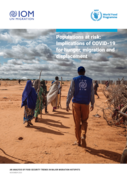
The report – the first of its kind – shows how the pandemic has driven up food insecurity and increased vulnerability among migrants, families reliant on remittances and communities forced from their homes by conflict, violence and disasters.
The two UN agencies warn the social and economic ...
An historic opportunity to end AIDS as a public health threat by 2030 and launch a new era of sustainability
A decade of progress has inspired the once unthinkable—that the AIDS epidemic can be ended as a public health threat. The global community has embraced the bold idea to end the AIDS ep...
A decade of progress has inspired the once unthinkable—that the AIDS epidemic can be ended as a public health threat. The global community has embraced the bold idea to end the AIDS ep...
Accessed: 03.03.2020
Evaluation on the Unicef valuation of the UNICEF PMTCT / paediatric HIV care and Treatment programme
Evaluation Report
Evaluation Office
WHO’s total revenue in 2020 was US$ 4299 million and total expenses were US$ 3561 million, resulting in a surplus of US$ 824 million, which includes finance revenue (e.g. interest and investment income) of US$ 86 million, representing increases of 38% and 15% in revenue and expenses respectively. ...
A Step-by-Step Guide.
It is intended for health planners, dengue or vector control programme managers and individuals, nongovernmental organizations (NGOs) and other agencies with interests and/or expertise in developing biological, chemical, environmental and communication interventions to prevent...

Trachoma is the leading infectious cause of blindness worldwide. In April 2023, it was a public health problem
in approximately 40 countries, with an estimated 116 million people at risk and 1.5 million people affected
by the late blinding stage of the disease (1). About 84% of those at risk of tr...