
Filter
1539
Text search:
young
child
survival
Featured
150
519
Language
Document type
1020
240
127
57
38
28
20
6
1
1
1
Countries
101
57
57
47
42
42
41
40
40
37
36
31
30
30
29
28
27
25
20
20
15
14
12
12
12
12
11
11
10
9
8
8
8
7
7
6
6
6
6
6
6
5
5
5
4
4
4
4
4
4
3
3
3
3
3
3
3
2
2
2
2
2
2
2
2
2
2
1
1
1
1
1
1
1
1
1
1
1
1
1
1
1
1
1
1
1
1
1
1
1
1
1
1
1
1
Authors & Publishers
Publication Years
Category
742
185
104
81
66
36
1
Toolboxes
135
84
76
64
50
41
39
37
36
34
28
21
20
14
11
10
9
7
7
5
4
4
4
3
2
2

As the Americas undergo profound demographic change and there are more persons aged 65 years or older than children younger than 5 years, it is crucial to recognize that national immunization programs must be redesigned to ensure comprehensive protection for individuals across the lifespan. By adopt
...

Background: Community Health Workers (CHWs) have a positive impact on the provision of community-based
primary health care through screening, treatment, referral, psychosocial support, and accompaniment. With a
broad scope of work, CHW programs must balance the breadth and depth of tasks to mainta
...

This report is one of the first major products of the newly established Precision Public Health Metrics unit of the UCN cluster of the WHO Regional Office for Africa. The report presents national trends in communicable and non-communicable disease burden and control in the WHO African region. It tra
...

Chronic kidney disease (CKD) is an important contributor to mortality from noncommunicable diseases. No decrease has been seen for CKD mortality contrary to many other important non-communicable diseases (e.g., cardiovascular disease). The prevalence of CKD and kidney failure are increasing all over
...

This UNAIDS 2024 report brings together new data and case studies which demonstrate that the decisions and policy choices taken by world leaders this year will decide the fate of millions of lives and whether the world’s deadliest pandemic is overcome.

About one fourth of the world’s population is estimated to have been infected with the tuberculosis (TB) bacilli, and about 5–10% of those infected develop TB disease in their lifetime. The risk for TB disease after infection depends on several factors, the most important being the person’s im
...

The South African WHO Country Cooperation Strategy (CCS) 2023–2027 focuses on four key strategic priorities based on the country’s health needs and disease epidemiology, while also considering the need for building resilient health systems for UHC and health security in the post pandemic period.
...
Lancet. 2014 June 28; 383(9936): 2253–2264. doi:10.1016/S0140-6736(13)61949-2. Review Article
The Lancet Regional Health Americas Volume 37100832 September 2024

The second edition of the Women and Trachoma: Achieving Gender Equity in the Implementation of SAFE manual provides an updated resource for realistically increasing, improving, and supporting gender representation within trachoma elimination efforts at all levels. From the trachoma workforce to the
...

The Global Programme on Tuberculosis & Lung Health of the World Health Organization (WHO/GTB) is now combining all current recommendations into one overall set of consolidated guidelines on TB. The guidelines contain recommendations pertaining to all areas related to the programmatic management of T
...

Preferred product characteristics and clinical development considerations

Growing emergencies and displacements across the world demand increasingly complex interventions and responses. The World Health Organization (WHO) has developed Malaria control in emergencies: a field manual to provide technical guidance to help partners respond effectively to malaria in emergency
...


These guidelines update earlier WHO recommendations to maximize the HIV prevention impact of safe VMMC services and aim to guide the transition to the sustained provision of interventions with a focus on the health and well-being of both adolescent boys and men.
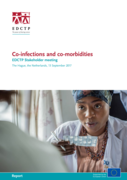
EDCTP Stakeholder meeting
These 2025 guidelines respond to the need for better approaches to identify advanced HIV disease, improve the poor outcomes of people living with HIV being discharged from hospital and provide updated guidance for treatment for Kaposi’s sarcoma through evidence-informed recommendations. The public
...

Indicators and questions to monitor progress towards the Global AIDS Strategy 2026-2031 targets

The 2026 appeal seeks nearly US$ 1 billion to respond to 36 emergencies worldwide, including 14 Grade 3 emergencies requiring the highest level of organizational response. These emergencies span sudden-onset and protracted humanitarian crises where health needs are critical.
