
Filter
2329
Filtered Results: 2329
Text search:
medicine
shortages
Featured
Recommendations
240
New Publications
663
Language
Document type
No document type
1204
Studies & Reports
461
Guidelines
294
Manuals
125
Strategic & Response Plan
120
Training Material
46
Situation Updates
31
Fact sheets
31
Brochures
10
Infographics
3
Online Courses
2
Resource Platforms
1
Videos
1
Countries / Regions
India
99
Global
91
South Africa
72
Kenya
71
Ethiopia
67
Syria
57
Uganda
56
Sierra Leone
55
Western and Central Europe
53
Nigeria
52
Liberia
52
Malawi
51
Tanzania
49
Africa
42
Nepal
40
Latin America and the Carribbean
40
Myanmar / Burma
38
Namibia
37
Zambia
37
Ukraine
36
Bangladesh
36
Ghana
31
Rwanda
31
Venezuela
30
Zimbabwe
24
Philippines
22
Lesotho
21
Mozambique
21
South–East Asia Region
17
Eastern Europe
17
Yemen
17
Guinea
16
Congo, Democratic Republic of
16
West and Central Africa
16
East and Southern Africa
16
South Sudan
16
Haiti
15
Asia
13
Cambodia
12
Botswana
12
Cameroon
11
Senegal
11
Germany
10
Middle East and North Africa
10
Eastern Europe and Central Asia
10
Burkina Faso
8
Afghanistan
8
Thailand
7
USA
7
Brazil
7
Eswatini/ Swaziland
7
Pakistan
7
Colombia
6
Jordan
6
Lebanon
6
Vietnam
6
Indonesia
6
China
5
Russia
5
Central African Republic
5
North Macedonia
4
Tajikistan
4
Albania
4
Western Pacific Region
4
Moldova
4
Sudan
4
Palestine
4
Turkey
3
Benin
3
Peru
3
North America
3
Mauritius
3
Southern Africa
3
Papua New Guinea
3
Iraq
3
Somalia
3
Timor Leste/ East Timor
2
Mexico
2
Chile
2
Iran
2
Laos
2
Malaysia
2
Turkmenistan
2
United Kingdom
2
Portugal
2
Spain
2
Bolivia
2
Egypt
2
Poland
2
Mali
2
Chad
2
Libya
2
Ecuador
2
El Salvador
1
Gambia
1
Togo
1
Kazakhstan
1
Fiji
1
Estonia
1
Niger
1
Uzbekistan
1
Burundi
1
Bulgaria
1
Mauritania
1
Hungary
1
Lithuania
1
Japan
1
France
1
Maldives
1
South Korea
1
Belarus
1
Israel
1
Argentina
1
Sri Lanka
1
Romania
1
Greece
1
Angola
1
Madagascar
1
Authors & Publishers
Publication Years
Category
Countries
1049
Clinical Guidelines
166
Public Health
130
Key Resources
99
Women & Child Health
89
Capacity Building
40
Pharmacy & Technologies
22
Annual Report MEDBOX
1
Toolboxes
COVID-19
282
HIV
134
Mental Health
124
TB
121
Caregiver
94
Conflict
92
AMR
68
NCDs
67
Ebola & Marburg
56
Planetary Health
52
NTDs
47
Pharmacy
45
Disability
44
Malaria
38
Refugee
37
Global Health Education
35
Natural Hazards
33
Rapid Response
25
Health Financing Toolbox
15
2.0 Rapid Response
13
Specific Hazards
11
Cholera
8
Zika
7
Social Ethics
4
Polio
4
Typhoon
1
This document provides a decision-making framework for implementation of mass treatment interventions, active case-finding campaigns and population-based surveys for neglected tropical diseases in the context of the COVID-19 pandemic. A two-step approach is proposed: a risk–benefit assessment, to ...

Tuberculosis (TB) is, and should be, a curable disease; however, each year significant numbers of patients acquire or develop drug-resistant TB, which has a much lower cure rate. Patients with drug-resistant TB have a high prevalence of symptoms; hence, staff caring for these patients should h...

The Plan subscribes to the goals and pillars of the WHO Global Technical Strategy against Malaria 2016-2030 (GTS), while presenting key elements to address the specific challenges of the Region.

Noncommunicable diseases (NCDs) (e.g., cardiovascular diseases, cancers, diabetes, and chronic respiratory diseases) and mental health conditions (e.g., Alzheimer’s disease and related dementias, depression, anxiety, autism spectrum disorders) are the world’s leading cause of preventable illness...

This resulting toolkit is a practical guide intended to assist users to become advocates for palliative care in a practical and effective
way. It is not necessarily a resource to read from cover to cover; rather, it can also be used selectively to each reader’s needs to engage audiences and...
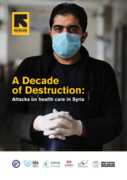
March 2021. “A Decade of Destruction: Attacks on health care in Syria,” highlights with chilling detail how this 10-year war strategy has turned hospitals from safe havens into no-go zones where Syrian civilians now fear for their lives.
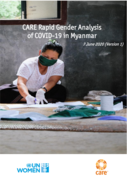
7 June 2020 Version 1
Women in Myanmar have traditionally been underrepresented in public decision-making processes, a trend which is continuing in structures established to respond to COVID-19. This means that even as women are disproportionately affected by the crisis, they have less say in how t...

This manual addresses all the issues. It focus on the cycle of microbes, antibiotics, vaccination, AMR,
infection prevention and control. It will support nurses on better action and also on communication towards
their patients and families.
While much progress has been achieved over the past year, the Region of the Americas has stubbornly remained the epicenter of the COVID-19 pandemic. PAHO is launching its 2021 COVID-19 Response Strategy and Donor Appeal to continue supporting Latin American and Caribbean countries and territories i...
The WHO/UNICEF JMP report, WASH in Health Care Facilities, is the first comprehensive global assessment of water, sanitation and hygiene (WASH) in health care facilities. It also finds that 1 in 5 health care facilities has no sanitation service*, impacting 1.5 billion people. The report further rev...
The module is currently available in English, French, Nepali, Portuguese, Russian, and Spanish
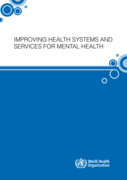
This document presents an integrated strategy for mental health system development that will lead to enhanced service delivery, improved outcomes, and improved human rights for people with mental disorders.
By using the practical guidance provided in this document, countries can ensure that thei...
Biennial Report. SUBMITTED TO THE UNITED NATIONS GENERAL ASSEMBLY SPECIAL SESSION ON HIV AND AIDS
Reporting period: January 2012 – December 2013
