
Filter
12456
Text search:
WHO
(
World
Health
Organization)
Featured
Recommendations
1211
New Publications
2722
Language
Document type
No document type
5897
Studies & Reports
2072
Guidelines
1717
Manuals
628
Fact sheets
573
Strategic & Response Plan
462
Training Material
255
Situation Updates
210
Resource Platforms
186
Infographics
154
Online Courses
113
Videos
90
Brochures
49
Dashboards/Maps
35
App
14
Countries / Regions
Global
705
India
361
Kenya
267
Sierra Leone
238
Liberia
219
Nigeria
212
Ethiopia
206
Uganda
203
Western and Central Europe
198
Latin America and the Carribbean
190
Africa
178
Nepal
173
Russia
164
Syria
159
South Africa
151
Ukraine
151
Rwanda
146
Bangladesh
142
Myanmar / Burma
141
Tanzania
140
Congo, Democratic Republic of
130
Malawi
125
Zambia
122
Ghana
113
Mozambique
102
Eastern Europe
100
Brazil
95
Philippines
93
Indonesia
93
South Sudan
90
Namibia
90
Middle East and North Africa
86
South–East Asia Region
82
Guinea
78
Yemen
76
Senegal
72
West and Central Africa
72
Asia
70
Cambodia
69
Haiti
65
Lesotho
65
Zimbabwe
64
East and Southern Africa
55
Venezuela
53
Burkina Faso
46
Colombia
46
Germany
45
Cameroon
44
Eastern Europe and Central Asia
44
Angola
40
Botswana
38
Pakistan
36
Paraguay
35
Mali
33
Sudan
32
Eswatini/ Swaziland
32
Madagascar
32
Afghanistan
31
China
30
Benin
30
Western Pacific Region
27
Somalia
26
Guinea-Bissau
25
Côte d’Ivoire / Ivory Coast
24
Lebanon
23
Thailand
23
Vietnam
23
Central African Republic
21
Jordan
20
Peru
19
Tajikistan
19
Niger
18
North America
18
Chad
17
Moldova
17
Laos
16
Iraq
15
Turkey
15
Argentina
15
Sri Lanka
15
Chile
14
Georgia
14
Albania
12
Ecuador
11
Palestine
11
Egypt
10
Armenia
10
Kazakhstan
10
Spain
10
Saudi Arabia
9
Togo
9
Burundi
9
Mexico
9
Iran
9
Kyrgyzstan
9
Portugal
9
Belarus
9
USA
8
Bolivia
8
Libya
8
Timor Leste/ East Timor
8
Romania
8
Gambia
7
North Macedonia
7
Greece
6
Bhutan
6
Poland
6
Malaysia
5
Papua New Guinea
5
Honduras
5
El Salvador
5
Southern Africa
5
Estonia
5
Jamaica
5
Tunisia
5
Morocco
4
Serbia
4
Hungary
4
Fiji
4
Djibouti
4
Uzbekistan
4
Turkmenistan
4
Japan
4
Azerbaijan
4
Guatemala
3
Italy
3
Mongolia
3
Canada
3
Uruguay
3
Mauritius
3
United Kingdom
3
Mauritania
2
Switzerland
2
Nicaragua
2
North Korea
2
Congo-Brazzaville
2
Qatar
2
Bulgaria
2
Slovakia
2
Gabon
2
Denmark
2
France
2
Bosnia and Herzegovina
2
Ireland
1
Singapore
1
Vanuatu
1
Dominican Republic
1
Croatia
1
Cape Verde
1
Other region
1
Solomon Islands
1
Lithuania
1
Belgium
1
Maldives
1
Norway
1
South Korea
1
Morocco
1
Israel
1
Latvia
1
Barbados
1
Belize
1
Costa Rica
1
Panama
1
Authors & Publishers
Publication Years
Category
Countries
4008
Clinical Guidelines
912
Public Health
736
Key Resources
657
Women & Child Health
628
Capacity Building
300
Pharmacy & Technologies
146
Annual Report MEDBOX
2
Toolboxes
COVID-19
1482
HIV
898
Mental Health
884
TB
705
NTDs
568
Disability
433
Ebola & Marburg
422
Planetary Health
418
AMR
356
NCDs
338
Caregiver
332
Conflict
319
Rapid Response
275
Global Health Education
227
Malaria
210
Pharmacy
191
2.0 Rapid Response
174
Refugee
173
Zika
149
Health Financing Toolbox
147
Natural Hazards
134
Cholera
109
Polio
79
Specific Hazards
69
Social Ethics
36
Typhoon
6
South Sudan
2
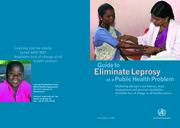
Leprosy will be eliminated when we detect all patients and cure them by using multidrug therapy (MDT).
Elimination means bringing the disease burden down to a very low level. This will lead to a reduction in the source of infection, so that leprosy is likely to disappear naturally as it already h
...
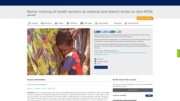
Noma (cancrum oris) is a serious gangrenous disease of the mouth and face, mainly affecting children aged 2 to 6 years in sub-Saharan Africa.
Despite substantial knowledge gaps, it is reported to be linked with malnutrition, poor oral hygiene, immunosuppression, and living in extreme poverty situ
...
Adolescent alcohol-related behaviours: trends and inequalities in the WHO European Region, 2002–2014
Observations from the Health Behaviour in School-aged Children (HBSC) WHO collaborative cross-national study

During the Programme Managers’ Review Meeting of Central and East Africa and South-East Asia (online meeting, June 2022), experts proposed additional regional and national subtargets related to VL incidence, as defined below. These targets can be revisited as progress is reviewed and access to dia
...
Neglected tropical diseases (NTDs) are a category of chronic, disabling, and at times disfiguring diseases and conditions that occur most commonly in the setting of extreme poverty. Historically, NTDs have received less attention and funding when compared to other diseases occurring in the same regi
...

In 1997, the Fiftieth World Health Assembly adopted resolution WHA50.29 on the elimination of
lymphatic filariasis as a public health problem. Pre
...
Research to develop point-of-care tests is in progress. Treatment of Buruli ulcer comprises 8 weeks of combined antibiotics (rifampicin and clarithromycin). Complementary therapies such as wound care, skin graft and prevention of disability are needed in some cases to ensure full recovery.
The targ
...
This template dossier complements and should be used after fulfilling the criteria and preconditions specified in the Process of validation of elimination of kala-azar as a public health problem in South-East Asia. The national kala-azar programme s
...

Driving progress towards rabies elimination: Results of Gavi’s Learning Agenda on rabies and new WHO position on rabies immunization
Kyiv, Ukraine 22-24 November 2010
Meeting Report
A total of 18 laboratories from 13 countries participated in the four rounds of EQA: 10 laboratories from eight African endemic countries, four of which participated in all four rounds and three in three rounds. The overall results showed that the median performance of these laboratories improved ov
...
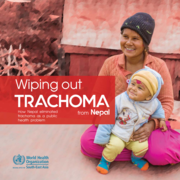
Wiping out Trachoma from Nepal – How Nepal eliminated trachoma as a public health problem
WHO - 2018
In order to help Member States understand what commercial foods for infants and young children are currently on the market, and to support implementation of the Guidance on ending inappropriate promotion of foods for infants and young children at the European level, the
...

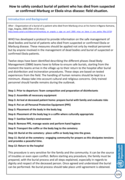
This protocol provides information on the safe management of dead bodies and burial of patients who died from suspected or confirmed Ebola virus disease.
These measures should be applied not only by medical personnel but by anyone involved in the
...
Cholera epidemics continue to be a major public health problem in many countries around the
world. When epidemics strike, they can spread rapidly. The disease can also evolve quickly;
patients wit
...
