
Filter
1555
Text search:
Billion
Lives
Featured
Recommendations
115
New Publications
377
Language
Document type
No document type
680
Studies & Reports
512
Strategic & Response Plan
115
Guidelines
99
Manuals
65
Fact sheets
30
Situation Updates
19
Training Material
12
Resource Platforms
10
Infographics
7
Brochures
4
Online Courses
1
Videos
1
Countries / Regions
Global
172
India
38
Syria
34
Africa
34
Kenya
33
Ethiopia
30
Nigeria
28
Asia
26
Myanmar / Burma
25
Nepal
24
Latin America and the Carribbean
23
Uganda
21
South Africa
20
Bangladesh
20
Western and Central Europe
20
South–East Asia Region
19
Liberia
17
South Sudan
16
Yemen
15
Sierra Leone
14
Zambia
14
Ukraine
14
Rwanda
13
Tanzania
12
Malawi
12
Pakistan
11
Namibia
11
Afghanistan
10
East and Southern Africa
10
Guinea
9
Philippines
9
West and Central Africa
9
Congo, Democratic Republic of
8
Central African Republic
8
Mozambique
7
Middle East and North Africa
7
USA
6
Ghana
6
Zimbabwe
6
Thailand
6
Indonesia
6
Sudan
6
Eastern Europe and Central Asia
6
Senegal
5
Somalia
5
Jordan
5
Lebanon
5
Cambodia
5
Western Pacific Region
5
Venezuela
5
Eastern Europe
5
Turkey
4
Egypt
4
Brazil
4
Sri Lanka
4
Cameroon
3
China
3
Papua New Guinea
3
Eswatini/ Swaziland
3
Colombia
3
Lesotho
3
Iran
3
Vietnam
3
Mali
2
Niger
2
Haiti
2
Iraq
2
Germany
2
Ecuador
2
Botswana
2
Libya
2
Guatemala
2
Bhutan
2
Palestine
2
Djibouti
2
Laos
2
Timor Leste/ East Timor
2
Kazakhstan
2
North America
2
Jamaica
2
Burkina Faso
1
Guinea-Bissau
1
Saudi Arabia
1
Chad
1
Benin
1
Argentina
1
Switzerland
1
Honduras
1
Greece
1
Chile
1
Fiji
1
Italy
1
Russia
1
Qatar
1
Moldova
1
Kyrgyzstan
1
Japan
1
United Kingdom
1
Morocco
1
Azerbaijan
1
Authors & Publishers
Publication Years
Category
Countries
456
Key Resources
113
Public Health
92
Women & Child Health
75
Clinical Guidelines
71
Capacity Building
14
Pharmacy & Technologies
5
Toolboxes
COVID-19
168
Planetary Health
151
HIV
113
Mental Health
100
Global Health Education
79
Disability
77
Health Financing Toolbox
72
Conflict
66
NCDs
47
TB
43
AMR
40
Refugee
39
Natural Hazards
37
NTDs
35
Caregiver
25
Ebola & Marburg
20
Malaria
18
Pharmacy
15
Social Ethics
13
2.0 Rapid Response
13
Rapid Response
12
Cholera
6
Polio
6
Specific Hazards
4
Zika
3
Typhoon
2

Climate change and health vulnerability and adaptation assessment
In 2013 the World Health Organization (WHO) published the report Protecting health from climate change:
vulnerability and adaptation assessment. The aim was to provide basic and flexible guidance on conducting national or subnati
...

Public health emergencies, including pandemics, highlight the need for health systems and services that are prepared, resilient and ready to respond to health security threats. Endorsed by Member States in 2023, the Asia Pacific Health Security Action Framework (APHSAF) is designed to engage m
...
DHS Working Papers No. 92

Climate change is a major risk to good development outcomes, and the World Bank Group is committed to playing an important role in helping countries integrate climate action into their core development agendas. The World Bank Group is committed to supporting client countries to invest in and build a
...
The purpose of the WHO Manual for the Public Health Management of Chemical Incidents is to provide a comprehensive overview of the principles and roles of public health in the management of chemical incidents and emergencies. While this information is provided for each phase of the emergency cycle,
...
This profile is part of a series of Climate Risk Country Profiles developed by the World Bank Group (WBG). The country profile
synthesizes most relevant data and information on climate change, disaster risk reduction, and adaptation actions and policies
at the country level. The country profile se
...
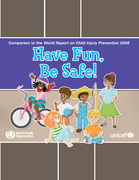
Companion to the World Report on Child Injury Prevention 2008
This child-friendly version of the World report on child injury prevention aims to inform children, aged 7 - 11 years, about various types of injuries and how these may be prevented by using a mixture of facts, puzzles, ...
This child-friendly version of the World report on child injury prevention aims to inform children, aged 7 - 11 years, about various types of injuries and how these may be prevented by using a mixture of facts, puzzles, ...

Significant progress has been made in the eradication of three priority diseases in the African Region, as a result of extensive collaboration between the Regional Office, WHO country offices and countries. For example, in August 2020, the region was certified free of wild poliovirus. In the area of
...
The WHO SAGE values framework for the allocation and prioritization of COVID-19 vaccination is intended to offer guidance on the prioritization of groups for vaccination when vaccine supply is limited. It provides a values foundation for the objectives of COVID-19 vaccination programmes and links t
...
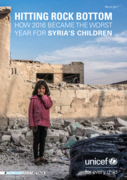
How 2016 became the worst year for Syria's children
The role of evidence in the journey towards universal health coverage is paramount. Financial risk protection monitoring, the major focus of this report, informs where the WHO African Region stands in reducing the financial hardship people face due to health expenses. This report details the status
...
In contrast to bilateral aid, aid disbursed from
multilateral institutions increased significantly at the onset
of the COVID-19 pandemic. Yet, at a time when a coherent
and effective multilateral response is needed most, the
COVID-19 pandemic revealed a shifting landscape of donor
agencies that
...
Over the past decade, countries in the African region experienced slow progress in mobilizing resources for health while facing continued challenges. In their revised estimates published in 2017, Stenberg et al., developed two costs scenarios, termed progress and ambitious, aimed at strengthening co
...
This paper presents a bibliometric analysis of the literature on private health aid and official health assistance between 2000 and 2022. It provides an overview of the sites and themes in the literature pertaining to development assistance in health, and collates the significant policy recommendati
...

Rising levels of inflation, debt and macrofiscal tightening are putting expenditures on the social sectors including health under immense scrutiny. Already, there are worrying signs of reductions in social sector investments. However, even before the pandemic, evidence showed the significant returns
...
