Filter
1953
Text search:
WHO
Regional
Office
for
Europe
Featured
Recommendations
183
New Publications
299
Language
Document type
No document type
850
Studies & Reports
491
Guidelines
271
Manuals
133
Strategic & Response Plan
69
Fact sheets
49
Training Material
40
Situation Updates
28
Infographics
9
Brochures
6
Resource Platforms
6
App
1
Countries / Regions
Western and Central Europe
158
Global
118
Ukraine
99
Eastern Europe
75
Russia
53
Eastern Europe and Central Asia
32
Syria
27
Germany
23
India
22
Latin America and the Carribbean
21
Sierra Leone
20
Ethiopia
19
Liberia
18
Africa
17
South Africa
14
Asia
14
Moldova
14
Nepal
13
Uganda
12
Kenya
12
Myanmar / Burma
12
Tajikistan
12
Ghana
11
Tanzania
11
South–East Asia Region
11
Nigeria
10
Zambia
10
Rwanda
10
Albania
9
Guinea
8
Congo, Democratic Republic of
8
Pakistan
8
North Macedonia
8
Middle East and North Africa
8
Venezuela
8
South Sudan
7
Bangladesh
7
East and Southern Africa
7
Kyrgyzstan
7
Georgia
7
Afghanistan
6
Lebanon
6
China
6
Malawi
6
Mozambique
6
West and Central Africa
6
Armenia
6
Romania
6
Somalia
5
Jordan
5
Turkey
5
Namibia
5
Brazil
5
Yemen
5
Poland
5
Kazakhstan
5
USA
4
Zimbabwe
4
Philippines
4
Cambodia
4
Thailand
4
Indonesia
4
Colombia
4
Western Pacific Region
4
Estonia
4
Iran
4
Belarus
4
Burkina Faso
3
Haiti
3
Iraq
3
Peru
3
Serbia
3
Hungary
3
Botswana
3
Greece
3
Sri Lanka
3
Vietnam
3
Guinea-Bissau
2
Cameroon
2
Niger
2
Sudan
2
Central African Republic
2
Eswatini/ Swaziland
2
Croatia
2
Libya
2
Mexico
2
Palestine
2
Laos
2
Bulgaria
2
Slovakia
2
Uzbekistan
2
Turkmenistan
2
United Kingdom
2
Azerbaijan
2
Bosnia and Herzegovina
2
Senegal
1
Morocco
1
Saudi Arabia
1
Chad
1
Papua New Guinea
1
Argentina
1
Burundi
1
Bolivia
1
Angola
1
Lesotho
1
Chile
1
Canada
1
Lithuania
1
Belgium
1
Mauritius
1
Tunisia
1
Portugal
1
Spain
1
Israel
1
Latvia
1
Authors & Publishers
Publication Years
Category
Countries
379
Clinical Guidelines
146
Key Resources
123
Public Health
107
Women & Child Health
105
Capacity Building
25
Pharmacy & Technologies
15
Toolboxes
HIV
236
Mental Health
222
COVID-19
216
TB
157
Planetary Health
128
Conflict
96
Refugee
92
AMR
71
Disability
70
Global Health Education
67
Caregiver
57
Rapid Response
55
Ebola & Marburg
36
Pharmacy
33
NCDs
32
2.0 Rapid Response
32
NTDs
30
Health Financing Toolbox
28
Zika
13
Specific Hazards
13
Natural Hazards
11
Polio
9
Malaria
6
Cholera
5
Social Ethics
4
Typhoon
2
Following the 2014 Euromaidan Revolution, Ukraine embarked on a national reform program to reduce widespread corruption within government. In the health sector, the government introduced several complementary reforms that aimed to improve the health outcomes of Ukrainian citizens, but designed in su
...
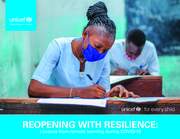
The COVID-19 pandemic led to school closures around the world, affecting almost 1.6 billion students. The effects of even short disruptions in a child’s schooling on their learning and well-being have been shown to be acute and long lasting. The capacities of education systems to respond to the cr
...
World Humanitarian Data and Trends presents global- and country-level data-and-trend analysis about humanitarian
crises and assistance. Its purpose is to consolidate this information and present it in an accessible way, providing policymakers, researchers and humanitarian practitioners with an evid
...
The war in Ukraine has had devasting impact on women and girls
worldwide, widening gender gaps and increasing rates of food insecurity, malnutrition and energy poverty. This brief reviews the available evidence of that impact, recommending urgent attention to its consequences
...

Cardiovascular diseases, principally ischemic heart disease (IHD), are the most important cause of death and disability in the majority of low- and lower-middle-income countries (LLMICs). In these countries, IHD mortality rates are significantly greater in individuals of a low socioeconomic status (
...
With eleven years left to achieve the ambitious goals of the 2030 Agenda, how close are OECD countries to reaching the SDGs? And how is our understanding constrained by targets and indicators that still cannot be measured? The OECD Measuring Distance to the SDG Targets Study aims to help member coun
...
Phil. Trans. R. Soc. B (2010) 365, 2959–2971; doi:10.1098/rstb.2010.0143.
Agricultural ecosystems provide humans with food, forage, bioenergy and pharmaceuticals and are essential to human wellbeing. These systems rely on ecosystem services provided by natural ecosystems, including pollination, b
...

An interdisciplinary study within the framework of the dialogue project on the contribution of the Catholic Church to a socio-ecological transformation.
The study examines the obstacles to the implementation of the socio-ecological transformation and develops recommendations
...
Key messages
● Pre-crisis Infant and Young Child Feeding (IYCF) Practices:
The Code has not been adequately implemented and enforced in Ukraine.
Multiple Indicator Cluster Survey (MCIS) data from 2012: Child ever breastfed (95.4%); early initiation of breastfeeding (EIBF) within 1
...
Overview.
The COVID-19 pandemic is the latest crisis facing the world, but unless humans release their grip on nature, it won’t be the last, according to a new report by the United Nations Development Programme (UNDP), which includes a new experimental index on human progress that takes into acco
...
Early data estimates suggest that 90% of the Ukrainian population could be facing poverty and extreme economic vulnerability should the war deepen, setting the country – and the region – back decades and leaving deep social and economic scars for
...
Many groups in sub-Saharan Africa have historically linked persons with disabilities with witchcraft as a component of a wider link between accusations of witchcraft and socially marginalized populations. It is commonly assumed that traditional prejudices towards persons with disabilities are recedi
...
CBM’s approach is based on the principles of the UN Convention on the Rights of Persons with Disabilities (CRPD) and on CBM’s responsibility to promote accessibility and the principles of universal design in all spheres of its work, including CBM’s digital content and communications. With this
...

We can't stop at almost. 2025 Goalkeeper Report
recommended
2025 is the first year of this century where child deaths will increase.
But we can stop this reversal before it becomes a trend, even in a time of tight budgets.
With proven solutions and next-generation innovations that do more with less, we can save millions of children's lives, protect the pro
...
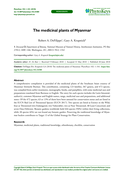
A comprehensive compilation is provided of the medicinal plants of the Southeast Asian country of Myanmar (formerly Burma). This contribution, containing 123 families, 367 genera, and 472 species, was compiled from earlier treatments, monographs, books, and pamphlets, with some medicinal uses and pr
...
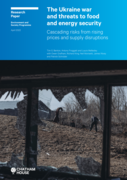
Cascading risks from rising prices and supply disruptions, April 2022.
Global resource markets are still reeling from the impacts of Russia’s invasion of Ukraine; the two countries are major suppliers of energy, food and fertilizers. Supply disruption and the sudden imposition, in response to the
...

The annual Development Co-operation Report brings new evidence, analysis and ideas on
sustainable development to members of the OECD Development Assistance Committee (DAC) and the international community more broadly. The objectives are to promote best practices and innovation in development co-ope
...
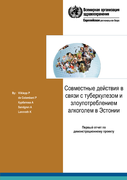
Совместные действия в связи с туберкулезом и злоупотреблением алкоголем в Эстонии
Первый отчет по демонстрационному проекту
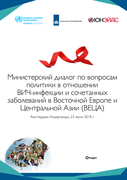
Амстердам, Нидерланды, 23 июля 2018 г.
Отчет