Filter
1904
Text search:
WHO
Country
Office
for
India
Featured
Recommendations
165
New Publications
531
Language
Document type
No document type
1047
Studies & Reports
386
Guidelines
232
Manuals
105
Strategic & Response Plan
54
Fact sheets
25
Training Material
22
Situation Updates
16
Resource Platforms
11
Infographics
4
Brochures
1
App
1
Countries / Regions
India
244
Global
122
Nepal
74
Myanmar / Burma
47
South–East Asia Region
46
Asia
41
Bangladesh
40
Ethiopia
24
Kenya
23
Syria
21
South Africa
20
Nigeria
18
Philippines
16
Pakistan
16
Indonesia
16
Africa
16
Uganda
15
Western and Central Europe
14
Sierra Leone
13
Zambia
12
Tanzania
12
Malawi
11
Ukraine
11
Liberia
10
Afghanistan
9
Mozambique
9
Latin America and the Carribbean
9
Ghana
8
Somalia
7
South Sudan
7
Thailand
7
China
7
Sri Lanka
7
Congo, Democratic Republic of
6
Haiti
6
Cambodia
6
Colombia
6
Yemen
6
Eastern Europe
6
Namibia
5
Brazil
5
Russia
5
Senegal
4
Rwanda
4
Central African Republic
4
Western Pacific Region
4
Eastern Europe and Central Asia
4
Venezuela
4
Laos
4
Vietnam
4
Mali
3
USA
3
Zimbabwe
3
Iraq
3
Lebanon
3
Argentina
3
Peru
3
Mexico
3
Palestine
3
Timor Leste/ East Timor
3
Moldova
3
Iran
3
Georgia
3
Guinea
2
Burkina Faso
2
Morocco
2
Cameroon
2
Niger
2
Jordan
2
Sudan
2
North Macedonia
2
Chile
2
East and Southern Africa
2
West and Central Africa
2
Middle East and North Africa
2
Bhutan
2
Tajikistan
2
Kyrgyzstan
2
Bosnia and Herzegovina
2
Guinea-Bissau
1
Saudi Arabia
1
Germany
1
Turkey
1
Papua New Guinea
1
Eswatini/ Swaziland
1
Serbia
1
Hungary
1
Ecuador
1
Botswana
1
Bolivia
1
Greece
1
Libya
1
Angola
1
Guatemala
1
Madagascar
1
Lesotho
1
Other region
1
North Korea
1
Albania
1
Armenia
1
Qatar
1
Estonia
1
Kazakhstan
1
North America
1
Turkmenistan
1
Jamaica
1
Maldives
1
Mauritius
1
Tunisia
1
Norway
1
Portugal
1
Authors & Publishers
Publication Years
Category
Countries
594
Clinical Guidelines
183
Public Health
135
Key Resources
130
Women & Child Health
118
Capacity Building
25
Pharmacy & Technologies
21
Toolboxes
Mental Health
185
HIV
160
COVID-19
123
Disability
110
TB
104
Planetary Health
75
NTDs
64
AMR
50
Caregiver
50
Global Health Education
49
Natural Hazards
39
NCDs
39
Health Financing Toolbox
33
Conflict
32
Refugee
31
Rapid Response
30
Pharmacy
26
Malaria
19
Polio
15
2.0 Rapid Response
15
Cholera
11
Ebola & Marburg
10
Specific Hazards
10
Zika
5
Typhoon
2
Social Ethics
2
South Sudan
1
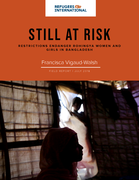
In April 2018, Refugees International (RI) conducted a mission to Bangladesh, to research the GBV (gender-based violence) response for Rohingya women and girls. RI found that the entire humanitarian system is struggling under tremendous constraints
...
This article analyzes the impact of the COVID-19 pandemic on foreign aid. Using examples from Canadian foreign aid, it argues that, despite the terrible toll it is exacting, the crisis has accelerated some significant positive pre-existing trends, both by destabilizing the perception of aid as flowi
...

Since the Alma Ata Declaration in 1978, community health volunteers (CHVs) have been at the forefront, providing health services, especially to underserved communities, in low-income countries. However, consolidation of CHVs position within formal health systems has proved to be complex and continue
...

From the start of the COVID-19 pandemic until August 2021, extreme weather events have affected at least 139.2 million people and killed at least 17,242 people in at least 433 unique events. These figures are certainly an underestimate, as they do not include estimates of numbers of people affected
...
In recent years Terre des Hommes Netherlands observed the steady rise of a new form of child sexual exploitation. One that is enabled and fuelled by rapid technological advances, increasing global connectivity, persisting poverty rates, and growing disparity in the global distribution of resources.
...

We can't stop at almost. 2025 Goalkeeper Report
recommended
2025 is the first year of this century where child deaths will increase.
But we can stop this reversal before it becomes a trend, even in a time of tight budgets.
With proven solutions and next-generation innovations that do more with less, we can save millions of children's lives, protect the pro
...
Governments have dedicated a pivotal role to the private sector in the implementation and financing of the 2030 Agenda and the SDGs. This has pushed a turn towards the private sector, the promotion of multi-stakeholder partnerships between public and private actors. However, far too often there is a
...

Cardiovascular diseases, principally ischemic heart disease (IHD), are the most important cause of death and disability in the majority of low- and lower-middle-income countries (LLMICs). In these countries, IHD mortality rates are significantly greater in individuals of a low socioeconomic status (
...

The annual Development Co-operation Report brings new evidence, analysis and ideas on
sustainable development to members of the OECD Development Assistance Committee (DAC) and the international community more broadly. The objectives are to promote best practices and innovation in development co-ope
...

This is the sixth of our 11-paper supplement entitled “Community Health Workers at the Dawn of New Era”. Expectations of community health workers (CHWs) have expanded in recent years to encompass a wider array
of services to numerous subpopulations, engage communities to collaborate with and to
...
The power of the Global Drug Policy Index lies in its key objective: to score and
rank how countries are faring in different areas of drug policy as identified in the
UN report ‘What we have learned over the last ten years: A summary of knowledge
acquired and produced by the UN system on drug-r
...
Census Report Volume 4-C
The 2014 Myanmar Census provided the opportunity to measure maternal mortality. The questions on deaths in households during the twelve months prior to the Census were included in the questionnaire, as well as questions necessary to estimate maternal mortality indicator ...
The 2014 Myanmar Census provided the opportunity to measure maternal mortality. The questions on deaths in households during the twelve months prior to the Census were included in the questionnaire, as well as questions necessary to estimate maternal mortality indicator ...

Sunsari Technical College Journal Oktober 2012
Census Report Volume 4-L
Myanmar’s 2014 Census enumerated 4.5 million people aged 60 and over and by 2050 Myanmar is projected to have 13 million people in this age group.
Myanmar’s population has aged between 1973 and 2014; while the total population increased at an annual rate of 1. ...
Myanmar’s 2014 Census enumerated 4.5 million people aged 60 and over and by 2050 Myanmar is projected to have 13 million people in this age group.
Myanmar’s population has aged between 1973 and 2014; while the total population increased at an annual rate of 1. ...
GUIDELINES ON LEPROSY CONTROL IN SOUTH AFRICA | 2011