
Filter
2189
Text search:
type
of
disability
Featured
226
506
Language
2103
105
47
35
24
15
14
9
7
6
6
5
5
5
4
4
4
4
4
4
3
3
3
3
3
3
3
3
2
2
2
2
2
2
2
2
2
2
2
1
1
1
1
1
1
1
1
1
1
1
1
1
Document type
1265
368
255
158
70
42
17
6
3
2
2
1
Countries
116
101
55
51
44
40
39
36
36
34
33
29
27
27
27
27
25
25
24
22
20
20
19
17
16
15
14
13
13
12
12
12
12
10
9
8
8
7
7
6
6
6
6
6
5
5
5
5
5
5
4
4
4
4
4
4
4
4
3
3
3
3
3
3
2
2
2
2
2
2
2
2
2
2
2
2
2
2
2
2
2
2
1
1
1
1
1
1
1
1
1
1
1
1
1
1
1
1
1
1
1
1
1
1
1
1
1
1
1
1
Authors & Publishers
284
101
77
66
56
51
50
33
29
24
23
23
20
18
18
18
16
16
15
13
13
11
9
8
8
8
7
7
7
7
7
7
7
7
7
7
7
7
6
6
6
6
6
6
6
6
6
5
5
5
5
5
5
5
5
5
5
5
5
4
4
4
4
4
4
4
4
4
4
4
4
4
4
4
4
4
4
4
4
4
4
4
4
4
4
4
4
4
3
3
3
3
3
3
3
3
3
3
3
3
3
3
3
3
3
3
3
3
3
3
3
3
3
3
3
3
3
3
3
3
3
3
3
3
3
3
3
3
3
3
3
3
3
3
3
3
3
3
3
2
2
2
2
2
2
2
2
2
2
2
2
2
2
2
2
2
2
2
2
2
2
2
2
2
2
2
2
2
2
2
2
2
2
2
2
2
2
2
2
2
2
2
2
2
2
2
2
2
2
2
2
2
2
2
2
2
2
2
2
2
2
2
2
2
2
2
2
2
2
2
2
2
2
2
2
2
2
2
2
2
2
2
2
2
2
2
2
2
2
2
2
2
2
2
2
2
2
2
2
2
2
2
2
2
2
2
2
2
2
2
1
1
1
1
1
1
1
1
1
1
1
1
1
1
1
1
1
1
1
1
1
1
1
1
1
1
1
1
1
1
1
1
1
1
1
1
1
1
1
1
1
1
1
1
1
1
1
1
1
1
1
1
1
1
1
1
1
1
1
1
1
1
1
1
1
1
1
1
1
1
1
1
1
1
1
1
1
1
1
1
1
1
1
1
1
1
1
1
1
1
1
1
1
1
1
1
1
1
1
1
1
1
1
1
1
1
1
1
1
1
1
1
1
1
1
1
1
1
1
1
1
1
1
1
1
1
1
1
1
1
1
1
1
1
1
1
1
1
1
1
1
1
1
1
1
1
1
1
1
1
1
1
1
1
1
1
1
1
1
1
1
1
1
1
1
1
1
1
1
1
1
1
1
1
1
1
1
1
1
1
1
1
1
1
1
1
1
1
1
1
1
1
1
1
1
1
1
1
1
1
1
1
1
1
1
1
1
1
1
1
1
1
1
1
1
1
1
1
1
1
1
1
1
1
1
1
1
1
1
1
1
1
1
1
1
1
1
1
1
1
1
1
1
1
1
1
1
1
1
1
1
1
1
1
1
1
1
1
1
1
1
1
1
1
1
1
1
1
1
1
1
1
1
1
1
1
1
1
1
1
1
1
1
1
1
1
1
1
1
1
1
1
1
1
1
1
1
1
1
1
1
1
1
1
1
1
1
1
1
1
1
1
1
1
1
1
1
1
1
1
1
1
1
1
1
1
1
1
1
1
1
1
1
1
1
1
1
1
1
1
1
1
1
1
1
1
1
1
1
1
1
1
1
1
1
1
1
1
1
1
1
1
1
1
1
1
1
1
1
1
1
1
1
1
1
1
1
1
1
1
1
1
1
1
1
1
1
1
1
1
1
1
1
1
1
1
1
1
1
1
1
1
1
1
1
1
1
1
1
1
1
1
1
1
1
1
1
1
1
1
1
1
1
1
1
1
1
1
1
1
1
1
1
1
1
1
1
1
1
1
1
1
1
1
1
1
1
1
1
1
1
1
1
1
1
1
1
1
1
1
1
1
1
1
1
1
1
1
1
1
1
1
1
1
1
1
1
1
1
1
1
1
1
1
1
1
1
1
1
1
1
1
1
1
1
1
1
1
1
1
1
1
1
1
1
1
1
1
1
1
1
1
1
1
1
1
1
1
1
1
1
1
1
1
1
1
1
1
1
1
1
1
1
1
1
1
1
1
1
1
1
1
1
1
1
1
1
1
1
1
1
1
1
1
1
1
1
1
1
1
1
1
1
1
1
1
1
1
1
1
1
1
1
1
1
1
1
1
1
1
1
1
1
1
1
1
1
1
1
1
1
1
1
1
1
1
1
1
1
1
1
1
1
1
1
1
1
1
1
1
1
1
1
1
1
1
1
1
1
1
1
1
1
1
1
1
1
1
1
1
1
1
1
1
1
1
1
1
1
1
1
1
1
1
1
1
1
1
1
1
1
1
1
1
1
1
1
1
1
1
1
1
1
1
1
1
1
1
1
1
1
1
1
1
1
1
1
1
1
1
1
1
1
1
1
1
1
1
1
1
1
1
1
1
1
1
1
1
1
1
1
1
1
1
1
1
1
1
1
1
1
1
1
1
1
1
1
1
1
1
1
1
1
1
1
1
1
1
1
1
1
1
1
1
1
1
1
1
1
1
1
1
1
1
1
1
1
1
1
1
1
1
1
1
1
1
1
1
1
1
1
1
1
1
1
1
1
1
1
1
1
1
1
1
1
1
1
1
1
1
1
1
1
1
1
1
1
1
1
1
1
1
1
1
1
1
1
1
1
1
1
1
1
1
1
1
1
1
1
1
1
1
1
1
1
1
1
1
1
1
1
1
1
1
1
1
1
1
1
1
1
1
1
1
1
1
1
1
1
1
1
1
1
1
1
1
1
1
1
1
1
1
1
1
1
1
1
1
1
1
1
1
1
1
1
1
1
1
1
1
1
1
1
1
1
1
1
1
1
1
1
1
1
1
1
1
1
1
1
1
1
1
1
1
1
1
1
1
1
1
1
1
1
1
1
1
1
1
1
1
1
1
1
1
1
1
1
1
1
1
1
1
1
1
1
1
1
1
1
1
1
1
1
1
1
1
1
1
1
1
1
1
1
1
1
1
1
1
1
1
1
1
1
1
1
1
1
1
1
1
1
1
1
1
1
1
1
1
1
1
1
1
1
1
1
1
1
1
1
1
1
1
1
1
1
1
1
1
1
1
1
1
1
1
1
1
1
1
1
1
1
1
1
1
1
1
1
1
1
1
1
1
1
1
1
1
1
1
1
1
1
1
1
1
1
1
1
1
1
1
1
1
1
1
1
1
1
1
1
1
1
1
1
1
1
1
1
1
1
1
1
1
1
1
1
1
1
1
1
1
1
1
1
1
1
1
1
1
1
1
1
1
1
1
1
1
1
1
1
1
1
1
1
1
1
1
1
1
1
1
1
1
1
1
1
1
1
1
1
1
1
1
1
1
1
1
1
1
1
1
1
1
1
1
1
1
1
1
1
1
1
1
1
1
1
1
1
1
1
1
1
1
1
1
1
1
1
1
1
1
1
1
1
1
1
1
1
1
1
1
1
1
1
1
1
1
1
1
1
1
1
1
1
1
1
1
1
1
1
1
1
1
1
1
1
1
1
1
1
1
1
1
1
1
1
1
1
1
1
1
1
1
1
1
1
1
1
1
1
1
1
1
1
1
1
1
1
1
1
1
1
1
1
1
1
1
1
1
1
1
1
1
1
1
1
1
1
1
1
1
1
1
1
1
1
1
1
1
1
1
1
1
1
1
1
1
1
1
1
1
1
1
1
1
1
1
1
1
1
1
1
1
1
1
1
1
1
1
1
1
1
1
1
1
1
1
1
1
1
1
1
1
1
1
1
1
1
1
1
1
1
1
1
1
1
1
1
1
1
1
1
1
1
1
1
1
1
1
1
1
1
1
1
1
1
1
1
1
1
1
1
1
1
1
1
1
1
1
1
1
1
1
1
1
1
1
1
1
1
1
1
1
1
1
1
1
1
1
1
1
1
1
1
1
1
1
1
1
1
1
1
1
1
1
1
1
1
1
1
1
1
1
1
1
1
1
1
1
1
1
1
1
1
1
1
1
1
1
1
1
1
1
1
1
1
1
1
1
1
1
1
1
1
1
1
1
1
1
1
1
1
1
1
1
1
1
1
1
1
1
1
1
1
1
1
1
1
1
1
1
1
1
1
1
1
1
1
1
1
1
1
1
1
1
1
1
1
1
1
1
1
1
1
1
1
1
1
1
1
1
1
1
1
1
1
1
1
1
1
1
1
1
1
1
1
1
1
1
1
1
1
1
1
1
1
1
1
1
1
1
1
1
1
1
1
1
1
1
1
1
1
1
1
1
1
1
1
1
1
1
1
1
1
1
1
1
1
1
1
1
1
1
1
1
1
1
1
1
1
1
1
1
1
1
1
1
1
1
1
1
1
1
1
1
1
1
1
1
1
1
1
1
1
1
1
1
1
1
1
1
1
1
1
1
1
1
1
1
1
1
1
1
1
1
1
1
1
1
1
1
1
1
1
1
1
1
1
1
1
1
1
1
1
1
1
1
1
1
1
1
1
1
1
1
1
1
1
1
1
1
1
1
1
1
1
1
1
1
1
1
1
1
1
1
1
1
1
1
1
1
1
1
1
1
1
1
1
1
1
1
1
1
1
1
Publication Years
586
1378
216
9
Category
730
177
175
142
134
42
10
1
Toolboxes
346
326
113
92
73
72
58
52
49
41
37
37
35
21
20
20
19
13
13
10
8
7
3
2
1
1
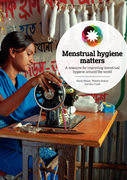
A resource for improving menstraul hygiene around the world.
Comprehensive guidance with examples of good practice, information for colleagues and pupils in class and tips on how to break the taboo
his revision to the Disaster Management Team’s (DMT) multi-sector response plan for COVID-19 is meant to align the multi-sector plan with the Department of Health’s COVID-19 Emergency Response Plan issued on 24 April 2020. Additionally, at the t
...
ime of this version, the Department of Education and Department for Community Development and Religion have also issued their own national COVID-19 response and recovery plans.
The Government’s plan maintains a health sector focus and plans for a ‘worst case’ scenario, articulating the process of progressing into containment and subsequently mitigation of community transmission and on to recovery. It presents an opportunity to improve the core capacities of the whole of government, to see where both health and non-health sectors fit in and respond in the immediate and medium terms, and to adapt to the ‘new normal’ that this coronavirus has inevitably presented
more
The present Community Empowerment Manual draws upon the lessons learned of the Community Protection Approach implementation in Lebanon, the occupied Palestinian territory and Central America during the period 2015-2020 by WeWorld – GVC and its par
...
tners.
The Manual means to accompany Field Staff in devising the most appropriate strategy to engage with communities, given the conditions of access, security and time of the specific context in which a project is implemented. Even though the steps described proceed alongside the implementation of the Community Protection Approach, the manual has different sections providing guidance for the definition of engagement strategies in any context or project in question.
more
This Fiji contextualized manual was initially drafted for CANDO partners as a result of the work done by the humanitarian arms of the various Christian denominations. However as the work progressed
...
it became evidently clear that the training was needed for all responders, and not only Christian responders, and as such, the Christian component has been added as an Annex to this manual, whilst the entire manual is relevant and can be used to train all first responders in Fiji.
more
2nd edition. The purpose of the WHO human health risk assessment toolkit: chemical hazards is to provide its users with guidance to identify, acquire and use the information needed to assess chemical hazards, exposures and the corresponding health r
...
isks in their given health risk assessment contexts at local and/or national levels.
The Toolkit provides road maps for conducting a human health risk assessment, identifies information that must be gathered to complete an assessment and provides electronic links to international resources from which the user can obtain information and methods essential for conducting the human health risk assessment
more
Energy use in the home is a vital and ubiquitous feature of human society. Energy
is used for a wide variety of purposes, including cooking, space heating, light-
ing, small-scale income generatio
...
n, various household tasks, and entertainment.
more
This global progress report attempts to lay the groundwork for the kind of accelerated action needed. Section 1 presents key data, trends and developments in women’s, children’s and adolescents’ health and well-being. That is followed in Secti
...
on 2 by a deeper dive into the impact of the COVID-19 pandemic, which has created and contributed to many threats and challenges to progress for women, children and adolescents. In Section 3, the report concludes with recommendations for accelerating progress towards the achievement of the 2030 Agenda even in such challenging times, with an emphasis on partnership
and clear-eyed recognition of the consequences of failing to do better.
more
Although Shiga toxin-producing Escherichia coli (STEC) have been isolated from a variety of food production animals, they are most commonly associated with ruminants from which we derive meat and milk. Because
...
of the widespread and diverse nature of ruminant-derived food production, coupled with the near ubiquity of STEC worldwide, there is no single definitive solution for controlling STEC that will work alone or in all situations. Instead, the introduction of multiple interventions applied in sequence, as a “multiple-hurdle scheme” at several points throughout the food chain (including processing, transport and handling) will be most effective.
This report summarizes the review and evaluation of interventions applied for the control of STEC in cattle, raw beef and raw milk and raw milk cheese manufactured from cows’ milk, and also evaluates available evidence for other small ruminants, swine and other animals. The information is presented from primary production, to the end of processing, providing the reader with information on the currently available interventions based on the latest scientific evidence.
This work was undertaken to support the development of guidelines for the control of STEC in beef, raw milk and cheese produced from raw milk by the Codex Committee on Food Hygiene (CCFH).
more

The World Health Organization (WHO) and the global community of countries, partners, donors, technical experts, scientists and field implementation teams continue to work towards the ultimate goal of
...
a world free of the burden of neglected tropical diseases (NTDs).
more

This document seeks to help health communication professionals working on the topic of immunization more effectively communicate about Events Supposedly Attributed to Vaccination and Immunization (ESAVI) by building trust in National Immunization Pr
...
ograms, understanding risk perceptions related to vaccination, and responding to false information related to vaccination. It includes practical dos and don’ts regarding risk communication and community engagement processes and principles, messaging, risk perceptions, handling false information, collaborating with partners, and pharmacovigilance, as well as real-world examples.
more
Azraq refugee camp located in Zarqa governorate was established in April 2014. As of June 2023, the camp continues to hosts 40,600 Syrian refugees, with 61% of the population children, and 25%
...
of all households female-headed (UNHCR, 2023).
The water supply system in Azraq has been operational since 2017 across the four villages of the camp and consists of 300 tap stands, two boreholes and two storage locations (each with 16 T-95 steel tanks).
Based on data from UNICEF (2022), the community is provided on average 2100 cubic meters of safe, treated water a day, which is distributed across the camp via a gravity flow system. A distribution schedule is in place, with water pumped during two shift times each day in the morning and evening. Monthly data reported through ActivityInfo (2023) shows a range 53.5-76.3 million liters per month provided through the network in 2022 for an average of 57 liters/person/day – well above the locally agreed minimum standard of 35 liters/person/day and the SPHERE standard of 15 liters/person/day.
Latrine and shower facilities in the camp are organized through communal WASH blocks shared typically between three households and connected to water and greywater networks. However, based on an ACF and World Vision assessment (2022), 60% of the surveyed households are using private latrines (50% self-constructed latrines, and 10% constructed by WASH actors), 24% of households used communal latrines as private latrines not shared with other families, and 16% reported the use of communal latrines shared with other families.
more
Global progress against cardiovascular disease (CVD) is flatlining.
Though rates of CVD deaths globally have fallen in the last three
decades, this trend has begun to stall and, without concerted
efforts, is at risk
...
of reversing.
more

Asthma is the commonest chronic childhood disease and encompasses a spectrum of airway diseases with similar symptoms. Inaccurate diagnosis remains common, especially in younger children, with failure to characterize the different “asthmas.” Chi
...
ldren worldwide repeatedly suffer symptoms which severely affect their everyday lives. Children die from asthma, especially in low and middle-income countries (LMICs). In many countries, asthma prevalence is rising. Access to effective care and changing environments are hugely variable and may explain the higher morbidity in inner-city children, in LMICs, and in deprived populations in high-income countries. Despite the disease being eminently controllable, morbidity and mortality persist.
more

More and more countries are completing their epidemiological mapping of trachoma in suspected
endemic districts and are preparing to distribute Zithromax® in those districts where the prevalence of
...
“trachomatous inflammation – follicular” (TF) is above 5% among children aged 1-9 years. Mass drug
administration (MDA) is normally at the district level and targets the whole population with Zithromax®
tablets to those 5 years old and above; Zithromax® suspension for children between 6 months and 5
years of age; and tetracycline eye ointment 1% for infants up to 6 months old.
more

PHSM are vital in reducing the risk and scale of infectious disease transmission and lowering hospitalization and deaths. Examples include contact tracing, quarantine and isolation, mask use, ventilation, school or workplace measures, mobility restr
...
ictions and travel requirements.
While these measures are essential, decision-making on PHSM becomes particularly complex during rapidly evolving health emergencies, with incomplete information and under significant public and political pressure, especially when the pathogen is novel or poorly understood. In such contexts, guidance needs to be agile and responsive, developed and adapted based on emerging evidence and shifting epidemiological patterns. Decision-makers are frequently confronted with difficult trade-offs, having to balance measures that are:
─ effective but socially disruptive;
─ cost-effective but logistically burdensome;
─ beneficial for public health but economically disruptive; or
─ practical but inequitable or unethical
more
In recent years, high prices of pharmaceutical products have posed challenges in high- and low-income countries alike. In many instances, high prices of pharmaceutical products have led to significa
...
nt financial hardship for individuals and negatively impacted on healthcare systems’ ability to provide population-wide access to essential medicines.
Pharmaceutical pricing policies need to be carefully planned, carried out, and regularly checked and revised according to changing conditions. Strong, well-thought-out policies can guide well-informed and balanced decisions to achieve affordable access to essential health products.
This guideline replaces the 2015 WHO guideline on country pharmaceutical pricing policies, revised to reflect the growing body of literature since the last evidence review in 2010. This update also recognizes country experiences in managing the prices of pharmaceutical products.
more
The current SEARVAP (South-East Asia regional vaccine action plan) describes a set of regional goals and objectives for immunization and control of vaccine-preventable diseases for 2016 – 2020 and
...
highlights priority actions, targets and indicators that address the specific needs and challenges of countries in the Region.
more

Rwanda’s national health sector is focused on the equitable delivery of high-quality health services. The Government of Rwanda (GoR) recognizes that developing human resources in the health sector
...
is a critical factor to the well-being of the population. Development of the health workforce has been guided by the Human Resources for Health (HRH) Programme (2012-2019) and its successor, the National Strategy for Health Professions Development (NSHPD) (2020-2030). Rwanda has made significant progress in enhancing its skilled health workforce, with notable improvements in the health professional-to-population ratio over the past decade, attaining 13.4 doctors, nurses, midwives, pharmacists, and dentists per 10 000 people in 2022. Despite such progress, health workforce levels remain below national and global recommendations.
more
Trends in Neonatal Mortality in Rwanda, 2000-2010
Winter, Rebecca, Thomas Pullum, Anne Langston, Ndicunguye V. Mivumbi, Pierre C. Rutayisire, Dieudonne N. Muhoza, and Solange Hakiba
Calverton, Maryland, USA: ICF International.
(2013)
C2
DHS Further Analysis Reports No. 88 - This further analysis examines levels, trends, and determinants of neonatal mortality in Rwanda, using data from the 2000, 2005, and 2010 Rwanda Demographic and Health Surveys (RDHS).

The mhGAP community toolkit: field test version is an integral part of WHO's Mental Health Gap Action Programme (mhGAP), and aims at scaling up services for people with mental health conditions to achieve universal health coverage.
The toolkit p
...
rovides guidance for programme managers on how to identify local mental health needs and tailor community services to match these needs. It offers practical information and necessary tools for community providers to promote mental health, prevent mental health conditions and expand access to mental health services.
more
