
Filter
1420
Text search:
organizing
Featured
Recommendations
118
New Publications
389
Language
Document type
No document type
824
Guidelines
193
Studies & Reports
181
Manuals
104
Training Material
46
Strategic & Response Plan
46
Fact sheets
13
Situation Updates
7
Resource Platforms
3
Brochures
1
Online Courses
1
Countries / Regions
India
97
Global
58
Ethiopia
35
Kenya
32
Myanmar / Burma
29
Western and Central Europe
28
Nepal
27
Liberia
24
Bangladesh
23
Latin America and the Carribbean
22
Uganda
21
Tanzania
21
Nigeria
19
Sierra Leone
18
Ghana
18
Rwanda
16
Zambia
14
Indonesia
14
Africa
14
Philippines
13
Asia
13
Malawi
12
Eastern Europe
12
South–East Asia Region
11
South Africa
10
Guinea
9
Congo, Democratic Republic of
9
Cambodia
9
Ukraine
9
Lesotho
7
Syria
6
Russia
6
Senegal
5
Zimbabwe
5
Haiti
5
Namibia
5
Botswana
5
East and Southern Africa
5
Eastern Europe and Central Asia
5
Cameroon
4
South Sudan
4
Lebanon
4
Mozambique
4
Benin
4
Middle East and North Africa
4
Pakistan
3
Jordan
3
Central African Republic
3
Eswatini/ Swaziland
3
Brazil
3
Western Pacific Region
3
Laos
3
Côte d’Ivoire / Ivory Coast
2
Somalia
2
Afghanistan
2
Germany
2
North Macedonia
2
Greece
2
Madagascar
2
Yemen
2
Venezuela
2
Timor Leste/ East Timor
2
North America
2
Belarus
2
Burkina Faso
1
Mali
1
Guinea-Bissau
1
Togo
1
Iraq
1
Chad
1
China
1
Sudan
1
Croatia
1
Burundi
1
Colombia
1
Libya
1
West and Central Africa
1
Other region
1
Palestine
1
Albania
1
Armenia
1
Moldova
1
Kyrgyzstan
1
Kazakhstan
1
Georgia
1
Vietnam
1
Belgium
1
United Kingdom
1
Portugal
1
Spain
1
Israel
1
Authors & Publishers
Publication Years
Category
Countries
482
Key Resources
131
Public Health
101
Clinical Guidelines
87
Women & Child Health
86
Capacity Building
65
Pharmacy & Technologies
15
Annual Report MEDBOX
1
Toolboxes
HIV
125
Mental Health
111
COVID-19
69
TB
62
Disability
61
Caregiver
57
Rapid Response
36
Planetary Health
36
NTDs
35
Conflict
34
Ebola & Marburg
30
Natural Hazards
26
Global Health Education
25
Pharmacy
25
2.0 Rapid Response
24
AMR
23
Malaria
22
Refugee
21
NCDs
20
Health Financing Toolbox
14
Cholera
13
Social Ethics
10
Zika
9
Polio
7
Specific Hazards
7
Typhoon
1

This toolkit is a comprehensive set of practical tools and resources designed to support country-level risk communication and community engagement (RCCE) practitioners, decision-makers, and partners to plan and implement readiness and response activities for yellow fever outbreaks. The toolkit conta
...

This guidance covers different options for banning or phasing out a pesticide and suggests related risk reduction measures to be taken during the phase-out period. A key focus of this guidance is how to take action to manage, prevent, minimize, and communicate about identified risks during the imple
...

This publication provides guidance for planning country-specific programming to achieve the triple elimination of mother-to-child (or vertical) transmission of HIV, syphilis and hepatitis B virus. It is based on the WHO Triple Elimination Framework, which promotes an integrated, person-centred appro
...

The World Health Organization recently redefined leprosy elimination as a phased process, with the first milestone being the
interruption of transmission, achieved when no new child cases (defined as younger than 15 years) are reported for five consecutive years.
In Pakistan, the well-functioning
...
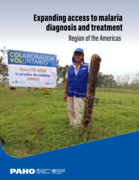
The overall objective of this approach is to accelerate efforts toward malaria elimination by increasing
access to early diagnosis and treatment. The specific objectives are to: Minimize the barriers that the population faces in accessing timely, quality diagnosis and treatment. Reduce the time bet
...

Early Adolescent Skills for Emotions (EASE) is an evidence-based group psychological intervention to help 10–15-year-olds affected by internalizing problems (e.g. stress and symptoms of anxiety, depression) in communities exposed to adversity. Published by the World Health Organization (WHO) and U
...

Second edition.
AVailable in English, French, Spanish, Russian, Chinese and Portuguese

WHO guideline on balanced national controlled medicines policies to ensure medical access and safety
Access to medicines is essential for attainment of universal health coverage, which is central to achievement of the health-related Sustainable Development Goals. Controlled medicines include those such as opioids, benzodiazepines, barbiturates, amphetamines and others with identified or emergent cl
...
20 YEARS OF STRATEGIC HIV AND PUBLIC HEALTH DATA . beThe completion of the 6th South African National HIV Prevalence, Incidence and Behaviour Survey (SABSSM) report, coincides with the celebration of 30 years of democracy in South Africa; and marks 20 years of conducting nationally representative ho
...


In an era of constrained resources and tightening budgets, strategic prioritization in tuberculosis (TB) programming is more critical than ever. Countries must make informed decisions to allocate limited resources effectively - maximizing impact, preventing avoidable deaths, and sustaining progress
...

Country tables & figures

Data presentation is the basis for describing data and generating hypotheses for further testing. It consists of a number of methods for summarising data in order to support the identification of patterns. Data can be summarised in a number of forms, including tables or graphical representations s
...

The handbook includes evidence-based mental health interventions, drawn from the WHO mhGAP guidelines for mental, neurological, and substance use disorders (3), particularly those listed in the UHC Compendium. Evidencebased interventions to reduce population health-related stigma and discriminatio
...
A practical toolkot

The guidelines present and discuss new recommendations and consolidate a range of recommendations and guidance from current WHO guidelines which are summarised here in this policy brief.

Consolidated guidelines on person-centred HIV strategic information: strengthening routine data for impact
recommended
These guidelines focus on the collection and use of person-centred data across the HIV cascade – from prevention, testing and treatment to longer-term health care – building upon 2017 and 2020 strategic information guidelines. The updated guidelines present a standard minimum dataset, priority i
...

he United Nations Development Programme’s (UNDP) Gender Equality Strategy 2022-2025 has
been created during turbulent times. Multiple crises and risks are threatening the world and
we are witnessing an alarming backlash against women’s rights and gender equality. Since the
COVID-19 pandemic h
...
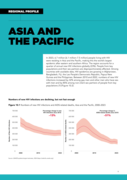
In 2023, 6.7 million [6.1 million–7.5 million] people living with HIV were residing in Asia and the Pacific, making this the world’s largest epidemic after eastern and southern Africa. The region accounts for a quarter of annual new HIV infections globally (23%). People from key populations and
...
