
Filter
2364
Text search:
International
Society
for
Infectious
Diseases
Featured
Recommendations
229
New Publications
542
Language
Document type
No document type
1189
Studies & Reports
481
Guidelines
338
Manuals
135
Strategic & Response Plan
134
Training Material
38
Fact sheets
24
Situation Updates
15
Resource Platforms
5
Brochures
3
Infographics
1
Online Courses
1
Countries / Regions
Global
131
India
73
Western and Central Europe
67
Kenya
56
South Africa
55
Sierra Leone
51
Africa
44
Latin America and the Carribbean
42
Liberia
40
Nepal
39
Ethiopia
35
Nigeria
33
Ghana
31
Uganda
31
Bangladesh
30
Ukraine
30
Myanmar / Burma
30
Zambia
26
Tanzania
25
Philippines
24
Rwanda
24
Eastern Europe
24
Namibia
21
Mozambique
20
Guinea
19
Germany
19
Asia
19
South–East Asia Region
18
Congo, Democratic Republic of
16
Brazil
15
Zimbabwe
14
Malawi
14
East and Southern Africa
13
West and Central Africa
13
Syria
12
Eastern Europe and Central Asia
12
Botswana
11
Lesotho
11
Russia
11
Senegal
10
Cambodia
9
Thailand
9
Indonesia
9
Middle East and North Africa
9
Cameroon
7
Haiti
7
China
7
Venezuela
7
USA
6
South Sudan
6
Western Pacific Region
6
Georgia
6
Burkina Faso
5
Afghanistan
5
Papua New Guinea
5
Albania
5
Tajikistan
5
Guinea-Bissau
4
Pakistan
4
Eswatini/ Swaziland
4
North Macedonia
4
Colombia
4
Angola
4
Madagascar
4
Timor Leste/ East Timor
4
Vietnam
4
Spain
4
Jordan
3
Sudan
3
Benin
3
Central African Republic
3
Peru
3
Ecuador
3
Yemen
3
Laos
3
Mali
2
Somalia
2
Iraq
2
Lebanon
2
Turkey
2
Argentina
2
Burundi
2
Bolivia
2
Sri Lanka
2
Chile
2
Paraguay
2
Bhutan
2
Poland
2
Southern Africa
2
Canada
2
Estonia
2
Romania
2
Moldova
2
North America
2
Japan
2
Mauritius
2
Côte d’Ivoire / Ivory Coast
1
Saudi Arabia
1
Malaysia
1
Serbia
1
Hungary
1
Other region
1
Fiji
1
North Korea
1
Qatar
1
Bulgaria
1
Lithuania
1
Gabon
1
Turkmenistan
1
Denmark
1
France
1
Maldives
1
United Kingdom
1
Portugal
1
Azerbaijan
1
Authors & Publishers
Publication Years
Category
Countries
725
Clinical Guidelines
199
Public Health
152
Key Resources
127
Women & Child Health
80
Capacity Building
30
Pharmacy & Technologies
17
Toolboxes
TB
240
HIV
229
COVID-19
216
AMR
168
Planetary Health
136
Mental Health
107
Ebola & Marburg
74
Global Health Education
66
NTDs
66
Rapid Response
65
Caregiver
48
Conflict
43
2.0 Rapid Response
43
Health Financing Toolbox
39
NCDs
38
Disability
36
Refugee
34
Natural Hazards
32
Pharmacy
28
Malaria
24
Polio
14
Zika
14
Specific Hazards
11
Cholera
9
Social Ethics
2

On Global Handwashing Day, WHO and UNICEF have released the first-ever global Guidelines on Hand Hygiene in Community Settings to support governments and practitioners in promoting effective hand hygiene outside health care – across households, public spaces and institutions. Framing hand hygiene
...
Kenya Essential Medicines List 2019
recommended
The Kenya Essential Medicines List 2019 is an indispensable guide to the medicines recommended for the management of common conditions in Kenya. It is primarily directed at health care providers and medicines supply managers in the public and non-pu
...
The Global vector control response 2017–2030 (GVCR) provides a new strategy to strengthen vector control worldwide through increased capacity, improved surveillance, better coordination and integrated action across sectors and diseases.
In Ma ...
In Ma ...
COP24 special report: health and climate change
recommended
Exposure to air pollution causes 7 million deaths worldwide every year and costs an estimated US$ 5.11 trillion in welfare losses globally. In the 15 countries that emit the most greenhouse gas emissions, the health impacts of air pollution are estimated to cost more than 4% of their GDP. Actions to
...
Constituting the second part of the World Drug Report 2022, the present booklet contains an overview of the global demand for and supply of drugs.
The first chapter of the booklet begins with the latest estimates of the number of people who use dru
...
A companion to the Child Friendly Schools Manual
WASH in Schools aims to improve the health and learning performance of school-aged children – and, by extension, that of their families – by reducing the incidence of water and sanitation-related ...
WASH in Schools aims to improve the health and learning performance of school-aged children – and, by extension, that of their families – by reducing the incidence of water and sanitation-related ...
The harmful use of alcohol causes approximately 3 million deaths every year and the overall burden of disease and injuries attributable to alcohol consumption remains unacceptably high. The pace of development and implementation of alcohol policies has been uneven in WHO regions, and resources and c
...
The WHO operational handbook on tuberculosis: tuberculosis preventive treatment is the companion, implementation guide to the 2020 WHO guidelines on TB preventive treatment.[1] Just as these guidelines are the first to be released under the rubric of the WHO consolidated TB guidelines, this handbook
...

Med Princ Pract 2021;30:17–28
An overview of ethics and clinical ethics is presented in this review. The 4 main ethical principles, that is beneficence, nonmaleficence, autonomy, and justice, are defined and explained. Informed consent, truth-telling, and confidentiality spring from the
...

Women, girls and marginalized groups who are largely dependent on natural resources for livelihoods are among the hardest hit by extreme weather patterns. These weather patterns limit their access to food, water, shelter, education and access to ess
...

Ahead of World Malaria Day, the WHO Global Malaria Programme published a new operational strategy outlining its priorities and key activities up to 2030 to help change the trajectory of malaria trends, with a view to achieving the global malaria targets. The strategy outlines 4 strategic objectives
...
The present National action plan on antimicrobial resistance (AMR) with component of antimicrobial consumption (AMC) covering both human and agriculture sectors was developed based on the World Health Organization's (WHO) Global plan on AMR dated 2015. With the purpose to develop this plan, in May 2
...

The climate crisis has many consequences – among them widespread health impacts that will lead to immense societal, ecological, and economic harm.
Over the past two decades multiple large-scale reviews on climate change and health have made clear the need
...
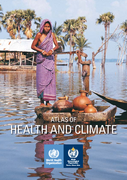
The Atlas of health and climate is a product of this unique collaboration between the meteorological and public health communities. It provides sound scientific information on the connections between weather and climate and major health challenges. These range from
...

WHO’s Ambition and Action in Nutrition 2016-2025 is anchored in the six global targets for improving maternal, infant and young child nutrition and the global diet-related NCD targets.
In support of the 2030 Agenda ...
In support of the 2030 Agenda ...

Saving lives is the priority of WHO’s response in Ukraine. WHO works to ensure time-critical, lifesaving multisectoral assistance, non-discriminatory access to emergency and essential health services and priority prevention programmes, and laying the foundation
...

In 2015, 5.9 million children under age five died (1). The major causes of child deaths globally are pneumonia, prematurity, intrapartum-related complications, neonatal sepsis, congenital anomalies, diarrhoea, injuries and malaria (2). Most of these diseas
...
This guideline provides global, evidence-informed recommendations on daily iron supplementation in infants and children, as a public-health intervention for the prevention of anaemia and iron deficiency. It includes recommendations
...
This report presents the results of the official United Nations estimates and projections of urban and rural populations for 233 countries and areas of the world and for close to 1,900 urban settlem
...
In the course of implementing a recently funded network of hubs for building capacities in mental health service development, training, and research (RedeAmericas), the peer support workers are being introduced into the mental health workforce in th
...
