Filter
549
Text search:
medicine
destruction
Featured
Recommendations
67
New Publications
147
Language
Document type
No document type
308
Studies & Reports
82
Guidelines
60
Manuals
53
Strategic & Response Plan
21
Training Material
12
Fact sheets
7
Situation Updates
4
Brochures
2
Countries / Regions
India
33
Global
26
Syria
25
Kenya
18
Myanmar / Burma
12
Uganda
11
Nepal
11
Ukraine
10
Liberia
9
Nigeria
9
Ethiopia
9
South Africa
9
Congo, Democratic Republic of
8
Zambia
8
Yemen
8
Sierra Leone
6
Ghana
6
Bangladesh
6
Malawi
6
USA
5
Zimbabwe
5
Haiti
5
Tanzania
5
Lesotho
5
Latin America and the Carribbean
5
Africa
5
Philippines
4
South Sudan
4
Namibia
4
Burkina Faso
3
Jordan
3
Lebanon
3
Mozambique
3
Sudan
3
Western and Central Europe
3
Albania
3
Moldova
3
Guinea
2
Senegal
2
Mali
2
Côte d’Ivoire / Ivory Coast
2
Somalia
2
Pakistan
2
Iraq
2
Afghanistan
2
Germany
2
Turkey
2
Rwanda
2
Central African Republic
2
South–East Asia Region
2
Poland
2
Eastern Europe
2
Palestine
2
Laos
2
Romania
2
Belarus
2
Morocco
1
Saudi Arabia
1
Cameroon
1
Niger
1
Egypt
1
Chad
1
Gambia
1
Indonesia
1
Benin
1
Eswatini/ Swaziland
1
Hungary
1
Colombia
1
Greece
1
Libya
1
Madagascar
1
Mexico
1
Sri Lanka
1
Middle East and North Africa
1
Western Pacific Region
1
Asia
1
Venezuela
1
Armenia
1
Timor Leste/ East Timor
1
Tajikistan
1
Lithuania
1
Iran
1
Georgia
1
Vietnam
1
Tunisia
1
United Kingdom
1
Authors & Publishers
Publication Years
Category
Countries
200
Clinical Guidelines
58
Key Resources
49
Public Health
33
Women & Child Health
17
Capacity Building
13
Pharmacy & Technologies
5
Toolboxes
Conflict
48
Mental Health
37
Planetary Health
35
NTDs
30
HIV
23
Natural Hazards
22
Pharmacy
19
COVID-19
17
Specific Hazards
16
TB
15
Refugee
12
NCDs
12
Disability
11
Ebola & Marburg
10
Malaria
10
Caregiver
9
AMR
8
Global Health Education
7
Rapid Response
6
Social Ethics
5
2.0 Rapid Response
2
Zika
1
Position Statement
Diabetes Care2018;42(Suppl. 1):S1–S194.
WHO Technical Report Series, No. 908, 2003, Annex 9. This guide is intended for those involved in the storage, transportation and distribution of pharmaceuticals. It describes the special measures considered appropriate for the storage and transportation of pharmaceuticals.
At least 2.2 million people were exposed to the earthquake, about 2,100 people have died, and more than 12,000 were injured as at 20 August. The death toll is expected to rise as the search for victims trapped under rubble continues. The Government has declared a month-long state of emergency for th
...
The guidance aspires
• To emphasize the 'need' to mainstream disaster risk reduction (DRR) in the health sector initiatives.
• To identify key approaches for mainstreaming DRR in the health sector in Myanmar, particularly in rural areas, based on the good practices, innovative approach ...
• To emphasize the 'need' to mainstream disaster risk reduction (DRR) in the health sector initiatives.
• To identify key approaches for mainstreaming DRR in the health sector in Myanmar, particularly in rural areas, based on the good practices, innovative approach ...
Fourth Edition
PLOS Neglected Tropical Diseases September 2014 | Volume 8 | Issue 9 | e3016 DOI: 10.1371/journal.pntd.0003016
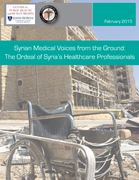
This report recounts the experiences of 27 physicians and other health workers in Syria (all but two of them Syrian) who struggle to provide trauma care and health services to a population under assault.

Buruli ulcer : management of Mycobacterium ulcerans disease : a manual for health care providers
recommended
This manual is addressed to health care providers dealing with Mycobacterium ulcerans disease (Buruli ulcer). The manual aims to achieve a better understanding of the disease, its clinical presentation and its surgical management. The manual is aimed particularly at district health care providers. A
...
The Water and Sanitation for Health Facility Improvement Tool (WASH FIT) presents a framework and acts as a guide to support multisectoral action to improve water, sanitation and hygiene (WASH) in health care. Central to the WASH FIT methodology is training and incremental improvements.
Implementat
...
The objective of this study is to analyze the strengths, weaknesses, sustainability, and impact of the tsunami response in Sri Lanka and Indonesia 10 years later. A cross cutting theme of this study is the assessment of whether communities are now better prepared to respond to and cope with disaster
...
Workplace Pandemic Preparedness. Training Manual
recommended
A training manual for identifying, assessing, preventing and controlling the risks of pandemics in the workplace. This training manual has been developed for both medical and non-medical personnel who may be called upon to lead emergency response, (eg epidemic outbreak, etc), ensure effective conta
...
This manual for trainers outlines the information and materials required to undertake training in line with the WASH FIT Guide, including background documents, the content of the recommended training modules and training evaluation approaches. The modular approach outlined enables trainers to decide
...
Lymphatic filariasis (LF) infection if untreated results in fluid accumulation in the limbs or breasts (lymphedema) or genitalia (hydrocele) that is painful and causes great discomfort. Morbidity management and disability prevention (MMDP) strategies such as surgery for hydrocele, treatment of acute
...
This Training module on malaria elimination has been developed by WHO to support health professionals in planning, managing, monitoring and evaluating malaria elimination programmes.
Supporting exercises: These files are necessary for participants to complete a number of exercises listed in the man
...
The WHO laboratory biosecurity guidance follows and complements the revision of the Laboratory biosafety manual, fourth edition and provides principles and measures to prevent lapses and incidents throughout the whole value chain of handling high-consequence biological material, technology and infor
...