
Filter
6356
Text search:
health
facility
Featured
670
1869
Language
6086
142
100
94
59
45
25
17
11
10
8
5
5
5
5
5
5
4
4
4
4
4
4
4
4
3
3
3
3
3
3
3
2
2
2
2
2
2
2
2
2
1
1
1
1
1
1
1
1
1
1
1
1
1
1
1
1
1
1
1
1
1
1
Document type
3324
1055
891
382
243
167
155
55
25
18
16
16
4
1
Countries
394
250
239
192
188
187
185
170
167
152
125
116
115
111
109
105
90
82
80
77
71
66
62
49
49
47
43
43
42
41
40
39
38
35
35
34
34
33
33
32
32
29
28
27
20
19
19
19
18
18
18
16
13
13
12
12
11
11
11
11
10
9
9
9
7
7
7
7
6
6
6
6
5
5
5
5
5
5
5
4
4
4
4
4
4
4
3
3
3
3
3
3
3
3
3
3
2
2
2
2
2
2
2
2
2
2
2
2
2
2
2
2
2
1
1
1
1
1
1
1
1
1
1
1
1
1
1
1
1
1
1
1
1
1
1
1
1
1
1
Authors & Publishers
939
277
167
155
148
138
128
108
55
52
52
49
48
45
45
43
41
36
35
33
32
29
29
28
28
26
25
25
25
24
24
24
23
22
22
22
21
21
20
20
19
19
19
18
18
18
18
17
17
17
16
16
16
15
15
14
14
14
14
14
14
13
13
13
12
12
12
12
12
12
12
12
12
12
11
11
11
11
11
11
11
10
10
10
10
10
10
10
10
10
10
9
9
9
9
9
9
9
9
9
9
9
9
9
9
9
9
8
8
8
8
8
8
8
8
8
8
8
8
7
7
7
7
7
7
7
7
7
7
7
7
7
7
7
7
7
7
7
7
7
6
6
6
6
6
6
6
6
6
6
6
6
6
6
6
6
6
6
6
6
6
6
6
6
6
6
6
6
6
6
6
6
5
5
5
5
5
5
5
5
5
5
5
5
5
5
5
5
5
5
5
5
5
5
5
5
5
5
5
5
5
5
5
5
5
5
5
5
5
5
5
5
5
5
5
5
4
4
4
4
4
4
4
4
4
4
4
4
4
4
4
4
4
4
4
4
4
4
4
4
4
4
4
4
4
4
4
4
4
4
4
4
4
4
4
4
4
4
4
4
4
4
4
4
4
4
4
4
4
4
4
4
4
4
4
4
4
4
4
4
3
3
3
3
3
3
3
3
3
3
3
3
3
3
3
3
3
3
3
3
3
3
3
3
3
3
3
3
3
3
3
3
3
3
3
3
3
3
3
3
3
3
3
3
3
3
3
3
3
3
3
3
3
3
3
3
3
3
3
3
3
3
3
3
3
3
3
3
3
3
3
3
3
3
3
3
3
3
3
3
3
3
3
3
3
3
3
3
3
3
3
3
3
3
3
3
3
3
3
3
3
3
3
3
3
3
3
3
3
3
3
3
3
3
3
3
3
3
3
3
3
3
3
3
3
3
3
3
3
2
2
2
2
2
2
2
2
2
2
2
2
2
2
2
2
2
2
2
2
2
2
2
2
2
2
2
2
2
2
2
2
2
2
2
2
2
2
2
2
2
2
2
2
2
2
2
2
2
2
2
2
2
2
2
2
2
2
2
2
2
2
2
2
2
2
2
2
2
2
2
2
2
2
2
2
2
2
2
2
2
2
2
2
2
2
2
2
2
2
2
2
2
2
2
2
2
2
2
2
2
2
2
2
2
2
2
2
2
2
2
2
2
2
2
2
2
2
2
2
2
2
2
2
2
2
2
2
2
2
2
2
2
2
2
2
2
2
2
2
2
2
2
2
2
2
2
2
2
2
2
2
2
2
2
2
2
2
2
2
2
2
2
2
2
2
2
2
2
2
2
2
2
2
2
2
2
2
2
2
2
2
2
2
2
2
2
2
2
2
2
2
2
2
2
2
2
2
2
2
2
2
2
2
2
2
2
2
2
2
2
2
2
2
2
2
2
2
2
2
2
2
2
2
2
2
2
2
2
2
2
2
2
2
2
2
2
2
2
2
2
2
2
2
2
2
2
2
2
2
2
2
2
2
2
2
2
2
2
2
2
2
2
2
2
2
2
2
2
2
2
2
2
2
2
2
2
2
2
2
2
2
2
2
2
2
2
2
2
2
2
2
2
2
2
2
2
2
2
2
2
2
2
2
2
2
2
2
2
2
2
2
2
2
2
2
2
2
2
2
2
2
2
2
2
2
2
2
1
1
1
1
1
1
1
1
1
1
1
1
1
1
1
1
1
1
1
1
1
1
1
1
1
1
1
1
1
1
1
1
1
1
1
1
1
1
1
1
1
1
1
1
1
1
1
1
1
1
1
1
1
1
1
1
1
1
1
1
1
1
1
1
1
1
1
1
1
1
1
1
1
1
1
1
1
1
1
1
1
1
1
1
1
1
1
1
1
1
1
1
1
1
1
1
1
1
1
1
1
1
1
1
1
1
1
1
1
1
1
1
1
1
1
1
1
1
1
1
1
1
1
1
1
1
1
1
1
1
1
1
1
1
1
1
1
1
1
1
1
1
1
1
1
1
1
1
1
1
1
1
1
1
1
1
1
1
1
1
1
1
1
1
1
1
1
1
1
1
1
1
1
1
1
1
1
1
1
1
1
1
1
1
1
1
1
1
1
1
1
1
1
1
1
1
1
1
1
1
1
1
1
1
1
1
1
1
1
1
1
1
1
1
1
1
1
1
1
1
1
1
1
1
1
1
1
1
1
1
1
1
1
1
1
1
1
1
1
1
1
1
1
1
1
1
1
1
1
1
1
1
1
1
1
1
1
1
1
1
1
1
1
1
1
1
1
1
1
1
1
1
1
1
1
1
1
1
1
1
1
1
1
1
1
1
1
1
1
1
1
1
1
1
1
1
1
1
1
1
1
1
1
1
1
1
1
1
1
1
1
1
1
1
1
1
1
1
1
1
1
1
1
1
1
1
1
1
1
1
1
1
1
1
1
1
1
1
1
1
1
1
1
1
1
1
1
1
1
1
1
1
1
1
1
1
1
1
1
1
1
1
1
1
1
1
1
1
1
1
1
1
1
1
1
1
1
1
1
1
1
1
1
1
1
1
1
1
1
1
1
1
1
1
1
1
1
1
1
1
1
1
1
1
1
1
1
1
1
1
1
1
1
1
1
1
1
1
1
1
1
1
1
1
1
1
1
1
1
1
1
1
1
1
1
1
1
1
1
1
1
1
1
1
1
1
1
1
1
1
1
1
1
1
1
1
1
1
1
1
1
1
1
1
1
1
1
1
1
1
1
1
1
1
1
1
1
1
1
1
1
1
1
1
1
1
1
1
1
1
1
1
1
1
1
1
1
1
1
1
1
1
1
1
1
1
1
1
1
1
1
1
1
1
1
1
1
1
1
1
1
1
1
1
1
1
1
1
1
1
1
1
1
1
1
1
1
1
1
1
1
1
1
1
1
1
1
1
1
1
1
1
1
1
1
1
1
1
1
1
1
1
1
1
1
1
1
1
1
1
1
1
1
1
1
1
1
1
1
1
1
1
1
1
1
1
1
1
1
1
1
1
1
1
1
1
1
1
1
1
1
1
1
1
1
1
1
1
1
1
1
1
1
1
1
1
1
1
1
1
1
1
1
1
1
1
1
1
1
1
1
1
1
1
1
1
1
1
1
1
1
1
1
1
1
1
1
1
1
1
1
1
1
1
1
1
1
1
1
1
1
1
1
1
1
1
1
1
1
1
1
1
1
1
1
1
1
1
1
1
1
1
1
1
1
1
1
1
1
1
1
1
1
1
1
1
1
1
1
1
1
1
1
1
1
1
1
1
1
1
1
1
1
1
1
1
1
1
1
1
1
1
1
1
1
1
1
1
1
1
1
1
1
1
1
1
1
1
1
1
1
1
1
1
1
1
1
1
1
1
1
1
1
1
1
1
1
1
1
1
1
1
1
1
1
1
1
1
1
1
1
1
1
1
1
1
1
1
1
1
1
1
1
1
1
1
1
1
1
1
1
1
1
1
1
1
1
1
1
1
1
1
1
1
1
1
1
1
1
1
1
1
1
1
1
1
1
1
1
1
1
1
1
1
1
1
1
1
1
1
1
1
1
1
1
1
1
1
1
1
1
1
1
1
1
1
1
1
1
1
1
1
1
1
1
1
1
1
1
1
1
1
1
1
1
1
1
1
1
1
1
1
1
1
1
1
1
1
1
1
1
1
1
1
1
1
1
1
1
1
1
1
1
1
1
1
1
1
1
1
1
1
1
1
1
1
1
1
1
1
1
1
1
1
1
1
1
1
1
1
1
1
1
1
1
1
1
1
1
1
1
1
1
1
1
1
1
1
1
1
1
1
1
1
1
1
1
1
1
1
1
1
1
1
1
1
1
1
1
1
1
1
1
1
1
1
1
1
1
1
1
1
1
1
1
1
1
1
1
1
1
1
1
1
1
1
1
1
1
1
1
1
1
1
1
1
1
1
1
1
1
1
1
1
1
1
1
1
1
1
1
1
1
1
1
1
1
1
1
1
1
1
1
1
1
1
1
1
1
1
1
1
1
1
1
1
1
1
1
1
1
1
1
1
1
1
1
1
1
1
1
1
1
1
1
1
1
1
1
1
1
1
1
1
1
1
1
1
1
1
1
1
1
1
1
1
1
1
1
1
1
1
1
1
1
1
1
1
1
1
1
1
1
1
1
1
1
1
1
1
1
1
1
1
1
1
1
1
1
1
1
1
1
1
1
1
1
1
1
1
1
1
1
1
1
1
1
1
1
1
1
1
1
1
1
1
1
1
1
1
1
1
1
1
1
1
1
1
1
1
1
1
1
1
1
1
1
1
1
1
1
1
1
1
1
1
1
1
1
1
1
1
1
1
1
1
1
1
1
1
1
1
1
1
1
1
1
1
1
1
1
1
1
1
1
1
1
1
1
1
1
1
1
1
1
1
1
1
1
1
1
1
1
1
1
1
1
1
1
1
1
1
1
1
1
1
1
1
1
1
1
1
1
1
1
1
1
1
1
1
1
1
1
1
1
1
1
1
1
1
1
1
1
1
1
1
1
1
1
1
1
1
1
1
1
1
1
1
1
1
1
1
1
1
1
1
1
1
1
1
1
1
1
1
1
1
1
1
1
1
1
1
1
1
1
1
1
1
1
1
1
1
1
1
1
1
1
1
1
1
1
1
1
1
1
1
1
1
1
1
1
1
1
1
1
1
1
1
1
1
1
1
1
1
1
1
1
1
1
1
1
1
1
1
1
1
1
1
1
1
1
1
1
1
1
1
1
1
1
1
1
1
1
1
1
1
1
1
1
1
1
1
1
1
1
1
1
1
1
1
1
1
1
1
1
1
1
1
1
1
1
1
1
1
1
1
1
1
1
1
1
1
1
1
1
1
1
1
1
1
1
1
1
1
1
1
1
1
1
1
1
1
1
1
1
1
1
1
1
1
1
1
1
1
1
1
1
1
1
1
1
1
1
1
1
1
1
1
1
1
1
1
1
1
1
1
1
1
1
1
1
1
1
1
1
1
1
1
1
1
1
1
1
1
1
1
1
1
1
1
1
1
1
1
1
1
1
1
1
1
1
1
1
1
1
1
1
1
1
1
1
1
1
1
1
1
1
1
1
1
1
1
1
1
1
1
1
1
1
1
1
1
1
1
1
1
1
1
1
1
1
1
1
1
1
1
1
1
1
1
1
1
1
1
1
1
1
1
1
1
1
1
1
1
1
1
1
1
1
1
1
1
1
1
1
1
1
1
1
1
1
1
1
1
1
1
1
1
1
1
1
1
1
1
1
1
1
1
1
1
1
1
1
1
1
1
1
1
1
1
1
1
1
1
1
1
1
1
1
1
1
1
1
1
1
1
1
1
1
1
1
1
1
1
1
1
1
1
1
1
1
1
1
1
1
1
1
1
1
1
1
1
1
1
1
1
1
1
1
1
1
1
1
1
1
1
1
1
1
1
1
1
1
1
1
1
1
1
1
1
1
1
1
1
1
1
1
1
1
1
1
1
1
1
1
1
1
1
1
1
1
1
1
1
1
1
1
1
1
1
1
1
1
1
1
1
1
1
1
1
1
1
1
1
1
1
1
1
1
1
1
1
1
1
1
1
1
1
1
1
1
1
1
1
1
1
1
1
1
1
1
1
1
1
1
1
1
1
1
1
1
1
1
1
1
1
1
1
1
1
1
1
1
1
1
1
1
1
1
1
1
1
1
1
1
1
1
1
1
1
1
1
1
1
1
1
1
1
1
1
1
1
1
1
1
1
1
1
1
1
1
1
1
1
1
1
1
1
1
1
1
1
1
1
1
1
1
1
1
1
1
1
1
1
1
1
1
1
1
1
1
1
1
1
1
1
1
1
1
1
1
1
1
1
1
1
1
1
1
1
1
1
1
1
1
1
1
1
1
1
1
1
1
1
1
1
1
1
1
1
1
1
1
1
1
1
1
1
1
1
1
1
1
1
1
1
1
1
1
1
1
1
1
1
1
1
1
1
1
1
1
1
1
1
1
1
1
1
1
1
1
1
1
1
1
1
1
1
1
1
1
1
1
1
1
1
1
1
1
1
1
1
1
1
1
1
1
1
1
1
1
1
1
1
1
1
1
1
1
1
1
1
1
1
1
1
1
1
1
1
1
1
1
1
1
1
1
1
1
1
1
1
1
1
1
1
1
1
1
1
1
1
1
1
1
1
1
1
1
1
1
1
1
1
1
1
1
1
1
1
1
1
1
1
1
1
1
1
1
1
1
1
1
1
1
1
1
1
1
1
1
1
1
1
1
1
1
1
1
1
1
1
1
1
1
1
1
1
1
1
1
1
1
1
1
1
1
1
1
1
1
1
1
1
1
1
1
1
1
1
1
1
1
1
1
1
1
1
1
1
1
1
1
1
1
1
1
1
1
1
1
1
1
1
1
1
1
1
1
1
1
1
1
1
1
1
1
1
1
1
1
1
1
1
1
1
1
1
1
1
1
1
1
1
1
1
1
1
1
1
1
1
1
1
1
1
1
1
1
1
1
1
1
1
1
1
1
1
1
1
1
1
1
1
1
1
1
1
1
1
1
1
1
1
1
1
1
1
1
1
1
1
1
1
1
1
1
1
1
1
1
1
1
1
1
1
1
1
1
1
1
1
1
1
1
1
1
1
1
1
1
1
1
1
1
1
1
1
1
1
1
1
1
1
1
1
1
1
1
1
1
1
1
1
1
1
1
1
1
1
1
1
1
1
1
1
1
1
1
1
1
1
1
1
1
1
1
1
1
1
1
1
1
1
1
1
1
1
1
1
1
1
1
1
1
1
1
1
1
1
1
1
1
1
1
1
1
1
1
1
1
1
1
1
1
1
1
1
1
1
1
1
1
1
1
1
1
1
1
1
1
1
1
1
1
1
1
1
1
1
1
1
1
1
1
1
1
1
1
1
1
1
1
1
1
1
1
1
1
1
1
1
1
1
1
1
1
1
1
1
1
1
1
1
1
1
1
1
1
1
1
1
1
1
1
1
1
1
1
1
1
1
1
1
1
1
1
1
1
1
1
1
1
1
1
1
1
1
1
1
1
1
1
1
1
1
1
1
1
1
1
1
1
1
1
1
1
1
1
1
1
1
1
1
1
1
1
1
1
1
1
1
1
1
1
1
1
1
1
1
1
1
1
1
1
1
1
1
1
1
1
1
1
1
1
1
1
1
1
1
1
1
1
1
1
1
1
1
1
1
1
1
1
1
1
1
1
1
1
1
1
1
1
1
1
1
1
1
1
1
1
1
1
1
1
1
1
1
1
1
1
1
1
1
1
1
1
1
1
1
1
1
1
1
1
1
1
1
1
1
1
1
1
1
1
1
1
1
1
1
1
1
1
1
1
1
1
1
1
1
1
1
1
1
1
1
1
1
1
1
1
1
1
1
1
1
1
1
1
1
1
1
1
1
1
1
1
1
1
1
1
1
1
1
1
1
1
1
1
1
1
1
1
1
1
1
1
1
1
1
1
1
1
1
1
1
1
1
1
1
1
1
1
1
1
1
1
1
1
1
1
1
1
1
1
1
1
1
1
1
1
1
1
1
1
1
1
1
1
1
1
1
1
1
1
1
1
1
1
1
1
1
1
1
1
1
1
1
1
1
1
1
1
1
1
1
1
1
1
1
1
1
1
1
1
1
1
1
1
1
1
1
1
1
1
1
1
1
1
1
1
1
1
1
1
1
1
1
1
1
1
1
1
1
1
1
1
1
1
1
1
1
1
1
1
1
1
1
1
1
1
1
1
1
1
1
1
1
1
1
1
1
1
1
1
1
1
1
1
1
1
1
1
1
1
1
1
1
1
1
1
1
1
1
1
1
1
1
1
1
1
1
1
1
1
1
1
1
1
1
1
1
1
1
1
1
1
1
1
1
1
1
1
1
1
1
1
1
1
1
1
1
1
1
1
1
1
1
1
1
1
1
1
1
1
1
1
1
1
1
1
1
1
1
1
1
1
1
1
1
1
1
1
1
1
1
1
1
1
1
1
1
1
1
1
1
1
1
1
1
1
1
1
1
1
1
1
1
1
1
1
1
1
1
1
1
1
1
1
1
1
1
1
1
1
1
1
1
1
1
1
1
1
1
1
1
1
1
1
1
1
1
1
1
1
1
1
1
1
1
1
1
1
1
1
1
1
1
1
1
1
1
1
1
1
1
1
1
1
1
1
1
1
1
1
1
1
1
1
1
1
1
1
1
1
1
1
1
1
1
1
1
1
1
1
1
1
1
1
1
1
1
1
1
1
1
1
1
1
1
1
1
1
1
1
1
1
1
1
1
1
1
1
1
1
1
1
1
1
1
1
1
1
1
1
1
1
1
1
1
1
1
1
1
1
1
1
1
1
1
1
1
1
1
1
1
1
1
1
1
1
1
1
1
1
1
1
1
1
1
1
1
1
1
1
1
1
1
1
1
1
1
1
1
1
1
1
1
1
1
1
1
1
1
1
1
1
1
1
1
1
1
1
1
1
1
1
1
1
1
1
1
1
1
1
1
1
1
1
1
1
1
1
1
1
1
1
1
1
1
1
1
1
1
1
1
1
1
1
1
1
1
1
1
1
1
1
1
1
1
1
1
1
1
1
1
1
1
1
1
1
1
1
1
1
1
1
1
1
1
1
1
1
1
1
1
1
1
1
1
1
1
1
1
1
1
1
1
1
1
1
1
1
1
1
1
1
1
1
1
1
1
1
1
1
1
1
1
1
1
1
1
1
1
1
1
1
1
1
1
1
1
1
1
1
1
1
1
1
1
1
1
1
1
1
1
1
1
1
1
1
1
1
1
1
1
1
1
1
1
1
1
1
1
1
1
1
1
1
1
1
1
1
1
1
1
1
1
1
1
1
1
1
1
1
1
1
1
1
1
1
1
1
1
1
1
1
1
1
1
1
1
1
1
1
1
1
1
1
1
1
1
1
1
1
1
1
1
1
1
1
1
1
1
1
1
1
1
1
1
1
1
1
1
1
1
1
1
1
1
1
1
1
1
1
1
1
1
1
1
1
1
1
1
1
1
1
1
1
1
1
1
1
1
1
1
1
1
1
1
1
1
1
1
1
1
1
1
1
1
1
1
1
1
1
1
1
1
1
1
1
1
1
1
1
1
1
1
1
1
1
1
1
1
1
1
1
1
1
1
1
1
1
1
1
1
1
1
1
1
1
1
1
1
1
1
1
1
1
1
1
1
1
1
1
1
1
1
1
1
1
1
1
1
1
1
1
1
1
1
1
1
1
1
1
1
1
1
1
1
1
1
1
1
1
1
1
1
1
1
1
1
1
1
1
1
1
1
1
1
1
1
1
1
1
1
1
1
1
1
1
1
1
1
1
1
1
1
1
1
1
1
1
1
1
1
1
1
1
1
1
1
1
1
1
1
1
1
1
1
1
1
1
1
1
1
1
1
1
1
1
1
1
1
1
1
1
1
1
1
1
1
1
1
1
1
1
1
1
1
1
1
1
1
1
1
1
1
1
1
1
1
1
Publication Years
1
2013
3771
542
27
2
Category
3046
431
404
388
261
202
64
Toolboxes
736
345
255
253
223
203
183
161
146
139
138
136
118
94
85
83
82
74
73
67
57
38
35
16
10
2
Interim guidance2 November 2020
This interim guidance, originally entitled “Harmonized health service capacity assessments in the context of the COVID-19 pandemic”, is an update to the earlier version published on 31
...
May 2020 as “Harmonized modules for health facility assessment modules in the context of the COVID-19 pandemic”. In this update, module content has been further refined and developed
more
WHO is launching a “Revised edition, 2021” for the Caring for women subjected to violence: A WHO training curriculum for health-care providers today. The revised edition includes 4 new modules three of which are for
...
health managers to assess and strengthen health facility readiness and one module, which is for managers and providers to support prevention of violence against women. The earlier content published in 2019 remains unchanged. The 2021 edition is aimed at creating an enabling health systems environment for health workers to provide quality care to women subjected to violence.
more
The COVID-19 pandemic has led to large increases in healthcare waste, straining under resourced healthcare facilities and exacerbating environmental impacts from solid waste. This report quantifies the additional COVID-19 healthcare waste generated, describes current healthcare waste management syst
...
ems and their deficiencies, and summarizes emerging best practices and solutions to reduce the impact of waste on human and environmental health. The recommendations included in the report build on actions in the WHO manifesto for a healthy recovery from COVID-19: prescriptions and actionables for a healthy and green recovery. They target the global, national and facility levels to promote a “win–win” scenario for COVID-19 PPE use, testing and vaccinations that are safe and support environmental sustainability.
more
Int. J. Environ. Res. Public Health 2020, 17(23), 8849; https://doi.org/10.3390/ijerph17238849
The aim of building climate resilient and environmentally sustainable health care facilities is: (a)
...
to enhance their capacity to protect and improve the health of their target communities in an unstable and changing climate; and (b) to empower them to optimize the use of resources and minimize the release of pollutants and waste into the environment. Such health care facilities contribute to high quality of care and accessibility of services and, by helping reduce facility costs, also ensure better affordability. They are an important component of universal health coverage.
more

nt. J. Environ. Res. Public Health 2014, 11(12), 13097-13116; https://doi.org/10.3390/ijerph111213097
Climate change will increase the frequency and magnitude of extreme weather events and create risks that will impact
...
health care facilities. Health care facilities will need to assess climate change risks and adopt adaptive management strategies to be resilient, but guidance tools are lacking. In this study, a toolkit was developed for health care facility officials to assess the resiliency of their facility to climate change impacts. A mixed methods approach was used to develop climate change resiliency indicators to inform the development of the toolkit. The toolkit consists of a checklist for officials who work in areas of emergency management, facilities management and health care services and supply chain management, a facilitator’s guide for administering the checklist, and a resource guidebook to inform adaptation. Six health care facilities representing three provinces in Canada piloted the checklist. Senior level officials with expertise in the aforementioned areas were invited to review the checklist, provide feedback during qualitative interviews and review the final toolkit at a stakeholder workshop. The toolkit helps health care facility officials identify gaps in climate change preparedness, direct allocation of adaptation resources and inform strategic planning to increase resiliency to climate change.
more
The WHO Quality Toolkit: Navigating tools to improve the quality of health services helps easy identification and access to a wide range of WHO published materials to improve the quality of health s
...
ervices. These tools support the actions described in the Quality health services: a planning guide, which outlines a structured, systems-based approach to improving quality of health services. Whether you work at the facility, sub-national or national level, or in specific communities, you will find resources within the Quality Toolkit to help you carry out essential tasks to improve quality of care
more
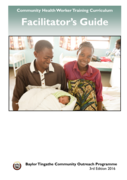
Community Health Worker Training Curriculum - Facilitator's Guide
Baylor Tingathe Community Outreach Programme
Baylor College of Medicine Children’s Foundation Malawi
(2016)
CC
This curriculum was designed to train newly recruited health care workers (HCW) in the basic knowledge and skills needed to improve different HIV services within the health
...
facility including identification, linkage, retention and support. In addition to HIV basics, the training has supplementary units focused on PMTCT, psychosocial support, opportunistic infections, tuberculosis and HIV, nutrition and family planning in order to give a more well-rounded and comprehensive training of related topics.
more

Zambia is facing a severe economic crisis marked by high inflation, increasing poverty and a heavy debt burden that is straining both its fiscal stability and progress in health outcomes. By 2020, the country's external debt reached United States do
...
llars (USD) 12.7 billion, representing 108% of the country's gross domestic product (GDP). In 2020, Zambia sought assistance through the G20 Common Framework and the International Monetary Fund (IMF) Extended Credit Facility (ECF), securing a USD 1.7 billion loan over 5 years. IMF loans, however, come with austerity measures that prioritise fiscal discipline but could potentially exacerbate social inequalities. These measures, which include increasing consumer taxes on goods and services (value added taxes - VATs), electricity tariffs and fuel prices, disproportionately impact vulnerable populations, raising concerns about their long-term effects on essential services, especially accessible and good quality healthcare services.
more

This toolkit was developed to provide detailed information and resources to support implementation of the WHO intrapartum and immediate postnatal care recommendations at the health-care facility lev
...
el. The careful design of this toolkit is based on a rigorous evidence-based approach that includes implementation strategies of proven effectiveness to help close the gap between WHO’s care recommendations and current policies and practices.
The primary target audience for the toolkit includes policy-makers, health-care facility managers, implementers and managers of maternal and child health programmes, nongovernmental organizations (NGOs) and professional societies involved in the planning and management of maternal and child health services.
more
Occupational hazards in the health sector
recommended
This e-tool is intended for use by people in charge of occupational health and safety for health workers at the national, subnational and facility
...
levels and for health workers who want to know what WHO and ILO recommend for the protection of their health and safety
more
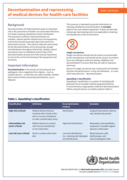
Decontamination of medical devices plays an important role in the prevention of health care-associated infections. It includes cleaning, disinfection and/or sterilization. The processes involved in decontamination are complex, require specific infra
...
structure and equipment, and involve several sequential steps that need to be performed correctly – from device collection and receipt by the decontamination unit to processing, storage and distribution throughout the facility. Quality control procedures (such as validation) at each step of the decontamination process are of the utmost importance to ensure the correct functioning of the equipment and processes. This aide-memoire presents a concise overview of important advice and key elements at a glance.
more

This section deals with implementing and improving infection control practices in hospitals, health centres and other health services in the outbreak area. It explains the need for, and implementati
...
on of, effective triage procedures, and basic requirements for infection control and supporting activities. Further guidance can be found in the MSF Infection Control Guideline
more
A treatment literacy guide for pregnant women and mothers living with HIV
Positive Health, Dignity and Prevention for Women and their Babies is intended for use by networks of women living with HIV, women’s groups, peer educators and o ... thers wishing to help guide women living with HIV through the decisions they will need to take before, during and after their pregnancy. It is not intended as a substitute for going to a health facility and seeking information from a healthcare worker.
The facilitator’s manual and flipchart are intended to be used by leaders of support groups, peer educators or lay counsellors to facilitate small groups or community sessions with women living with HIV. Together, they provide accurate and comprehensive information to enable pregnant women and mothers living with HIV to know their rights and make informed decisions about their health, and the health of their baby. more
Positive Health, Dignity and Prevention for Women and their Babies is intended for use by networks of women living with HIV, women’s groups, peer educators and o ... thers wishing to help guide women living with HIV through the decisions they will need to take before, during and after their pregnancy. It is not intended as a substitute for going to a health facility and seeking information from a healthcare worker.
The facilitator’s manual and flipchart are intended to be used by leaders of support groups, peer educators or lay counsellors to facilitate small groups or community sessions with women living with HIV. Together, they provide accurate and comprehensive information to enable pregnant women and mothers living with HIV to know their rights and make informed decisions about their health, and the health of their baby. more
A treatment literacy guide for pregnant women and mothers living with HIV
Positive Health, Dignity and Prevention for Women and their Babies is intended for use by networks of women living with HIV, women’s groups, peer educators and o ... thers wishing to help guide women living with HIV through the decisions they will need to take before, during and after their pregnancy. It is not intended as a substitute for going to a health facility and seeking information from a healthcare worker.
The facilitator’s manual and flipchart are intended to be used by leaders of support groups, peer educators or lay counsellors to facilitate small groups or community sessions with women living with HIV. Together, they provide accurate and comprehensive information to enable pregnant women and mothers living with HIV to know their rights and make informed decisions about their health, and the health of their baby. more
Positive Health, Dignity and Prevention for Women and their Babies is intended for use by networks of women living with HIV, women’s groups, peer educators and o ... thers wishing to help guide women living with HIV through the decisions they will need to take before, during and after their pregnancy. It is not intended as a substitute for going to a health facility and seeking information from a healthcare worker.
The facilitator’s manual and flipchart are intended to be used by leaders of support groups, peer educators or lay counsellors to facilitate small groups or community sessions with women living with HIV. Together, they provide accurate and comprehensive information to enable pregnant women and mothers living with HIV to know their rights and make informed decisions about their health, and the health of their baby. more

A two-week mission was conducted by WASH and quality UHC technical experts from WHO headquarters and supported by the WHO Ethiopia Country Office (WASH and health systems teams) in July 2016, to understand how change in WASH services and quality imp
...
rovements have been implemented in Ethiopia at national, sub-national and facility levels; to document existing activities; and through the “joint lens” of quality UHC and WASH, to identify and seek to address key bottlenecks in specific areas including leadership, policy/financing, monitoring and evaluation, evidence application and facility improvements. Ethiopia has implemented a number of innovative and successful interventions.
more

The main goal of the National Health Plan (NHP) 2017-2021 is to extend access to a basic Essential Package of Health Services (EPHS) to the entire population while increasing financial protection. I
...
n order to extend service delivery to all communities, the NHP calls for all health workers (whether community-based, outreach-based or facility-based) involved in the delivery of health promotion, prevention and treatment services to be fully recognised and institutionalized within the health system to ensure efficient use of resources, necessary oversight and quality service provision (regardless of whether the health workers are voluntary or salaried). The first year Annual Operational Plan (AOP) of the NHP 2017-2021 calls for a comprehensive literature review of the situation of all Village Based Health Workers (VBHWs) in the country to inform the development of a comprehensive, institutionalized approach to community health for the country.
more
Monitoring is a crucial element in any successful programme. It is important to
know if health care facilities – and ultimately countries – are meeting the agreed
goals and objectives for preventing and managing cardiovascular diseases (CVD).
...
Monitoring is the on-going collection, management and use of information to
assess whether an activity or programme is proceeding according to plan and/
or achieving defined targets. Not all outcomes of interest can be monitored. Clear
outcomes must be identified that relate to the most important changes expected to result from the project and to what is realistic and measurable within the timescale of the project. Once these outcomes have been articulated, indicators can be chosen that best measure whether the desired outcomes are being met.
To allow progress to be monitored, this module provides a set of indicators on
CVD management. Agreeing on a set of indicators allows countries to compare
progress in CVD management and treatment across different districts or
subnational jurisdictions, as well as at a facility level, identify where performance
can be improved, and track trends in implementation over time. Monitoring
these indicators also helps identify problems that may be encountered so that
implementation efforts can be redirected.
This module starts from the collection of data at facility level, which is then
“transferred up” the system: facility-level data are aggregated at subnational level
to produce reports that allow tracking of facility and subnational performance over time and allow for comparison among facilities. National-level data are obtained through population-based surveys.
Implementing a monitoring system requires action at many levels. At national and
subnational levels, staff can determine how best to integrate data elements into
existing data collection systems – such as the routine service-delivery data that are collected through facility-level Health Management Information Systems (HMIS).
In the facility setting, personnel must be aware of what data are needed. Sample
data-collection tools are included, recognizing that countries use different datamanagement systems for HMIS, so the CVD monitoring tools will be adapted to work with the HMIS system being used by the country, such that the indicators can be collected with minimal disruption/work to existing systems and tools
more
WHO Guidance for Climate Resilient and Environmentally Sustainable Health Care Facilities
recommended
The aim of this guidance is to enhance the capacity of health care facilities to protect and improve the health of their target communities in an unstable and changing climate; and to empower
...
health care facilities to be environmentally sustainable, by optimizing the use of resources and minimizing the release of waste into the environment. Climate resilient and environmentally sustainable health care facilities contribute to high quality of care and accessibility of services, and by helping reduce facility costs also ensure better affordability. They are, therefore, an important component of universal health coverage (UHC).
more

Community-based health care, including outreach and campaigns,in the context of the COVID-19 pandemic
recommended
The COVID-19 pandemic is challenging health systems across the world. Rapidly increasing demand for care of people with COVID-19 is compounded by fear, misinformation and limitations on the movement of people and supplies that disrupt the delivery o
...
f frontline health care for all people...
This guidance addresses the specific role of community-based health care in the pandemic context and outlines the adaptations needed to keep people safe, maintain continuity of essential services and ensure an effective response to COVID-19. It is intended for decision-makers and managers at the national and subnational levels and complements a range of other guidance, including that on priority public health interventions, facility-based care, and risk communication and community engagement in the setting of the COVID-19 pandemic.
more
This checklist is the first step in identifying and prioritizing areas of action for improving the protection of health and safety of health workers in line with WHO–ILO Global Framework for Natio
...
nal Occupational Health Programmes for Health Workers.
It is designed to be filled out in discussion with management, responsible officers for occupational health, environmental health, infection prevention and control, human resources and representatives of workers in the health facility. This participatory approach will provide a variety of perspectives and a more comprehensive basis for identifying the existing preventive measures, possible problems and solutions for continuous improvement.
more
