
Filter
4199
Text search:
female
Featured
324
1418
Language
4039
92
72
52
50
48
19
18
11
10
9
7
6
6
5
5
4
4
4
4
3
3
3
3
3
3
3
3
3
3
2
2
2
2
2
2
2
2
1
1
1
1
1
1
1
1
1
1
1
1
1
Document type
2588
719
367
171
128
74
70
35
16
15
9
3
1
1
1
Countries
258
173
138
131
128
122
112
109
100
98
97
91
82
76
74
73
72
61
58
55
47
43
41
40
39
39
39
38
36
36
36
26
24
23
23
23
23
20
20
19
19
18
18
17
16
15
15
14
14
13
12
12
11
11
10
10
10
10
10
9
9
9
8
8
8
7
7
7
6
6
6
5
5
5
5
5
5
5
4
4
3
3
3
3
3
3
3
3
3
3
3
3
2
2
2
2
2
2
2
2
2
2
2
2
2
2
2
2
2
2
1
1
1
1
1
1
1
1
1
1
1
1
1
1
1
1
1
1
Authors & Publishers
335
126
102
96
93
77
69
63
59
54
38
32
32
29
29
25
24
24
23
23
23
22
21
21
21
21
21
18
18
17
17
16
16
16
15
14
13
13
12
12
12
11
11
11
11
10
10
10
10
10
9
9
9
9
9
9
9
9
9
9
8
8
8
8
8
8
8
7
7
7
7
7
7
7
7
7
7
7
7
6
6
6
6
6
6
6
6
6
6
6
6
6
6
6
6
6
6
6
5
5
5
5
5
5
5
5
5
5
5
5
5
5
5
5
5
5
5
5
5
5
5
5
5
5
5
5
5
5
5
4
4
4
4
4
4
4
4
4
4
4
4
4
4
4
4
4
4
4
4
4
4
4
4
4
4
4
4
4
4
4
4
4
4
4
4
4
4
4
4
4
4
4
4
4
4
4
4
4
4
3
3
3
3
3
3
3
3
3
3
3
3
3
3
3
3
3
3
3
3
3
3
3
3
3
3
3
3
3
3
3
3
3
3
3
3
3
3
3
3
3
3
3
3
3
3
3
3
3
3
3
3
3
3
3
3
3
3
3
3
3
3
3
3
3
3
3
3
3
3
3
3
3
3
3
3
3
3
3
3
3
3
3
3
3
3
3
3
3
3
3
3
3
3
3
3
3
3
3
3
2
2
2
2
2
2
2
2
2
2
2
2
2
2
2
2
2
2
2
2
2
2
2
2
2
2
2
2
2
2
2
2
2
2
2
2
2
2
2
2
2
2
2
2
2
2
2
2
2
2
2
2
2
2
2
2
2
2
2
2
2
2
2
2
2
2
2
2
2
2
2
2
2
2
2
2
2
2
2
2
2
2
2
2
2
2
2
2
2
2
2
2
2
2
2
2
2
2
2
2
2
2
2
2
2
2
2
2
2
2
2
2
2
2
2
2
2
2
2
2
2
2
2
2
2
2
2
2
2
2
2
2
2
2
2
2
2
2
2
2
2
2
2
2
2
2
2
2
2
2
2
2
2
2
2
2
2
2
2
2
2
2
2
2
2
2
2
2
2
2
2
2
2
2
2
2
2
2
2
2
2
2
2
2
2
2
2
2
2
2
2
2
2
2
2
2
2
2
2
2
2
2
2
2
2
2
2
2
2
2
2
2
2
2
2
2
2
2
2
2
2
2
2
2
2
2
2
2
2
2
2
2
2
2
2
2
2
2
2
2
2
2
2
2
2
2
2
2
2
2
2
2
2
2
2
2
2
2
2
2
2
2
2
2
2
2
2
2
2
2
2
2
2
2
2
2
2
2
2
2
2
2
1
1
1
1
1
1
1
1
1
1
1
1
1
1
1
1
1
1
1
1
1
1
1
1
1
1
1
1
1
1
1
1
1
1
1
1
1
1
1
1
1
1
1
1
1
1
1
1
1
1
1
1
1
1
1
1
1
1
1
1
1
1
1
1
1
1
1
1
1
1
1
1
1
1
1
1
1
1
1
1
1
1
1
1
1
1
1
1
1
1
1
1
1
1
1
1
1
1
1
1
1
1
1
1
1
1
1
1
1
1
1
1
1
1
1
1
1
1
1
1
1
1
1
1
1
1
1
1
1
1
1
1
1
1
1
1
1
1
1
1
1
1
1
1
1
1
1
1
1
1
1
1
1
1
1
1
1
1
1
1
1
1
1
1
1
1
1
1
1
1
1
1
1
1
1
1
1
1
1
1
1
1
1
1
1
1
1
1
1
1
1
1
1
1
1
1
1
1
1
1
1
1
1
1
1
1
1
1
1
1
1
1
1
1
1
1
1
1
1
1
1
1
1
1
1
1
1
1
1
1
1
1
1
1
1
1
1
1
1
1
1
1
1
1
1
1
1
1
1
1
1
1
1
1
1
1
1
1
1
1
1
1
1
1
1
1
1
1
1
1
1
1
1
1
1
1
1
1
1
1
1
1
1
1
1
1
1
1
1
1
1
1
1
1
1
1
1
1
1
1
1
1
1
1
1
1
1
1
1
1
1
1
1
1
1
1
1
1
1
1
1
1
1
1
1
1
1
1
1
1
1
1
1
1
1
1
1
1
1
1
1
1
1
1
1
1
1
1
1
1
1
1
1
1
1
1
1
1
1
1
1
1
1
1
1
1
1
1
1
1
1
1
1
1
1
1
1
1
1
1
1
1
1
1
1
1
1
1
1
1
1
1
1
1
1
1
1
1
1
1
1
1
1
1
1
1
1
1
1
1
1
1
1
1
1
1
1
1
1
1
1
1
1
1
1
1
1
1
1
1
1
1
1
1
1
1
1
1
1
1
1
1
1
1
1
1
1
1
1
1
1
1
1
1
1
1
1
1
1
1
1
1
1
1
1
1
1
1
1
1
1
1
1
1
1
1
1
1
1
1
1
1
1
1
1
1
1
1
1
1
1
1
1
1
1
1
1
1
1
1
1
1
1
1
1
1
1
1
1
1
1
1
1
1
1
1
1
1
1
1
1
1
1
1
1
1
1
1
1
1
1
1
1
1
1
1
1
1
1
1
1
1
1
1
1
1
1
1
1
1
1
1
1
1
1
1
1
1
1
1
1
1
1
1
1
1
1
1
1
1
1
1
1
1
1
1
1
1
1
1
1
1
1
1
1
1
1
1
1
1
1
1
1
1
1
1
1
1
1
1
1
1
1
1
1
1
1
1
1
1
1
1
1
1
1
1
1
1
1
1
1
1
1
1
1
1
1
1
1
1
1
1
1
1
1
1
1
1
1
1
1
1
1
1
1
1
1
1
1
1
1
1
1
1
1
1
1
1
1
1
1
1
1
1
1
1
1
1
1
1
1
1
1
1
1
1
1
1
1
1
1
1
1
1
1
1
1
1
1
1
1
1
1
1
1
1
1
1
1
1
1
1
1
1
1
1
1
1
1
1
1
1
1
1
1
1
1
1
1
1
1
1
1
1
1
1
1
1
1
1
1
1
1
1
1
1
1
1
1
1
1
1
1
1
1
1
1
1
1
1
1
1
1
1
1
1
1
1
1
1
1
1
1
1
1
1
1
1
1
1
1
1
1
1
1
1
1
1
1
1
1
1
1
1
1
1
1
1
1
1
1
1
1
1
1
1
1
1
1
1
1
1
1
1
1
1
1
1
1
1
1
1
1
1
1
1
1
1
1
1
1
1
1
1
1
1
1
1
1
1
1
1
1
1
1
1
1
1
1
1
1
1
1
1
1
1
1
1
1
1
1
1
1
1
1
1
1
1
1
1
1
1
1
1
1
1
1
1
1
1
1
1
1
1
1
1
1
1
1
1
1
1
1
1
1
1
1
1
1
1
1
1
1
1
1
1
1
1
1
1
1
1
1
1
1
1
1
1
1
1
1
1
1
1
1
1
1
1
1
1
1
1
1
1
1
1
1
1
1
1
1
1
1
1
1
1
1
1
1
1
1
1
1
1
1
1
1
1
1
1
1
1
1
1
1
1
1
1
1
1
1
1
1
1
1
1
1
1
1
1
1
1
1
1
1
1
1
1
1
1
1
1
1
1
1
1
1
1
1
1
1
1
1
1
1
1
1
1
1
1
1
1
1
1
1
1
1
1
1
1
1
1
1
1
1
1
1
1
1
1
1
1
1
1
1
1
1
1
1
1
1
1
1
1
1
1
1
1
1
1
1
1
1
1
1
1
1
1
1
1
1
1
1
1
1
1
1
1
1
1
1
1
1
1
1
1
1
1
1
1
1
1
1
1
1
1
1
1
1
1
1
1
1
1
1
1
1
1
1
1
1
1
1
1
1
1
1
1
1
1
1
1
1
1
1
1
1
1
1
1
1
1
1
1
1
1
1
1
1
1
1
1
1
1
1
1
1
1
1
1
1
1
1
1
1
1
1
1
1
1
1
1
1
1
1
1
1
1
1
1
1
1
1
1
1
1
1
1
1
1
1
1
1
1
1
1
1
1
1
1
1
1
1
1
1
1
1
1
1
1
1
1
1
1
1
1
1
1
1
1
1
1
1
1
1
1
1
1
1
1
1
1
1
1
1
1
1
1
1
1
1
1
1
1
1
1
1
1
1
1
1
1
1
1
1
1
1
1
1
1
1
1
1
1
1
1
1
1
1
1
1
1
1
1
1
1
1
1
1
1
1
1
1
1
1
1
1
1
1
1
1
1
1
1
1
1
1
1
1
1
1
1
1
1
1
1
1
1
1
1
1
1
1
1
1
1
1
1
1
1
1
1
1
1
1
1
1
1
1
1
1
1
1
1
1
1
1
1
1
1
1
1
1
1
1
1
1
1
1
1
1
1
1
1
1
1
1
1
1
1
1
1
1
1
1
1
1
1
1
1
1
1
1
1
1
1
1
1
1
1
1
1
1
1
1
1
1
1
1
1
1
1
1
1
1
1
1
1
1
1
1
1
1
1
1
1
1
1
1
1
1
1
1
1
1
1
1
1
1
1
1
1
1
1
1
1
1
1
1
1
1
1
1
1
1
1
1
1
1
1
1
1
1
1
1
1
1
1
1
1
1
1
1
1
1
1
1
1
1
1
1
1
1
1
1
1
1
1
1
1
1
1
1
1
1
1
1
1
1
1
1
1
1
1
1
1
1
1
1
1
1
1
1
1
1
1
1
1
1
1
1
1
1
1
1
1
1
1
1
1
1
1
1
1
1
1
1
1
1
1
1
1
1
1
1
1
1
1
1
1
1
1
1
1
1
1
1
1
1
1
1
1
1
1
1
1
1
1
1
1
1
1
1
1
1
1
1
1
1
1
1
1
1
1
1
1
1
1
1
1
1
1
1
1
1
1
1
1
1
1
1
1
1
1
1
1
1
1
1
1
1
1
1
1
1
1
1
1
1
1
1
1
1
1
1
1
1
1
1
1
1
1
1
1
1
1
1
1
1
1
1
1
1
1
1
1
1
1
1
1
1
1
1
1
1
1
1
1
1
1
1
1
1
1
1
1
1
1
1
1
1
1
1
1
1
1
1
1
1
1
1
1
1
1
1
1
1
1
1
1
1
1
1
1
1
1
1
1
1
1
1
1
1
1
1
1
1
1
1
1
1
1
1
1
1
1
1
1
1
1
1
1
1
1
1
1
1
1
1
1
1
1
1
1
1
1
1
1
1
1
1
1
1
1
1
1
1
1
1
1
1
1
1
1
1
1
1
1
1
1
1
1
1
1
1
1
1
1
1
1
1
1
1
1
1
1
1
1
1
1
1
1
1
1
1
1
1
1
1
1
1
1
1
1
1
1
1
1
1
1
1
1
1
1
1
1
1
1
1
1
1
1
1
1
1
1
1
1
1
1
1
1
1
1
1
1
1
1
1
1
1
1
1
1
1
1
1
1
1
1
1
1
1
1
1
1
1
1
1
1
1
1
1
1
1
1
1
1
1
1
1
1
1
1
1
1
1
1
1
1
1
1
1
1
1
1
1
1
1
1
1
1
1
1
1
1
1
1
1
1
1
1
1
1
1
1
1
1
1
1
1
1
1
1
1
1
1
1
1
1
1
1
1
1
1
1
1
1
1
1
1
1
1
1
1
1
1
1
1
1
1
1
1
1
1
1
1
1
1
1
1
1
1
1
1
1
1
1
1
1
1
1
1
1
1
1
1
1
1
1
1
1
1
1
1
1
1
1
1
1
1
1
1
1
1
1
1
1
1
1
1
1
1
1
1
1
1
1
1
1
1
1
1
1
1
1
1
1
1
1
1
1
1
1
1
1
1
1
1
1
1
1
1
1
1
1
1
1
1
1
1
1
1
1
1
1
1
1
1
1
1
1
1
1
1
1
1
1
1
1
1
1
1
1
1
1
1
1
1
1
1
1
1
1
1
1
1
1
1
1
1
1
1
1
1
1
1
1
1
1
1
1
1
1
1
1
1
1
1
1
1
1
1
1
1
1
1
1
1
1
1
1
1
1
1
1
1
1
1
1
1
1
1
1
1
1
1
1
1
1
1
1
1
1
1
1
1
1
1
1
1
1
1
1
1
1
1
1
1
1
1
1
1
1
1
1
1
1
1
1
1
1
1
1
1
1
1
1
1
1
1
1
1
1
1
1
1
1
1
1
1
1
1
1
1
1
1
1
1
1
1
1
1
1
1
1
1
1
1
1
1
1
1
1
1
1
1
1
1
1
1
1
1
1
1
1
1
1
1
1
1
1
1
1
1
1
1
1
1
1
1
1
1
1
1
1
1
1
1
1
1
1
1
1
1
1
1
1
1
1
1
1
1
1
1
1
1
1
1
1
1
1
1
1
1
1
1
1
1
1
1
1
1
1
1
1
1
1
1
1
1
1
1
1
1
1
1
1
1
1
1
1
1
1
1
1
1
1
1
1
1
1
1
1
1
1
1
1
1
1
1
1
1
1
1
1
1
1
1
1
1
1
1
1
1
1
1
1
1
1
1
1
1
1
1
1
1
1
1
1
1
1
1
1
1
1
1
1
1
1
1
1
1
1
1
1
1
1
1
1
1
1
1
1
1
1
1
1
1
1
1
1
1
1
1
1
1
1
1
1
1
1
1
1
1
1
1
1
1
1
1
1
1
1
1
1
1
1
1
1
1
1
1
1
1
1
1
1
1
1
1
1
1
1
1
1
1
1
1
1
1
1
1
1
1
1
1
1
1
1
1
1
1
1
1
1
1
1
1
1
1
1
1
1
1
1
1
1
1
1
1
1
1
1
1
1
1
1
1
1
1
1
1
1
1
1
1
1
1
1
1
1
1
1
1
1
1
1
1
1
1
1
1
1
1
1
1
1
1
1
1
1
1
1
1
1
1
1
1
1
1
1
1
1
1
1
1
1
1
1
1
1
1
1
1
1
1
1
1
1
1
1
1
1
1
1
1
1
1
1
1
1
1
1
1
1
1
1
1
1
1
1
1
1
1
1
1
1
1
1
1
1
1
1
1
1
1
1
1
1
1
1
1
1
1
1
1
1
1
1
1
1
1
1
1
1
1
1
1
1
1
1
1
1
1
1
1
1
1
1
1
1
1
1
1
1
1
1
1
1
1
1
1
1
1
1
1
1
1
1
1
1
1
1
1
1
1
1
1
1
1
1
1
1
1
1
1
1
1
1
1
1
1
1
1
1
1
1
1
1
1
1
1
1
1
1
1
1
1
1
1
1
1
1
1
1
1
1
1
1
1
1
1
1
1
1
1
1
1
1
1
1
1
1
1
1
1
1
1
1
1
1
1
1
1
1
1
1
1
1
1
1
1
1
1
1
1
1
1
1
1
1
1
1
1
1
1
1
1
1
1
1
1
1
1
1
1
1
1
1
1
1
1
1
1
1
1
1
1
1
1
1
1
1
1
1
1
1
1
1
1
1
1
1
1
1
1
1
1
1
1
1
1
1
1
1
1
1
1
1
1
1
1
1
1
1
1
1
1
1
1
1
1
1
1
1
1
1
1
1
1
1
1
1
1
1
1
1
1
1
1
1
1
1
1
1
1
1
1
1
1
1
1
1
1
1
1
1
1
1
1
1
1
1
1
1
1
1
1
1
1
1
1
1
1
1
1
1
1
1
1
1
1
1
1
1
1
1
1
1
1
1
1
1
1
1
1
1
1
1
1
1
1
1
1
1
1
1
1
1
1
1
1
1
1
1
1
1
1
1
1
1
1
1
1
1
1
1
1
1
1
1
1
1
1
1
1
1
1
1
1
1
1
1
1
1
1
1
1
1
1
1
1
1
1
1
1
1
1
1
1
1
1
1
1
1
1
1
1
1
1
1
1
1
1
1
1
1
1
1
1
1
1
1
1
1
1
1
1
1
1
1
1
1
1
1
1
1
1
1
1
1
1
1
1
1
1
1
1
1
1
1
1
1
1
1
1
1
1
1
1
1
1
1
1
1
1
1
1
1
1
1
1
1
1
1
1
1
1
1
1
1
1
1
1
1
1
1
1
1
1
1
1
1
1
1
1
1
1
1
1
1
1
1
1
1
1
1
1
1
1
1
1
1
1
1
1
1
1
1
1
1
1
1
1
1
1
1
1
1
1
1
1
1
1
1
1
1
1
1
1
1
1
1
1
1
1
1
1
1
1
1
1
1
1
1
1
1
1
1
1
1
1
1
1
1
1
1
1
1
1
1
1
1
1
1
1
1
1
1
1
1
1
1
1
1
1
1
1
1
1
1
1
1
1
1
1
1
1
1
1
1
1
1
1
1
1
1
1
1
1
1
1
1
1
1
1
1
1
1
1
1
1
1
1
1
1
1
1
1
1
1
1
1
1
1
1
1
1
Publication Years
1
1037
2767
387
6
1
Category
2140
331
204
187
185
102
16
Toolboxes
314
217
180
167
161
151
143
112
99
94
62
50
49
47
47
29
28
25
21
20
18
17
15
12
9
2
1
Countries experiencing concentrated epidemics of HIV need the size of key populations (KPs) to guide the national response on HIV and AIDS. Conducting a robust method to estimate the size of KPs is quite challenging as most of them are hidden and do not want to disclose theiridentity due to stigma a
...
nd discrimination associated with their behaviour. KPs in Bangladesh include female sex workers (FSW), people who inject drugs (PWID), men who have sex with men (MSM) including transgender (TG)/Hijra and sex workers, and clients of sex workers in the country or abroad.
more
Policy Brief, Updated in March 2017
Key messages
• Meaningful involvement of sex workers in the HIV response through peer-based education and outreach and consultation in policy making and programme planning is vital to reduce their vulnerability to HIV and other sexually transmitted inf ... ections (STIs) and ensure that the challenges they face are addressed adequately.
• Sex workers (female, transgender and male) have the right to protect their health through accessing comprehensive and evidence-informed HIV and sexual and reproductive health (SRH) interventions.
• Innovative HIV prevention strategies and creative use of combination interventions are needed to reach mobile and ”hard to reach” sex workers. more
Key messages
• Meaningful involvement of sex workers in the HIV response through peer-based education and outreach and consultation in policy making and programme planning is vital to reduce their vulnerability to HIV and other sexually transmitted inf ... ections (STIs) and ensure that the challenges they face are addressed adequately.
• Sex workers (female, transgender and male) have the right to protect their health through accessing comprehensive and evidence-informed HIV and sexual and reproductive health (SRH) interventions.
• Innovative HIV prevention strategies and creative use of combination interventions are needed to reach mobile and ”hard to reach” sex workers. more
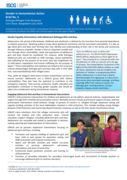
UNHCR and its partners implement interventions focusing on adolescent girls and boys, including:
▪ Formation and capacity building of adolescent girls and boys’ clubs as peer groups for awareness raising, and SGBV prevention and response mechanisms.
▪ Community based protection activ ... ities and training on child protection
▪ Provision of secondary education for secondary school-aged youth and recruitment of female teachers to encourage adolescent girls to continue education
▪ Introduction of community sharing/ parenting sessions and increasing the number of women support networks
▪ Establishing girls’ friendly spaces, which includes information sharing and psycho-social support
▪ Awareness raising campaigns with all members of the community, including community leaders more
▪ Formation and capacity building of adolescent girls and boys’ clubs as peer groups for awareness raising, and SGBV prevention and response mechanisms.
▪ Community based protection activ ... ities and training on child protection
▪ Provision of secondary education for secondary school-aged youth and recruitment of female teachers to encourage adolescent girls to continue education
▪ Introduction of community sharing/ parenting sessions and increasing the number of women support networks
▪ Establishing girls’ friendly spaces, which includes information sharing and psycho-social support
▪ Awareness raising campaigns with all members of the community, including community leaders more
Objective: The study aimed to describe the current epidemiological, clinical and immunological profile of newly
detected HIV - positive patients in Northern Benin by 2016. Methods: It was a prospective study conducted from May 2 to
October 31, 2016 on three main sites of care of people living with
...
HIV (PLHIV) in the department of Borgou in Benin. All
new cases of HIV infection have been systematically and comprehensively recruited. Initial epidemiological, clinical and
immunological data were collected using a questionnaire. These data were entered and analyzed using the Epi Info 7 software.
Results: In total, 185 adults (68 male and 117 female) newly screened HIV positive were included in this study. The middle age
was 36.2 ± 10.9 years and the sex ratio was 0.6 One hundred and thirty-five patients (73%) were between 25 and 50 years old.
In terms of the profession, 132 patients (71.3%) were engaged in liberal activities (craftmen, traders and retailers). The
majority was schooled (113 or 61.1%) and resided in urban areas (146 or 79%). One hundred and sixteen patients lived in
couple (62.7%) with an average monthly income estimated at 70 US Dollars. Clinically, 123 patients (66.5%) were in WHO
stage III. The body mass index was over 18.5 kg/m2 in 124 patients (67%). The median number of TCD4 lymphocytes was
254.5 cells/ml and 25 patients (13.5%) had a number of CD4 over 500 cells/ml. HIV1 was really predominant (97.8%). Most
patients (152 or 82.2%) had been screened for clinical suspicion. Conclusion: HIV infection in Benin remains the prerogative
of young, female, educated and poor people. Screening is delayed and hence the need to develop innovative strategies for early
more
Diagnosis and Treatment Outcomes of Tuberculosis in Relation to Gender and HIV Status in South Benin
Journal of Tuberculosis Research, 2017, 5, 189-200
Background: In Benin, little is known about the influence of both gender and
HIV-status on diagnostic patterns and treatment outcomes of Tuberculosis
(TB) patients. Objective: To assess whether differences in gender and HIV
status affect diagn
...
ostic patterns and treatment outcomes of TB patients. Methods:
Retrospective cohort study of patients registered in 2013 and 2014 in
the three largest TB Basic Management Units in south Benin. Results: Of 2694
registered TB patients, 1700 (63.1%) were male. Case notification rates were
higher in males compared with females (96 vs 53/100,000 inhabitants). The
male to female ratio was 1:1 in HIV positive patients, but was 2:1 among HIV
negative cases. In HIV-positive patients, there were no differences in TB types
between men and women. In HIV-negative patients, there were significantly
higher proportions of females with clinically diagnosed pulmonary TB (p =
0.04) and extrapulmonary TB (p < 0.001). Retreatment TB was 4.65 times
higher amongst males compared with females. For New bacteriologically confirmed
pulmonary TB, no differences were observed in treatment outcomes
between genders in the HIV positive group; but significantly more unfavorable
outcomes were reported among HIV negative males, with higher rates of
failure (p < 0.001) and loss-to-follow up (p = 0.02). Conclusion: The study
has shown that overall TB notification rates were higher in males than in females
in south Benin, with more females co-infected with HIV. Unfavorable outcomes were more common in HIV-negative males.
more
As part of the new strategy preparation, USAID/Senegal requested assistance with a gender assessment. This study was conducted from March 20 to April 11, 2010. It was supported jointly by the Women in Development Indefinite Quantity Contract (WID IQC) Task Order 1 ShortTerm Technical Assistance and
...
Training (STTA&T) and the USAID/Senegal mission. In addition to conducting a literature review, the team made site visits in the cities and towns of Dakar, Thiès, Kaolack, and Tambacounda and villages near each of them. These offered examples of key gender issues in Senegal, including gender disparities in access to education, unequal allocation of land and other productive resources, and gender-based violence (such as domestic violence, female genital cutting [FGC], and rape), as well as examples of USAID/Senegal‟s programming to address these problems.
more
Фонд ООН в области народонаселения (ЮНФПА) стремится достичь трех изменяющих мир
результатов к 2030 году - крайнему сроку достижения Целей в Области Устойчивого
Раз
...
вития. Эти цели таковы: положить конец неудовлетворенной потребности в планировании
семьи, искоренить гендерное насилие, включая такие вредные практики, как калечащие
операции на женских половых органах и детские браки, а также устранить все случаи
предотвратимой материнской смертности. Этот анализ показывает, как пандемия COVID-19
может серьезно подорвать прогресс в достижении этих целей.
Impact of the COVID-19 Pandemic on Family Planning and Ending Gender-based Violence, Female Genital Mutilation and Child Marriage
also available in: english, arabic, spanish
more
Journal of Clinical TB and other Mycobacterial Diseases
uberculosis (TB) in the gastrointestinal tract or peritoneum is an uncommon condition in clinical practice. Its rarity, combined with its nonspecific presentations, makes this kind of extrapulmonary tuberculosis difficult to diagnose as it can
...
mimic other inflammatory or malignant conditions. Delays in treatment and frequent misdiagnosis can lead to hazardous complications. In countries like Ecuador where the disease is endemic, TB should always be considered in the differential diagnosis of a patients who present with nonspecific abdominal symptoms. In these scenarios, laparoscopy can be an invaluable tool when used with sufficiently high clinical awareness and adequate training.
Case presentation
We present the case of a 37-year-old female patient from Ecuador with a 1-year history of abdominal pain, nausea, intermittent vomits, night sweats, and weight loss. After clinical evaluation and a laparoscopic intervention, abdominal TB was detected and promptly treated. Antituberculosis chemotherapy was initiated, and the patient successfully reco
High clinical awareness is imperative when approaching abdominal TB due to its wide spectrum of clinical symptoms and its rarity. Early detection and prompt treatment are critical to minimize the possibility of hazardous complications.
more
DNA studies of Egyptian mummies shows evidence of the existence of Schistosomiasis about 5000 years ago. Schistosomiasis is increasing in prevalence, affecting nearly 10% of the world’s population and ranking second only to malaria as a cause of morbidity & mortality.
Schistosoma haematobium are
...
found in tropical Africa & part of southwest Asia.
Schistosoma mansoni are found in tropical Africa, part of southwest Asia, south America & Caribbean islands.
Schistosoma japonicum are found in parts of Japan, China, Philippines, India & part of southeast Asia.
Blood flukes are known as schistosomes because of the "split body" on the ventral side of the male, in which the female is held during insemination and egg laying.
Man is the definite host harbouring adult parasites, and fresh water snails are intermediate hosts.
more
Considered a neglected tropical disease, Guinea worm disease (dracunculiasis) is a parasitic infection caused by the nematode roundworm parasite Dracunculus medinensis. It is contracted when people consume water from stagnant sources contaminated with Guinea worm larvae. Inside a human's abdomen, Gu
...
inea worm larvae mate and female worms mature and grow. After about a year of incubation, the female Guinea worm, one meter long, creates an agonizingly painful lesion on the skin and slowly emerges from the body. Guinea worm sufferers may try to seek relief from the burning sensation caused by the emerging worm and immerse their limbs in water sources, but this contact with water stimulates the emerging worm to release its larvae into the water and begin the cycle of infection all over again.
more
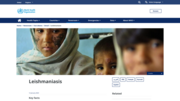
There are 3 main forms of leishmaniases: visceral (the most serious form because it is almost always fatal without treatment), cutaneous (the most common, usually causing skin ulcers), and mucocutaneous (affecting mouth, nose and throat).
Leishmaniasis is caused by protozoan parasites which are tra
...
nsmitted by the bite of infected female phlebotomine sandflies.
The disease affects some of the world’s poorest people and is associated with malnutrition, population displacement, poor housing, a weak immune system and lack of financial resources.
An estimated 700 000 to 1 million new cases occur annually.
Only a small fraction of those infected by parasites causing leishmaniasis will eventually develop the disease.
more
Leishmaniasis is a vector-borne disease with a broad global distribution and an increasing number of recorded cases worldwide. However, it is still one of the world's most neglected diseases. Over the last decades, the disease has been found to expand geographically with a global increase of cases o
...
f visceral and cutaneous leishmaniasis increasing the public health problems associated with the disease epidemics. The reported range expansion of the diseases has been associated with range expansions of vector populations in response to climate change. Leishmaniasis is caused by protozoan parasites of the genus Leishmania. The transmission can either be zoonotic and/or anthroponotic through the bite of an infected female phlebotomine sandfly. In Eurasia and Africa, all vector-competent sandfly species belong to the genus Phlebotomus. Cutaneous leishmaniasis (CL) is the most common form of leishmaniasis. In the ‘old world’, it is caused by five currently recognized Leishmania species: L. major, L. tropica and L. aethiopica (being main causative parasites) as well as L. infantum and L. donovani. Visceral leishmaniasis (VL), another common and more severe form of leishmaniasis, is only associated with the Leishmania species L. infantum and L. donovani. The specific Leishmania species cause different clinical symptoms in humans.
more

UNFPA has been implementing programming for women and girls through Women Friendly Health Spaces (WFHSs), which provide access to critical services, information and support. The WFHS is providing: psychosocial counseling services; awareness raising sessions on PSS in the community; and life skills &
...
vocational training opportunities. The WFHS also facilitates referral to other services including Psychosocial Counseling Centers (PSCCs).
The aim of this guidance note is to provide an overview of approaches on how to successfully integrate adolescent and youth (A&Y) programming into the WFHSs. UNFPA activities for women’s and girl’s protection in health facilities aim to protect women and girls including child marriage. Given that vulnerable women and girls in Afghanistan continue to access health facilities, particularly for reproductive health and maternal health services, it is crucial to provide support for survivors in the same location to improve access to essential psychosocial and protection support for women and girls. To support the integration of A&Y in the WFHS programming each WFHS will be supported by two full time Youth Educators. A female Youth Educator who will be working within the WFHS and a male Youth Educator who will be working in the community. The role of the Youth educators is to increase A&Y awareness and knowledge on living healthy lifestyles and ensuring a referral system to services in existing facilities.
more
The South African Department of Health reports a decline in cholera cases, with only one confirmed case out of 28 suspected cases in the last 10 days as of July 5, 2023. However, authorities urge continued vigilance, emphasizing hygiene, especially during mass gatherings.
Since February 2023, South
...
Africa has recorded 1,073 suspected cholera cases, with 198 confirmed cases across five provinces. Gauteng Province is the most affected, with 176 cases, primarily in Hammanskraal, Tshwane. Other affected provinces include Free State, North West, Limpopo, and Mpumalanga.
The outbreak has resulted in 47 deaths, with four new suspected deaths reported in the Free State. The majority of confirmed cases are in individuals aged 41-50 years, and 52% of cases are female.
The health department continues preventive efforts through health education and targeted case-finding. Authorities also stress the importance of clean water and hygiene compliance in initiation schools to prevent further outbreaks.
more

The World Health Organization (WHO) is releasing the second edition of its Global Accelerated Action for the Health of Adolescents (AA-HA!) guidance. The document aims to equip governments to respond to the health and well-being challenges, opportunities and needs of adolescents.
The guidance pro
...
vides the latest available data on adolescent health and well-being. It also outlines an updated list of core indicators that data should be collected on. Globally, road injury was the top cause of death for adolescent males in 2019. Among female adolescents, the leading causes of death were diarrhoeal diseases among the younger group (10-14 years) and tuberculosis (TB) in the older group (15-19 years).
Over the last 20 years, mortality rates have declined among adolescents globally, with the largest decline in older (15–19 years) adolescent girls. For non-fatal diseases, the burden has not improved over the past two decades, with the main causes of ill health in this category being: mental health conditions (depressive and anxiety disorders, childhood behavioural disorders), iron deficiency anaemia, skin diseases and migraine.
Adolescent well-being depends on a range of factors, including healthy food, education, life skills and employability, connectedness, feeling valued by society, safe and supportive environments, resilience, and the freedom to make choices. To take an appropriately holistic approach, the guidance outlines how to take crosscutting action to support adolescent health and well-being, with mutually reinforcing interventions across sectors, such as health, education, social protection, and telecommunications. Targeted efforts are also required to engage adolescents, as they trust health systems less than adults do and are especially vulnerable to modern-day trends, like online bullying and gaming.
more

UNFPA supports the Youth Health Line (YHL), launched in 2012, as a nationwide, youth friendly health service to provide information and counseling for adolescents and youth on issues related to their health and reproductive health. The YHL is providing a vital service to young people around the coun
...
try who are dialing the toll-free number ‘120’ from any phone to speak to a professionally trained youth health counselor. These conversations are confidential, free of judgment, and do not require parental consent. The average reach of the YHL per year is 120,000 adolescents and youth served by full-time male and female counselors.
This Standard Operating Procedure for YHL provides a critical resource for the administration and day-to-day management. The SOP is designed to provide direction to all staff responsible for carrying out the administrative and managerial functions of the YHL. The SOP is intended to guide UNFPA Implementing Partners in running the YHL with a consistent approach to ensure improved access and quality of services provided to adolescents and youth in Afghanistan.
more

Evidence shows that oral pre-exposure prophylaxis (PrEP) reduces the risk of contracting HIV during sexual intercourse by more than 90% when taken daily. It is for this reason the National HIV Prevention Strategy 2015-2020 (2018 Revision) emphasises the role of preexposure prophylaxis (PrEP) in
...
reducing new HIV infections in Malawi.
The Ministry of Health has prioritised PrEP use among the populations most at-risk of HIV infection in Malawi: young women ages 10 to 24 years, sero-discordant couples, female sex workers, men who have sex with men, and other priority populations (such as members of the uniformed services, prisoners, and mobile populations).
more
Despite progress in improving antiretroviral therapy (ART) for people with HIV in Malawi, the burden of HIV infections and HIV treatment outcomes among key populations is suboptimal. Client-centered differentiated service delivery approaches may facilitate addressing HIV prevention and treatment nee
...
ds of key populations in Malawi.
Methods
De-identified program data routinely collected as part of the LINKAGES project–Malawi were assembled from October 2017 to September 2019. HIV case finding was compared across different testing modalities for each population. Poisson regression was used to estimate the association between testing modalities and ART initiation.
Results
Of the 18 397 people included in analyses, 10 627 (58%) were female sex workers (FSWs), 2219 (12%) were men who have sex with men (MSM), and 4970 (27%) were clients of FSWs. HIV case finding varied by modality and population, with index testing and enhanced peer outreach demonstrating high yield despite reaching relatively few individuals. FSWs who tested positive through risk network referral testing were more likely to initiate ART within 30 days compared with those who tested positive through clinic-based testing (adjusted risk ratio [aRR], 1.50; 95% CI, 1.23–1.82). For MSM, index testing (aRR, 1.45; 95% CI, 1.06–2.00) and testing through a drop-in center (aRR, 1.82; 95% CI, 1.19–2.78) were associated with 30-day ART initiation.
Conclusions
These data suggest that differentiated HIV testing and outreach approaches tailored to the needs of different key populations may facilitate improved ART initiation in Malawi. Achieving 0 new infections by 2030 suggests the need to adapt treatment strategies given individual and structural barriers to treatment for key populations with HIV in high-prevalence settings.
more
Background
Asthma remains highly prevalent, with more severe symptoms in low-income to middle-income countries (LMICs) compared with high-income countries. Identifying risk factors for severe asthma symptoms can assist with improving outcomes. We aimed to determine the prevalence, severity and ris
...
k factors for asthma in adolescents in an LMIC.
Methods
A cross-sectional survey using the Global Asthma Network written and video questionnaires was conducted in adolescents aged 13 and 14 from randomly selected schools in Durban, South Africa, between May 2019 and June 2021.
Results
A total of 3957 adolescents (51.9% female) were included. The prevalence of lifetime, current and severe asthma was 24.6%, 13.7% and 9.1%, respectively. Of those with current and severe asthma symptoms; 38.9% (n=211/543) and 40.7% (n=147/361) had doctor-diagnosed asthma; of these, 72.0% (n=152/211) and 70.7% (n=104/147), respectively, reported using inhaled medication in the last 12 months. Short-acting beta agonists (80.4%) were more commonly used than inhaled corticosteroids (13.7%). Severe asthma was associated with: fee-paying school quintile (adjusted OR (CI)): 1.78 (1.27 to 2.48), overweight (1.60 (1.15 to 2.22)), exposure to traffic pollution (1.42 (1.11 to 1.82)), tobacco smoking (2.06 (1.15 to 3.68)), rhinoconjunctivitis (3.62 (2.80 to 4.67)) and eczema (2.24 (1.59 to 3.14)), all p<0.01.
Conclusion
Asthma prevalence in this population (13.7%) is higher than the global average (10.4%). Although common, severe asthma symptoms are underdiagnosed and associated with atopy, environmental and lifestyle factors. Equitable access to affordable essential controller inhaled medicines addressing the disproportionate burden of asthma is needed in this setting.
more

Women, girls and marginalized groups who are largely dependent on natural resources for livelihoods are among the hardest hit by extreme weather patterns. These weather patterns limit their access to food, water, shelter, education and access to essential health services, including those that addres
...
s sexual and reproductive health and rights (SRHR), gender-based violence (GBV) and preventing harmful practices such as child marriage and female genital mutilation.
more
