Filter
150
Text search:
USAID,
BASICS
Featured
Recommendations
9
New Publications
57
Language
Document type
No document type
111
Training Material
12
Studies & Reports
11
Guidelines
9
Manuals
6
Situation Updates
1
Countries / Regions
Liberia
10
Nepal
8
Kenya
8
Uganda
7
Senegal
5
Ethiopia
5
Tanzania
5
Ghana
4
Malawi
4
Nigeria
3
India
3
South Africa
3
Namibia
3
Asia
3
Sierra Leone
2
Congo, Democratic Republic of
2
Cameroon
2
Cambodia
2
Benin
2
Latin America and the Carribbean
2
Global
2
Mali
1
Zimbabwe
1
Haiti
1
Jordan
1
Zambia
1
Syria
1
Chad
1
Rwanda
1
Indonesia
1
Bangladesh
1
Ukraine
1
Lesotho
1
Middle East and North Africa
1
South–East Asia Region
1
Eastern Europe and Central Asia
1
Africa
1
Tajikistan
1
Guyana
1
Authors & Publishers
Publication Years
Category
Countries
77
Women & Child Health
25
Public Health
16
Capacity Building
11
Key Resources
11
Clinical Guidelines
7
Toolboxes
Caregiver
12
HIV
10
TB
9
Disability
3
Ebola & Marburg
3
Cholera
3
Global Health Education
3
COVID-19
3
Pharmacy
3
Malaria
3
Planetary Health
2
NTDs
2
Conflict
1
Refugee
1
Zika
1
Mental Health
1
Specific Hazards
1
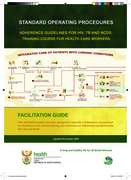
The target audience for this training course is non-clinicians such as Home Based Carers, Community Caregivers, Youth Care Workers, Peer educators, Community Health Workers etc. primarily those who will be providing adherence counselling to clients with HIV, TB, Hypertension and Diabetes. This group
...

Poor quality health services are holding back progress on improving health in countries at all income levels.
Today, inaccurate diagnosis, medication errors, inappropriate or unnecessary treatment, inadequate or unsafe clinical facilities or practices, or providers who lack adequate training an ...
Today, inaccurate diagnosis, medication errors, inappropriate or unnecessary treatment, inadequate or unsafe clinical facilities or practices, or providers who lack adequate training an ...
Tips for Engaging Communities during COVID-19 in Low-Resource Settings, Remotely and In-Person
recommended
This brief provides key considerations for engaging communities on COVID-19 and tips for how to engage where there are movement restrictions and physical distancing measures in place, particularly in low-resource settings.

In 2015, 26% of the deaths of 5.9 million children who died before reaching their fifth birthday could have been prevented
through addressing environmental risks – a shocking missed opportunity. The prenatal and early childhood period represents
a window of particular vulnerability, where enviro
...

Glob Health Sci Pract February 1, 2014 vol. 2 no. 1 p. 103-116

Managers Who Lead empowers health managers at all levels of an organization to lead teams to face challenges and achieve results. It answers questions such as: How can I lead and manage more effectively? How do I create a shared vision and a clear path for achieving it? What can I do to improve work
...
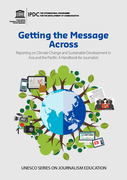
Reporting on Climate Change and Sustainable Development in Asia and the Pacific: A Handbook for Journalists.
UNESCO Series on Journalism education.
It explores the essential aspects of climate change, including its injustices to vulnerable communities, especially women and girls and least develope
...
This document, Ghana’s National Newborn Health Strategy and Action Plan 2014–2018 outlines a targeted strategy for accelerating the reduction of newborn deaths in Ghana. Furthermore it provides a costed action plan with clearly marked timelines for implementation to facilitate resource mobilisat
...
This guidance note is meant to assist humanitarian actors, youth-led organizations, and young people themselves across sectors, working at local, country, regional, and global levels in their response to the novel coronavirus pandemic. It begins diagnostically, exploring the impacts of coronavirus d
...