
Filter
600
Text search:
UNICEF,
WASH
Cluster
Featured
Recommendations
66
New Publications
237
Language
Document type
No document type
313
Studies & Reports
81
Guidelines
65
Strategic & Response Plan
57
Situation Updates
29
Manuals
28
Fact sheets
20
Training Material
5
Dashboards/Maps
1
Infographics
1
Countries / Regions
Myanmar / Burma
32
Sierra Leone
23
Global
23
Congo, Democratic Republic of
22
Bangladesh
21
Nepal
20
South Sudan
19
Liberia
17
Malawi
17
Mozambique
17
Syria
16
Yemen
16
Ethiopia
15
Ukraine
14
Nigeria
13
Kenya
13
Madagascar
12
Uganda
11
Zimbabwe
10
Philippines
10
Sudan
8
Central African Republic
8
Venezuela
8
Burkina Faso
6
Mali
6
Haiti
6
India
6
Somalia
6
Tanzania
6
Colombia
6
Guinea
5
Niger
5
Rwanda
5
Africa
5
Ghana
4
West and Central Africa
4
Latin America and the Carribbean
4
Senegal
3
Pakistan
3
Jordan
3
Lebanon
3
Indonesia
3
Brazil
3
Burundi
3
East and Southern Africa
3
Cameroon
2
Afghanistan
2
Zambia
2
South Africa
2
Papua New Guinea
2
Peru
2
Lesotho
2
South–East Asia Region
2
Palestine
2
Laos
2
Guinea-Bissau
1
Côte d’Ivoire / Ivory Coast
1
Togo
1
Turkey
1
Cambodia
1
Malaysia
1
Argentina
1
Namibia
1
Bolivia
1
Libya
1
Guatemala
1
Sri Lanka
1
Chile
1
Eastern Europe and Central Asia
1
Western and Central Europe
1
Paraguay
1
Congo-Brazzaville
1
Russia
1
Iran
1
Authors & Publishers
Publication Years
Category
Countries
303
Key Resources
76
Women & Child Health
37
Public Health
20
Clinical Guidelines
18
Capacity Building
9
Toolboxes
COVID-19
88
Conflict
59
Natural Hazards
39
Ebola & Marburg
32
Disability
22
Cholera
21
Rapid Response
20
Planetary Health
18
Refugee
13
Mental Health
9
Caregiver
7
2.0 Rapid Response
7
HIV
6
Global Health Education
6
Zika
5
TB
4
Polio
2
Specific Hazards
2
NTDs
2
Malaria
2
South Sudan
1
Typhoon
1
AMR
1
Health Financing Toolbox
1
NCDs
1
The well-being of children in sub-Saharan Africa is under siege from all directions since the advent of the COVID-19 pandemic. The region is now suffering its first-ever economic recession, pushing about 50 million people into extreme poverty, a majority of whom are children.
(Last Update: July 2022)
Guidance | Preparedness - Response and early recovery - Recovery and reconstruction
Guidance | Preparedness - Response and early recovery - Recovery and reconstruction
Rwanda first confirmed cases of coronavirus disease 2019 (COVID-19) in March 2020. Although the number of cases has been low, health system resources are being redirected to respond and an increasing number of children are affected by the socio-economic impacts of the pandemic, including disruptions
...
Guidance | Preparedness - Response and early recovery - Recovery and reconstruction

Street Child & Child Protection AoR: Accelerating localised response to COVID-19: Practical pathways
The COVID-19 pandemic presents a rare and immediate opportunity for a norm shift towards localisation in the humanitarian architecture. Whils tinternational humanitarian actors are facing constraints in funding and restrictions on movement and travel, national and local level
...
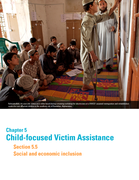
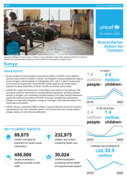
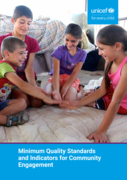
The Minimum Standards and Indicators for Community Engagement were developed through an inter‑agency consultation process that engaged a large number of experts from around the world. UNICEF wishes to acknowledge the contribution of all those that
...
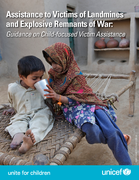
This document is one of eight PDF documents that comprise the Guidance on Child-focused Victim
Assistance. All are available in PDF at unicef.org/publications/>. The full document is also available.
This first section contains the Ack
...

This note provides information and practical guidance to support gender-based violence (GBV) practitioners to integrate attention to disability into GBV prevention, risk mitigation and response efforts during the COVID-19 pandemic. This document complements other resources relating to GBV and COVID-
...
In emergency or humanitarian settings, mobile clinics are used to bring essential lifesaving health care to communities affected by crises. Though there are standard emergency benefit packages for health services during emergencies, there are however no agreed or standard way of running mobile clini
...
