Filter
407
Text search:
The
Lancet
Regional
Health
–
Americas
Featured
Recommendations
42
New Publications
73
Language
Document type
No document type
149
Studies & Reports
142
Guidelines
53
Strategic & Response Plan
26
Manuals
11
Training Material
8
Fact sheets
7
Situation Updates
6
Resource Platforms
3
Brochures
1
Online Courses
1
Countries / Regions
Latin America and the Carribbean
64
Global
43
Brazil
11
North America
6
Sierra Leone
4
Venezuela
4
Mexico
3
Liberia
2
Ghana
2
Zimbabwe
2
Cambodia
2
Thailand
2
China
2
South Africa
2
Bangladesh
2
Colombia
2
Yemen
2
South–East Asia Region
2
Western and Central Europe
2
Asia
2
Africa
2
Guinea
1
Burkina Faso
1
Nigeria
1
Senegal
1
USA
1
Ethiopia
1
Uganda
1
Haiti
1
Philippines
1
India
1
South Sudan
1
Afghanistan
1
Germany
1
Kenya
1
Indonesia
1
Mozambique
1
Argentina
1
Peru
1
Ecuador
1
El Salvador
1
Madagascar
1
Myanmar / Burma
1
Chile
1
Middle East and North Africa
1
Eastern Europe
1
Palestine
1
Canada
1
Russia
1
Authors & Publishers
Publication Years
Category
Clinical Guidelines
68
Countries
67
Public Health
43
Women & Child Health
34
Key Resources
13
Capacity Building
2
Pharmacy & Technologies
2
Toolboxes
COVID-19
43
Mental Health
41
NTDs
41
HIV
28
NCDs
27
Planetary Health
24
TB
21
Global Health Education
20
Zika
19
Rapid Response
14
AMR
11
Caregiver
11
Disability
7
Cholera
4
2.0 Rapid Response
4
Refugee
3
Health Financing Toolbox
3
Malaria
3
Polio
2
Natural Hazards
2
Pharmacy
2
Ebola & Marburg
1
This document focuses on making recommendations for the diagnosis and treatment of Chagas disease, an infection caused by Trypanosoma cruzi, the protozoan agent of a systemic parasitic disease. Meth
...

This document highlights landmarks and key milestones in the development and implementation of the global agenda for noncommunicable diseases (NCDs) over
...
The new WHO recommendations for the treatment of isoniazid-resistant, rifampicin-susceptible TB are based upon a review of evidence from patients treated with such regimens by a Guideline Developmen
...
The Sustainable Development Goals (SDGs) were launched in September 2015, made up of 17 Goals and 169 Targets that set out a plan of action that will shape the mainstream development agenda for
...
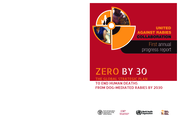
Rabies is entirely preventable, and vaccines, medicines, tools and technologies have long
been available to prevent people from dying of dog-mediated rabies. Nevertheless, rabies still
kills about 60 000 people a year, of whom over 40% are children under 15, mainly in rural areas
of economically
...

The report is geared towards mayors, local government officials and city policy planners.It highlights key areas where city leaders can tackle the drivers of NCDs, including tobacco use, air polluti
...
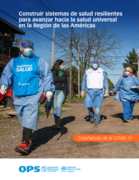
En este folleto se resume la situación de los sistemas y servicios de salud en la Región de las Américas en su progreso hacia el acceso universal a la salud y la cobertura universal de salud (la “salud universal”). Se presenta la situación p
...
This 2011 update of Guidelines for the programmatic management of drug-resistant tuberculosis is intended as a tool for use by public health professionals working in response
to
...
The purpose of this document is to guide clinicians in the care of patients with or at risk of severe illness from influenza virus infection, including those caused by seasonal influenza viruses, pa
...
This report reviews the current situation in relation to national capacity to address NCDs and the progress made at country level over the past dec
...

Drawing on the World Health Organization’s package of NCD best buys, the report demonstrates how these evidence-based measures can help countries
...
An estimated 59 000 people die from rabies each year. That’s one person every nine minutes of every day, 40% of whom are children living in Asia and Africa. As dog bites cause almost all human cases, we can prevent rabies deaths by increasing awareness, vaccinating dogs to prevent
...

Download (7.4 MB)
Overview
Epilepsy is one of the most common neurological disorders globally. The WHO epilepsy technical brief aims to strengthen action for epilepsy and complements
...
Climate Change Toolkit for Health Professionals
recommended
This toolkit consists of eight modules which have been prepared as stand-alone documents that can be read by themselves, but they have also been prepared to complement one another. It has been designed as a tool for health professionals and student
...
These WHO guidelines which were updated in 2018, are valid for any country and suitable to local adaptations, and take account of the strength of available scientific evidence, the cost and resource
...