
Filter
1590
Text search:
National
Institute
for
Communicable
Diseases
Featured
142
422
Language
Document type
770
363
219
88
85
22
19
12
8
2
2
Countries / Regions
127
83
65
61
49
41
41
38
37
36
32
29
25
24
23
23
21
20
20
20
16
15
15
13
13
12
11
11
11
10
10
10
9
9
9
7
7
6
6
5
5
5
5
5
4
4
4
4
4
4
4
4
4
3
3
3
3
3
3
3
3
3
3
3
3
3
3
3
3
2
2
2
2
2
2
2
2
2
2
2
2
1
1
1
1
1
1
1
1
1
1
1
1
1
1
1
1
1
1
1
1
1
1
1
1
1
1
1
1
1
1
1
1
Authors & Publishers
Publication Years
Category
677
206
131
58
39
19
18
Toolboxes
142
102
98
84
76
61
54
50
49
35
33
30
27
26
22
19
13
13
12
12
10
10
7
5
3
1
Key stakeholders must be involved in the planning, implementation, monitoring and evaluation of NCD plans and programmes. Within a ministry of health there will be different types of stakeholders, such as programme managers and senior managers in departments of prevention, health promotion, and hosp
...

World Health Organization. (2022). Toolkit for developing a multisectoral action plan for noncommunicable diseases: module 4: developing an i
...
To maintain a structured and well-organized implementation plan it is important to have a lead agency or sector. The ministry of health or a similar authority in government will be critical in facilitating development and implementation of the multisectoral action plan.

One of the first steps in developing a multisectoral action plan (MSAP) is to use a situation analysis to provide a comprehensive assessment of the health needs, prevailing risks and the context of the area to which the plan will apply. This will help countries, regions, provinces or cities intendi
...

The article outlines the prioritized research agenda for the prevention and control of chronic respiratory diseases (CRDs) as part of the World Health Organization's (WHO) action plan on noncommunic
...

Notable progress has also been made on other key health indicators such as reducing maternal, infant and child deaths and malnutrition, increasing immunization coverage, eliminating infectious diseases such as polio and reducing the incidence of mal
...

Rabies is a fatal viral zoonosis and serious public health problem.1 All mammals are believed to be susceptible to the disease, and for the purposes of this document, use of the term animal refers to mammals. The disease is an acute, progressive enc
...

Pakistan Global Antibiotic Resistance Partnership (GARP) was formed in the wake of international and national efforts for AMR curtailment. A group of experts from microbiology,
...
Regional Network for Equity in Health in east and southern Africa (EQUINET): Disussion Paper 111
The health services delivery system in Zambia is pyramid in structure, with primary healthcare (PHC) services at community level, at the base, foll ...
The health services delivery system in Zambia is pyramid in structure, with primary healthcare (PHC) services at community level, at the base, foll ...

Drawing on the World Health Organization’s package of NCD best buys, the report demonstrates how these evidence-based measures can help countries reduce premature deaths, strengthen health systems, and advance progress towards the Sustainable Development Goals. It provides policymakers, donors, ad
...
School health programmes are the most cost-effective way to influence health behaviours in young people. The purpose of this two-part handbook is to support schools as they seek to implement interventions in order to reduce the main modifiable risk behaviours
...

Over the past 20 years, the Global Initiative for Asthma (GINA) has regularly published and annually updated a global strategy for asthma management and prevention that has formed the basis
...
Key considerations for the use of law to prevent noncommunicable diseases in the WHO European Region
Report of an intensive legal training and capacity-building workshop on law and noncommunicable diseases (Moscow, 30 May–3 June 2016)
The report summarizes important issues, themes and topics discussed during the meeting in Moscow, ranging from t
...

Vaccines are powerful weapons in the fight against pandemic viruses as shown by responses to both the 2009 H1N1 influenza and the COVID-19 pandemics. However, planning for accessing, allocating and deploying vaccines in a pandemic situation is a com
...

The document "Global Report on Diabetes" by the World Health Organization (WHO) provides an in-depth analysis of diabetes as a global health challenge. It covers the rising prevalence of the disease, the associated risk factors, and the increasing burden on healthcare systems, particularly in low- a
...
Sepsis contributes significantly to preventable mortality and is the final common pathway to death for severe infectious diseases; it can also arise as a complication of injuries and non-
...

The management of information and logistics is an essential component of health product systems. In a context of limited financial resources and morbidity and mortality sustained by persistent diseases, it is necessary to strengthen health systems t
...
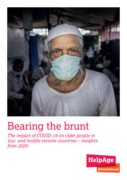
The report shows that older people are not getting the healthcare treatments they desperately need. The COVID-19 response has disrupted services for non-communicable
...
PlosOne https://doi.org/10.1371/journal.pone.0165797; Food production is a major driver of greenhouse gas (GHG) emissions, water and land use, and dietary risk factors are contributors to non-communicable
...
