
Filter
256
Text search:
National
Disaster
Management
Authority
India
Featured
Recommendations
25
New Publications
85
Language
Document type
No document type
145
Studies & Reports
38
Guidelines
34
Manuals
19
Strategic & Response Plan
11
Training Material
5
Fact sheets
2
Situation Updates
1
Resource Platforms
1
Countries / Regions
India
32
Nepal
17
Global
13
Myanmar / Burma
12
Bangladesh
8
Asia
8
Pakistan
5
Liberia
4
Philippines
4
Syria
4
Indonesia
4
Uganda
3
Malawi
3
South–East Asia Region
3
Sierra Leone
2
Ethiopia
2
Somalia
2
Cambodia
2
China
2
Brazil
2
Sri Lanka
2
Western Pacific Region
2
Iran
2
Guinea
1
Morocco
1
USA
1
Saudi Arabia
1
Ghana
1
Niger
1
Haiti
1
Iraq
1
Jordan
1
Lebanon
1
Kenya
1
Thailand
1
Rwanda
1
South Africa
1
Sudan
1
Peru
1
Serbia
1
Greece
1
Eastern Europe
1
Albania
1
Laos
1
Georgia
1
Vietnam
1
Tunisia
1
Authors & Publishers
Publication Years
Category
Countries
89
Key Resources
57
Clinical Guidelines
8
Public Health
7
Capacity Building
5
Women & Child Health
4
Pharmacy & Technologies
1
Toolboxes
Natural Hazards
30
COVID-19
19
Planetary Health
18
Mental Health
14
Rapid Response
12
Conflict
11
Global Health Education
11
Disability
10
Specific Hazards
9
NTDs
7
TB
6
2.0 Rapid Response
6
AMR
5
HIV
4
Caregiver
4
Health Financing Toolbox
4
Ebola & Marburg
3
Refugee
3
Pharmacy
3
NCDs
2
Malaria
2
Cholera
1
Typhoon
1
Learning from earthquake relief and recovery operations
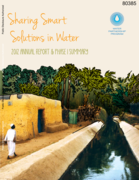
Water security, or having the right amount and quality of water in the right place at the right time, fosters social and economic progress. Where water is sufficient to meet demand, it can promote economy wide growth and enable countries to reach their food security, energy security, and human devel
...

(Health Systems in Transition, Vol. 4, No. 3, 2014)
It is our hope and prayer that the guidance and multiple tools provided herein to manage
the entire lifecycle of a food security program are useful to our food security staff, our
local partners, and our fellow international Cooperating Sponsors throughout the world.

Guidelines for Medicine Donations
recommended
This 3rd edition of Guidelines for medicine donations has been developed by the World Health Organization (WHO) in cooperation with major international agencies active in humanitarian relief and development assistance. The guidelines are intended to improve the quality of medicine donations in inter
...

Guide to monitoring and evaluating

Disabled people in developing countries are the poorest of the poor: if we are serious about tackling extreme poverty, our development work has to target them. The post-2015 development framework offers hope that disabled people will finally get the prominence they deserve on the global development
...
The GHS Index is intended to be a key resource in the face of increasing risks of high-consequence and globally catastrophic biological events and in light of major gaps in international financing for preparedness. These risks are magnified by a rapidly changing and interconnected world; increasing
...

The message contained in this publication is clear: countries need a
public health system that can respond to the deliberate release of
chemical and biological agents. Regrettable though this message may
be, the use of poison gas in the war between Iraq and the Islamic
Republic of Iran in the 19
...
Research results of sexual and gender-based violence (SGBV) prevention and response before, during and after disasters in Indonesia, Lao PDR and the Philippines
This report contributes new evidence on why and how sexual and gender-based violence (SGBV) risks increase during humanitarian disasters ...
This report contributes new evidence on why and how sexual and gender-based violence (SGBV) risks increase during humanitarian disasters ...

This paper has been commissioned by RedR to identify gaps in skills, technology, and knowledge in urban humanitarian response in order to inform RedR’s project Ready to Respond which is looking to address these gaps in two specific areas:
Water supply, sanitation, and hygiene; Shelter res
...
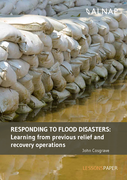
This paper presents lessons learned from previous flood responses in developing countries, based on a structured review of the literature. It is intended for people working in relief and recovery operations who have to decide if, when and how to intervene after a flood.
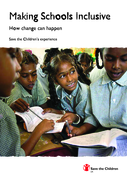
Making education more inclusive requires schools and education authorities to remove the barriers to education experienced by the most excluded children - often the poorest, children with disabilities, children without family care, girls, or children from minority groups. Also included in the text a
...
The case studies in this document are set in different scales and geographies, tackling a wide realm of issues connected to urban housing recovery — locally in Nepal and globally. The case studies are categorized into three:
case studies from partner organizations
case studies from house
...
