
Filter
801
Text search:
London
School
of
Hygiene
&
Tropical
Medicine
Featured
Recommendations
92
New Publications
154
Language
Document type
No document type
390
Studies & Reports
174
Guidelines
98
Manuals
66
Strategic & Response Plan
26
Training Material
24
Fact sheets
14
Situation Updates
4
Resource Platforms
3
Brochures
1
Videos
1
Countries / Regions
Global
39
Africa
15
India
12
Sierra Leone
11
Kenya
11
Western and Central Europe
11
Uganda
9
South Africa
9
Malawi
9
Ethiopia
8
Nepal
8
Tanzania
8
Mozambique
8
Liberia
7
Senegal
7
Guinea
6
Congo, Democratic Republic of
6
Ukraine
6
Cameroon
5
Latin America and the Carribbean
5
Nigeria
4
Mali
4
South Sudan
4
Zambia
4
Syria
4
Benin
4
Brazil
4
East and Southern Africa
4
Asia
4
Eastern Europe
4
Burkina Faso
3
Ghana
3
Zimbabwe
3
Somalia
3
Germany
3
Bangladesh
3
Guatemala
3
Myanmar / Burma
3
West and Central Africa
3
Paraguay
3
Chad
2
Rwanda
2
Sudan
2
Peru
2
Colombia
2
Angola
2
Madagascar
2
Mexico
2
Yemen
2
South–East Asia Region
2
Eastern Europe and Central Asia
2
Russia
2
Vietnam
2
Guinea-Bissau
1
Philippines
1
Pakistan
1
Afghanistan
1
Turkey
1
Cambodia
1
Indonesia
1
Papua New Guinea
1
Eswatini/ Swaziland
1
Burundi
1
Botswana
1
Sri Lanka
1
Chile
1
Middle East and North Africa
1
Venezuela
1
Qatar
1
Estonia
1
Iran
1
France
1
United Kingdom
1
Portugal
1
Spain
1
Authors & Publishers
Publication Years
Category
Countries
134
Clinical Guidelines
106
Women & Child Health
66
Key Resources
49
Public Health
43
Capacity Building
21
Pharmacy & Technologies
10
Toolboxes
HIV
75
TB
72
Mental Health
71
COVID-19
69
Disability
52
NTDs
49
Planetary Health
40
Ebola & Marburg
34
Malaria
19
Global Health Education
18
Caregiver
18
Rapid Response
15
AMR
14
Health Financing Toolbox
13
NCDs
12
Natural Hazards
11
Refugee
11
Conflict
9
Zika
7
Polio
6
Pharmacy
6
2.0 Rapid Response
5
Cholera
3

ICTC’s 2022-2030 strategic plan spans the critical period running to the end of 2030, the year by which we are striving to achieve the elimination of trachoma as a public health problem. This stra
...

ABSTRACT
More than 500 million people worldwide live with cardiovascular disease (CVD). Health systems today face fundamental challenges in delivering optimal care due to ageing populations, healthcare workforce constraints, financing, availability and affordability
...

Cholera is a diarrhoeal disease that is usually contracted when drinking water contaminated with Vibrio cholerae bacteria. The fight against this disease requires a multidisciplinary approach that combines a water, hygiene and sanitation (WaSH) resp
...
sur la base des orientations actuelles de l’OMS, 31 may 2021. Aide mémoire
This aide-mémoire presents information on use and procurement of masks for community outreach interventions, with a focus on those for malaria, neglected
...

Malar J (2017) 16:174 DOI 10.1186/s12936-017-1808-x
Background: Since 2004, artemisinin-based combination therapy (ACT) has been the first-line treatment for uncomplicated malaria in Benin. In 2016, a medicine outlet survey was implemented to inves
...
Surveys are needed to guide trachoma control efforts in Mozambique, with WHO guidelines for intervention based on the prevalence of trachomatous inflammation–follicular (TF) in children aged 1–9 years and the prevalence
...
Guidance for health workers
The internationally recognized criteria for diagnosis of neurocysticercosis include a requirement for neuroimaging techniques, such as computerized tomography (CT) and/or magnetic resonance imaging (MRI), ideally supported by serology. These facilit
...
Case study
An emergency WASH gap exists – there is little disagreement on this point within the humanitarian sector. There is a paucity of emergency WASH capacity, but a surplus of complacency. T
...
PLoS Med 15(7): e1002615. https://doi.org/10.1371/journal. pmed.1002615
Summary of key informant interviews with representatives of organizations providing, funding, or supporting WASH services to refugee populations
This manual for trainers outlines the information and materials required to undertake training in line with the WASH FIT Guide, including background documents, the content of the recommended training modules and training evaluation approaches. The m
...
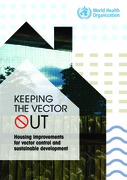
Vector-borne diseases are responsible for 17% of the global burden of communicable diseases and more than 500 000 deaths annually. The ambitious global targets for the control
...

PLoS Med. 2009 Oct;6(10):e1000159. doi: 10.1371/journal.pmed.1000159. Epub 2009 Oct 6.

Nepal is on target to meet the Millennium Development Goals for maternal and child health despite high levels of poverty, poor infrastructure, difficult terrain and recent conflict. Each year, nearly 35000 Nepali children die before their fifth birt
...
This article summarises the process involved in developing the updated guideline and includes an infographic to highlight key IPC recommendations from the guideline, following the patient care pathway from the community to a healthcare facility to discharge.
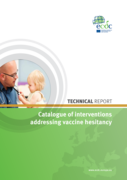
This catalogue provides tools and information resources to support EU/EEA countries in addressing the challenging issue of vaccine hesitancy. The catalogue provides examples of practices that can se
...

The Creditor Reporting System was analysed for official development assistance funding disbursements towards TB control in 11 conflict-affectedstates, 17 non-conflict-affected fragile states and 38 comparable non-fragile states. The amounts of fundi
...
PlosOne https://doi.org/10.1371/journal.pone.0165797; Food production is a major driver of greenhouse gas (GHG) emissions, water and land use, and dietary risk factors are contributors to non-communicable diseases. Shifts in dietary patterns can the
...
